Meetings and Events
Upcoming
-
Conference Coms Check,
Patrick McEvoy
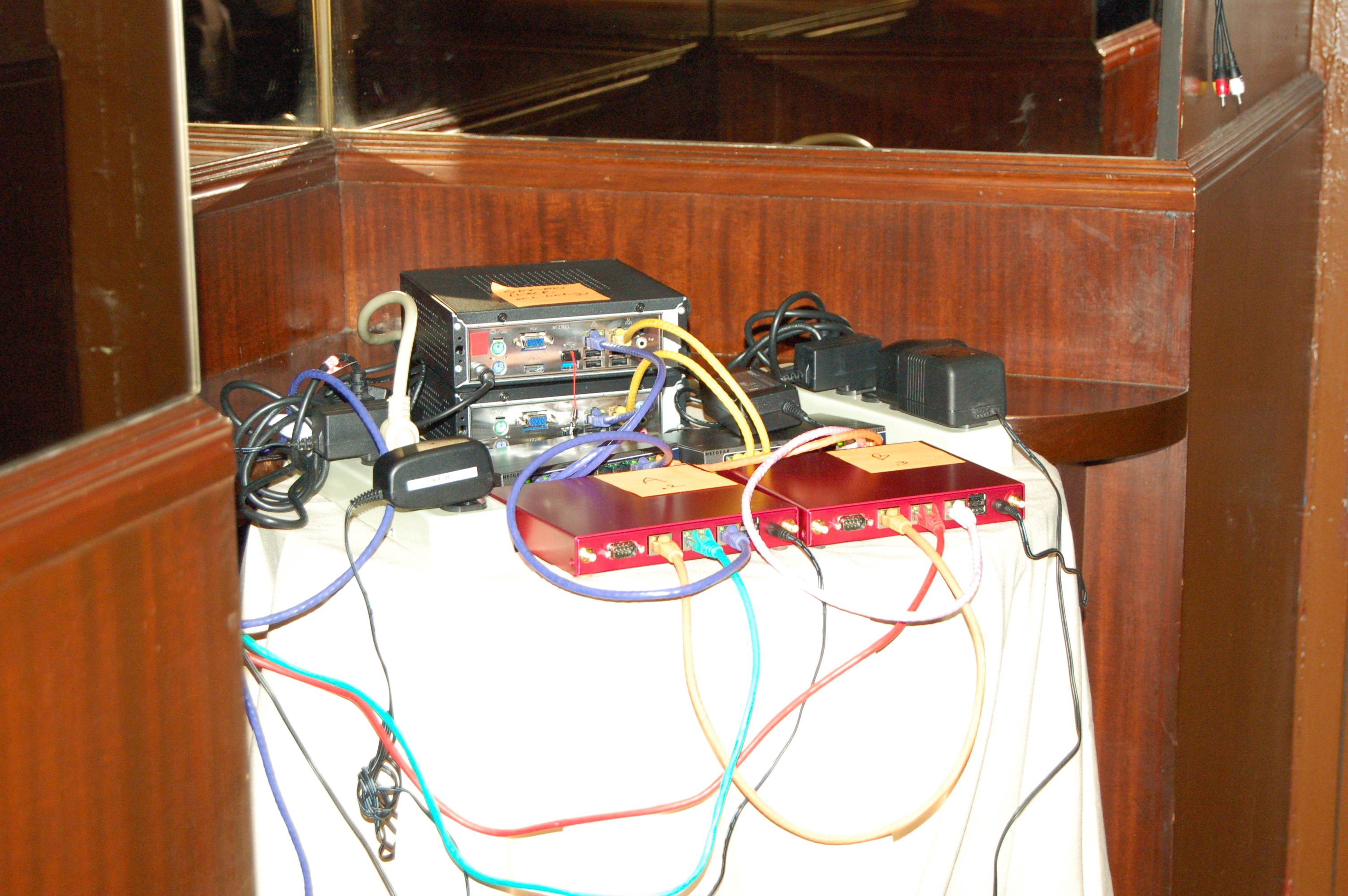
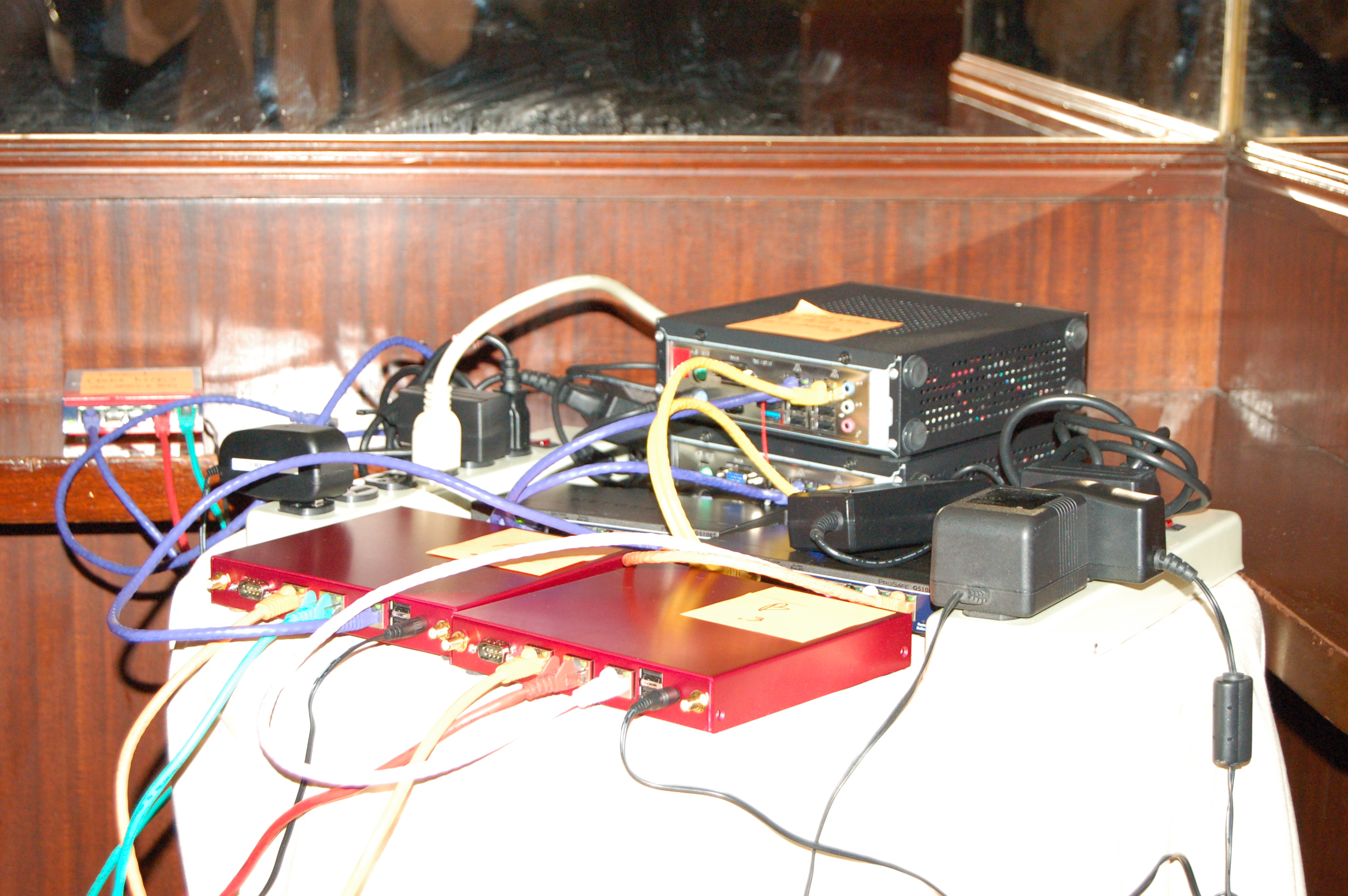
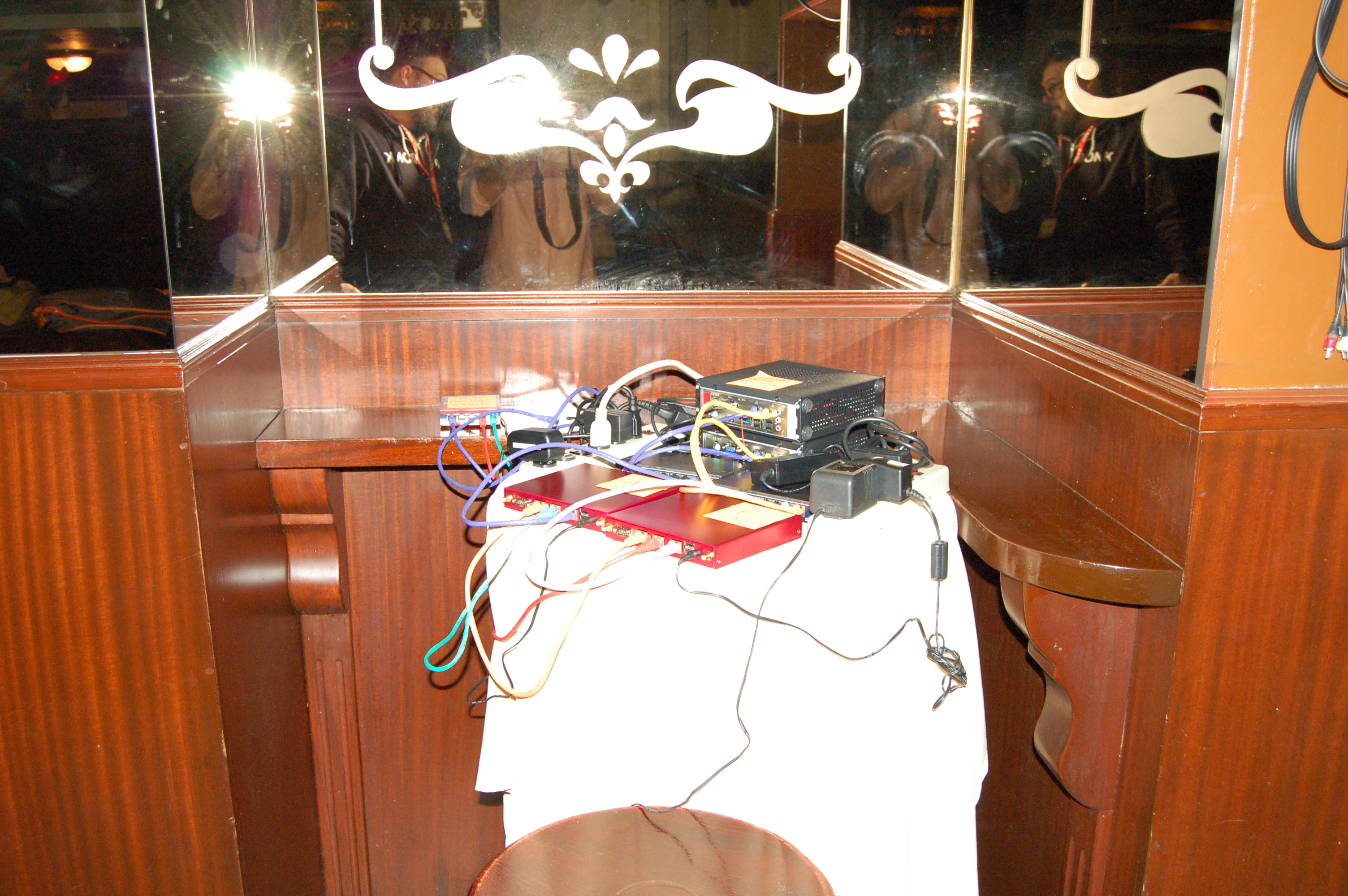
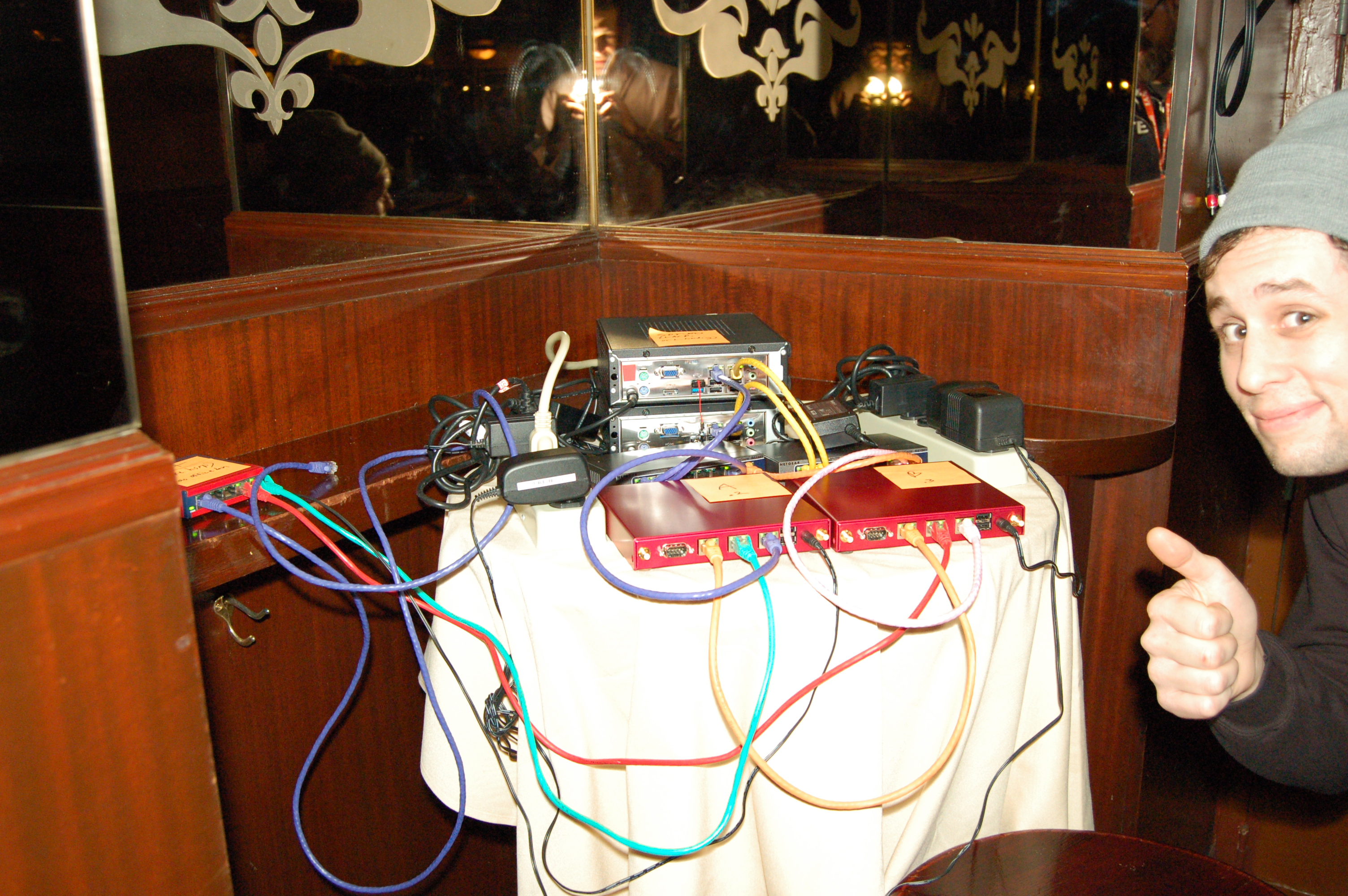
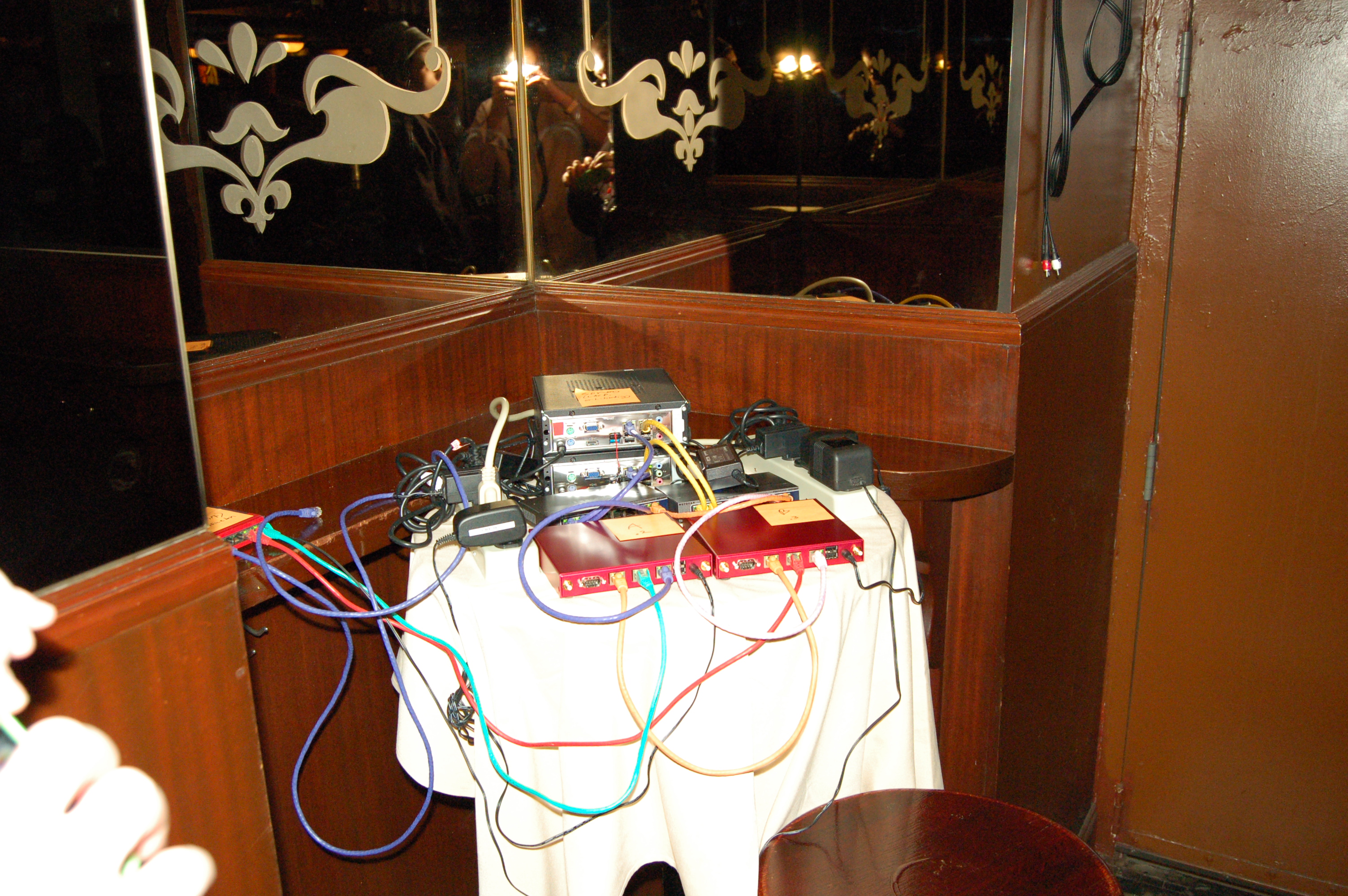
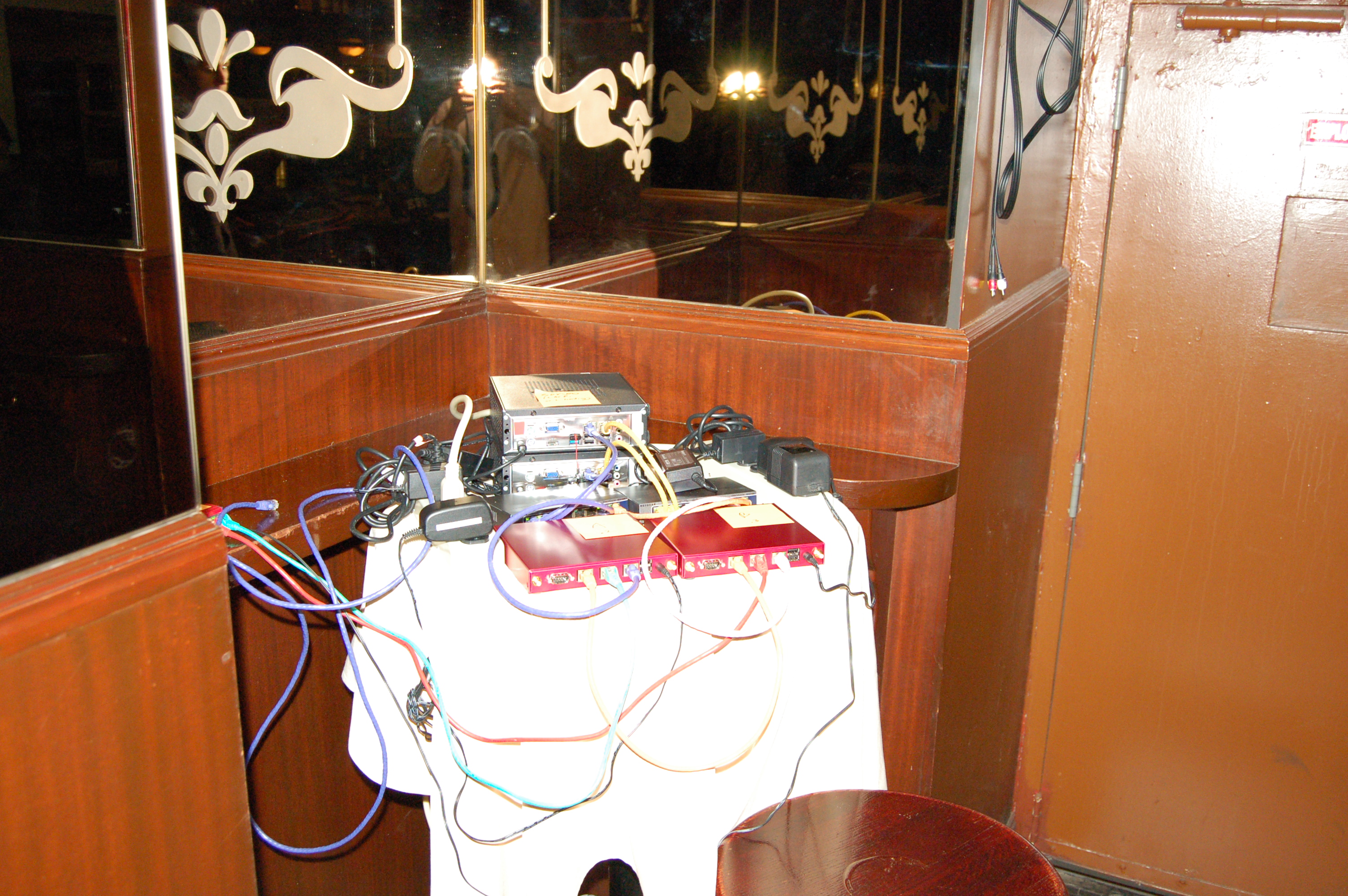
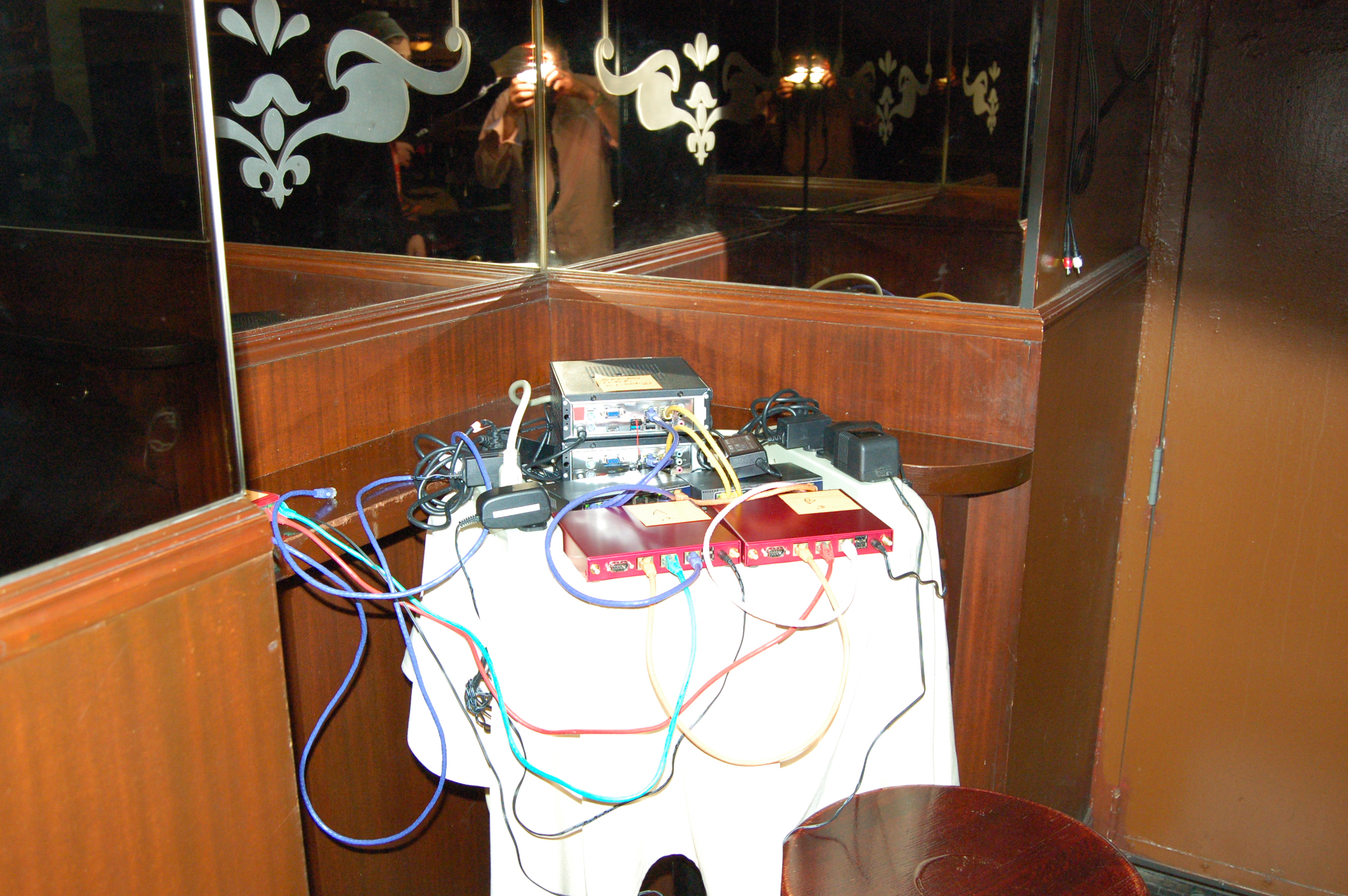
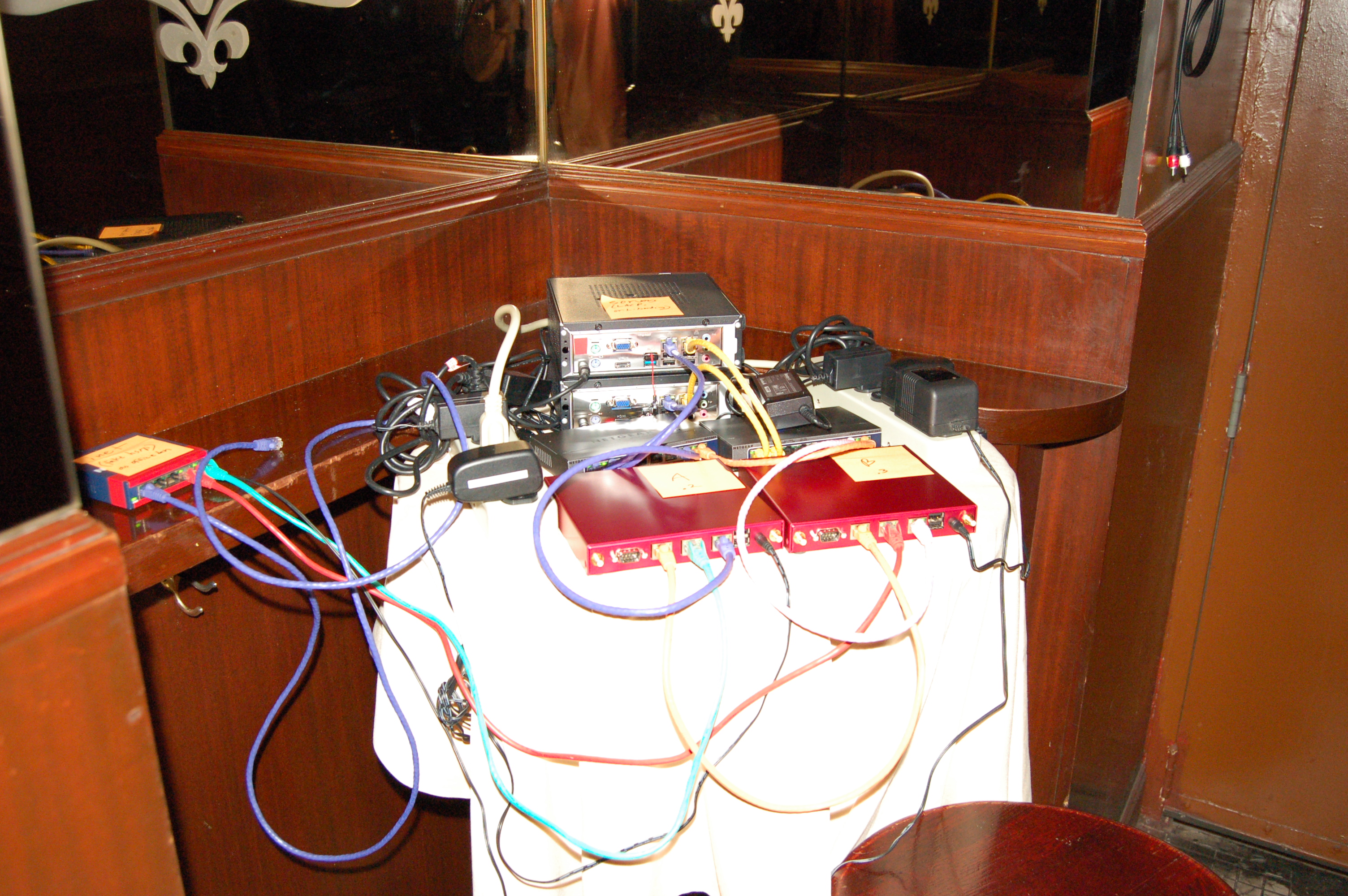
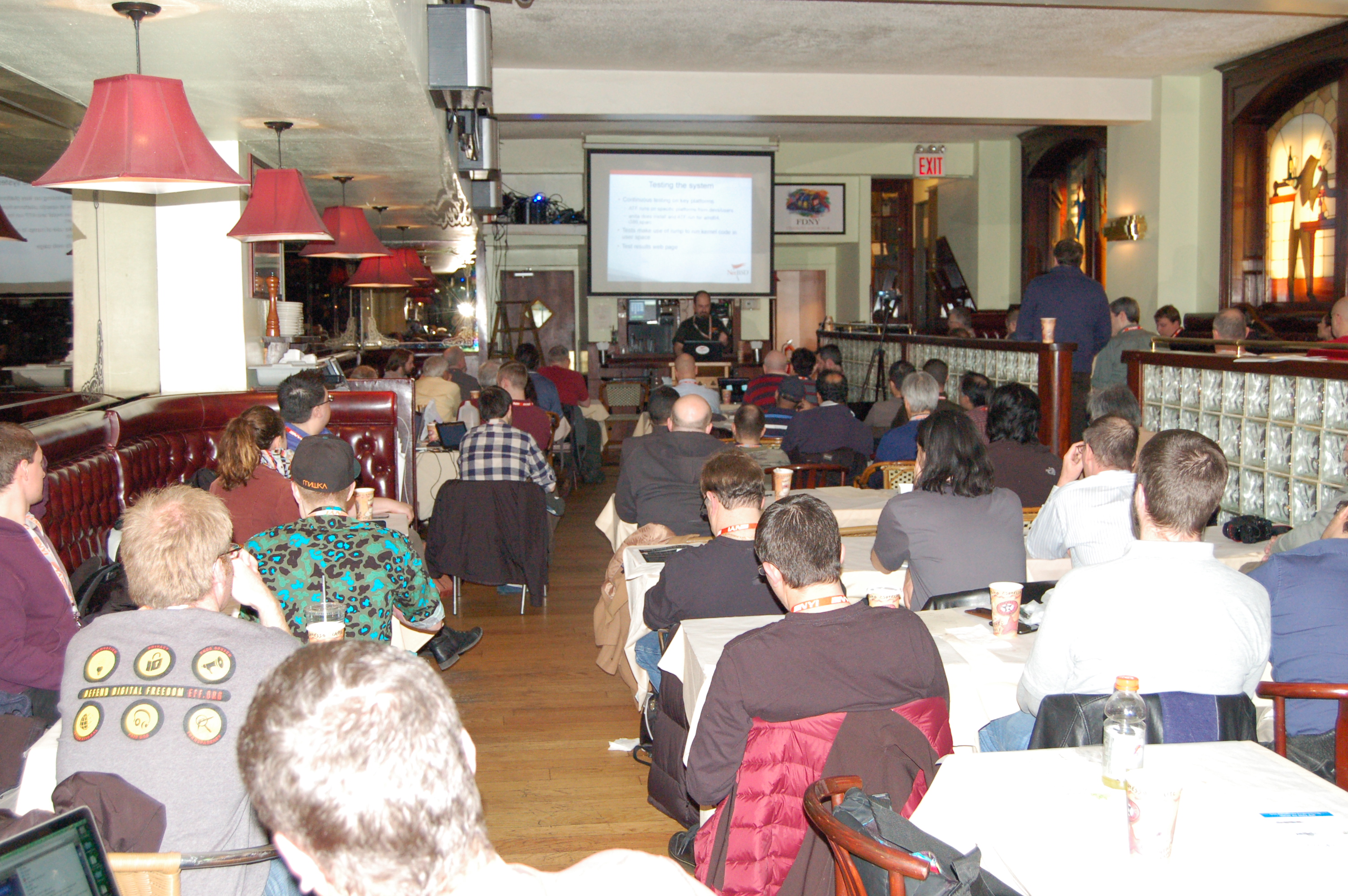
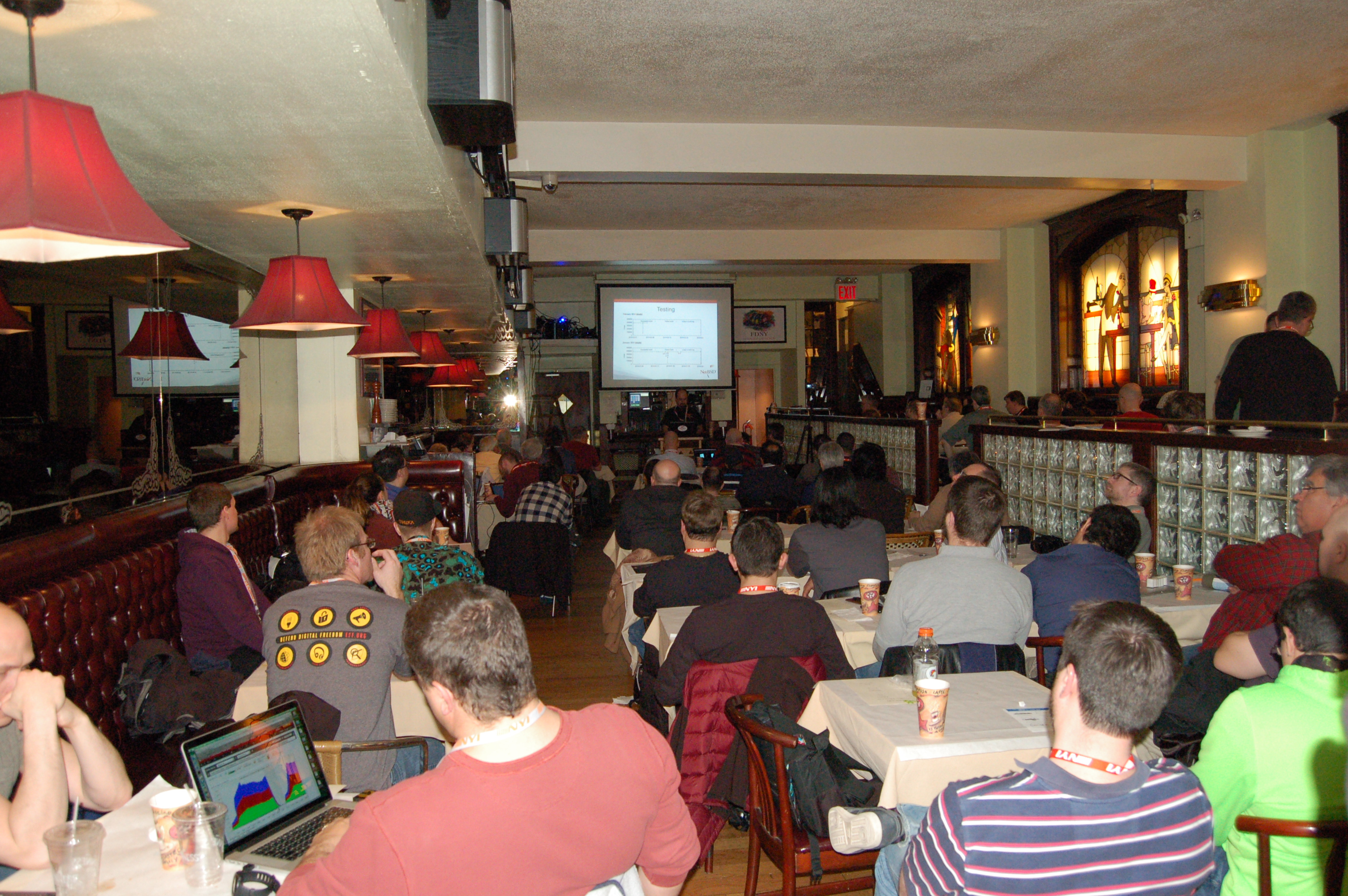
2026-09-02 @ 18:45 local (22:45 UTC) - Backroom of Brass Monkey 55 Little West 12th StDuring this informal meeting we will be testing the streaming / IRC bot forwarding / Peertube / discord system we have been using for conferences with an eye towards making EuroBSDcon and future *BSD related conferences run as smoothly as possible while bringing offsite members of the community into the conversation. Bring your favorite IRC and Discord clients to the table as we test streaming system resilience and interaction from the BrassMonkey in downtown Manhattan.
Patrick McEvoy (BSDTV) has been streaming NYCBSDCons since 2010 and BSDCan since they lost their entire videoteam in a last minute staffing emergency. He has been active with NYCBUG for a number of years and streams other tech / *BUG events when the schedule allows and releases these videos on conference YouTube and Peertube under a number of different umbrellas.
Nearest NYC Subway is the 14th Street/Eighth Avenue station L, A, C, E.
To get to the backroom, you must enter the front door, follow the long bar on your left, and walk all the way to the back. At the rear of the BrassMonkey, you will see an alcove for the 3 bathrooms our room is off to your right.
Past
-
VIDAR - Server Protection for Internet facing FreeBSD Servers,
Jim Brown
2026-08-05 @ 18:45 local (22:45 UTC) - Backroom of Brass Monkey 55 Little West 12th StVidar is a combination of programs, a PostgreSQL database, and the SEC correlator engine that reads logfiles from authentication, email (postfix), and web server (nginx), (and potentially any other logs) and takes action based on SEC rules to add e ntries to an IPFW firewall. In concept it is similar to fail2ban and has some features in common with blocklistd.
SEC reads the logs in real time and based on its rules and correlations, outputs metadata that is piped to a process that inserts the events into a PostgreSQL database and further pipes the offending IP address to a script that updates a table named “BAD” in IPFW. This table is read by IPFW rules to block offending external systems from wreaking havoc on a FreeBSD host.
A corresponding table named GOOD contains whitelisted IP addresses so you don’t accidentally lock yourself out.
<RANT>
Are you sick and tired of seeing:
2a03:b0c0:3:d0::402:d001 - - [31/Jan/2026:17:37:17 -0500] \x16\x03\x01\x05\xDE\x01 ...in your nginx logs and sick of seeing:
Feb 20 16:36:03 jimby dovecot[59472]: imap-login: Disconnected: Connection closed (no auth attempts in 5 secs): user=<>,
rip=206.168.34.125, lip=174.136.97.66, TLS: Connection closed, ...
in your mail logs and sick of seeing:
Feb 20 12:47:58 jimby sshd-session[47730]: Invalid user zzzz from 2607:f170:44:12::5d0 port 520in your authentication logs?
With Vidar, you get to put the hammer down:
“If you abuse my system, I will shut you out. Permanently.”
</RANT>
Vidar has additional tricks - a way to dump the IPFW BAD table and a way to import it later - you can keep this database of shame up to date on all those miscreants and keep them away. You can even import the BAD table on another FreeBSD system running IPFW. Also, there’s a handy audit script that lets you compare the entries in the database with what is actually in the IPFW BAD table. Also, Vidar keeps the evidence of the event in question that resulted in blocked access. Finally, using SEC rules, you can make the block last for an hour (for a misconfigured remote system) or a day (for a script kiddie), or permanently (for a determined hacker), or any length of time you choose.
There is also a feature to check live processes and alert if, for example, the vi editor is running at 2:00am in the morning.
Jim Brown is a long time BSD aficionado who currently lives in Durham, NC.
Nearest NYC Subway is the 14th Street/Eighth Avenue station L, A, C, E.
To get to the backroom, you must enter the front door, follow the long bar on your left, and walk all the way to the back. At the rear of the BrassMonkey, you will see an alcove for the 3 bathrooms our room is off to your right.
-
July Social,
Could be you!
2026-07-01 @ 18:45 local (22:45 UTC) - Front table of Brass Monkey 55 Little West 12th StWe are having a social meeting to catch up after BSDCan. Will bring a few ideas for future meetings, stickers.
Nearest NYC Subway is the 14th Street/Eighth Avenue station L, A, C, E.
-
Let's review some OpenBSD mitigations,
Brian Callahan
2026-06-03 @ 18:45 local (22:45 UTC) - Backroom of Brass Monkey 55 Little West 12th StHow do we know that security mitigations actually work? How often should we review code to ensure they are continuing to provide?
Following two recent publications, let’s explore some of OpenBSD’s anti-ROP mitigations. We will explore what they do, how to test they work, how to port them to other operating systems, and how to understand larger questions about security mitigations. You’ll leave having a deeper appreciation for OpenBSD’s sustained security track record.
Brian is a long-time face in the *BSD world. While he claims semi-retirement from OpenBSD development, in reality he probably spends even more time on it getting students excited about the BSDs. He is the Director of the Monmouth University Cybersecurity Research Center, where here leads quantum cybers ecurity and other security research.
Meeting Slides
Meeting Notables
- https://ieeexplore.ieee.org/document/11458911
- https://www.researchgate.net/publication/405728967_A_Final_Return_for_OpenBSD_Anti-Return-Oriented_Programming_Mitigations
- https://github.com/ibara/rop
- https://www.openbsd.org/innovations.html
- https://www.linkedin.com/in/brian-robert-callahan-ph-d-cissp-707738137/
Event Video
- Peertube / Toobnix.org: https://toobnix.org/w/ervMrV47x8oYEWCmW9aMwe (recorded and processed by Pat McEvoy)
- Youtube: https://youtube.com/live/hTI2KstsAfY (recorded and processed by Pat McEvoy)
Nearest NYC Subway is the 14th Street/Eighth Avenue station L, A, C, E.
To get to the backroom, you must enter the front door, follow the long bar on your left, and walk all the way to the back. At the rear of the BrassMonkey, you will see an alcove for the 3 bathrooms our room is off to your right.
-
The Design of Unix Shell,
Stephen R. Bourne
2026-05-13 @ 19:30 local (23:30 UTC) - Backroom of Brass Monkey 55 Little West 12th StWe’re looking at having a “fireside chat” with Stephen R. Bourne, covering everything from shell to its design decisions, and the relevance today.
Some relevant reading for the meeting might be Stephen’s 1978 piece in The Bell System Technical Journal entitled “UNIX Time-Sharing System: The UNIX Shell” https://archive.org/details/bstj57-6-1971 (Bell System Technical Journal, Vol 57, No 6, 1978).
Steve Bourne is internationally known for his work on the UNIX operating system. During his career he spent 20 years in senior engineering management positions at computer systems and networking companies. These included Cisco Systems, Sun Microsystems, Digital Equipment and Silicon Graphics. Since 2000 he has been Chief Technology Officer at El Dorado Ventures (now Rally Ventures) in Menlo Park, California.
He is past chair of the ACM Queue board, a magazine that he started in 2003 for software practitioners.
Steve spent nine years at Bell Laboratories as a member of the Seventh Edition UNIX team. He designed the UNIX Command Language sh or “Bourne Shell” which is used for scripting in the UNIX programming environment and he wrote the adb debugger tool. His book “The UNIX System” was widely read and published in 1983.
Nearest NYC Subway is the 14th Street/Eighth Avenue station L, A, C, E.
To get to the backroom, you must enter the front door, follow the long bar on your left, and walk all the way to the back. At the rear of the BrassMonkey, you will see an alcove for the 3 bathrooms our room is off to your right.
-
What's Changed Since The Last Time I Came this Way - a talk that was supposed to be about OpenZFS,
Michael W Lucas
2026-04-01 @ 18:45 local (22:45 UTC) - Backroom of Brass Monkey 55 Little West 12th StMichael W Lucas and Allan Jude are busy working on a new OpenZFS book, which means not only documenting everything that’s changed in the last 12 years but discovering everything that they got wrong the first time. The quest for accuracy has taken Lucas deep into mailing list archives, Usenet, VAX installation manuals, the Kremlin’s first Internet connection, the United Nations’ effort to merge the BSD projects, and the ULTRIX and S51K filesystems, and left MWL more convinced than ever that filesystems are nothing but a April Fools’ prank. This hurriedly conceived and hastily assembled talk will update you on new OpenZFS features, but will also try to determine if it’s a good prank–or not.
Michael W Lucas’ name may ring a bell for some in the BSD community. He’s written several shelves of books. But for anyone who has seen him speak in public during Ante COVID days, it was clear they are mere transcriptions of his rambling presentations. For this NYC*BUG meeting, he is unlikely to edit out any of his expected corny jokes we endure during his conference presentations.
More likely, you know his name from his grotesque horror fiction. In the same way his technical books are just transcriptions of his presentations, his fictionaal horror is just a simple reflection of someone who lives in a haunted house filled with (pet) rats in Detroit.
Nearest NYC Subway is the 14th Street/Eighth Avenue station L, A, C, E.
To get to the backroom, you must enter the front door, follow the long bar on your left, and walk all the way to the back. At the rear of the BrassMonkey, you will see an alcove for the 3 bathrooms our room is off to your right.
-
Weird Code Injection Techniques on FreeBSD With libhijack.pdf remote presentation,
Shawn Webb
2026-03-04 @ 18:45 local (23:45 UTC) - Backroom of Brass Monkey 55 Little West 12th StFreeBSD is a widely-used open source operating system, powering your Playstation 4 and 5, Netflix, Juniper devices, and many other devices. libhijack is a post-exploitation tool to make code injection easier. In as little as four lines of code, developers can inject a complete shared object into another process fully anonymously.
libhijack makes it easy to force the target process to create new anonymous memory mappings, inject code into memory-backed file descriptors, and finally call fdlopen on the memfd.
This presentation walks attendees through various methods in which to stealthily inject code into a target process - some of these methods are new variants of prior work and remain unique to libhijack.
Shawn Webb is the co-founder of the HardenedBSD Project and the founding president of The HardenedBSD Foundation, a tax-exmpt not-for-profit 501©3 charitable organization in the US. While Shawn has a few decades of experience in infosec, both as a profession and a hobby, he considers himself a perpetual newb. He works for IOActive, an offensive security company, spending his time finding vulnerabilities in customer products.
While working in the NSA’s backyard, he had the opportunity to be mentored by two interns - an experience that changed his life. He and his interns focused on the intersection of human rights and information security and cybersecurity.
Shawn “lattera” Webb also maintains a post-exploitation tool called libhijack. It makes runtime process infection and runtime function hooking for remote processes over the ptrace boundary incredibly simple on FreeBSD.
Nearest NYC Subway is the 14th Street/Eighth Avenue station L, A, C, E.
To get to the backroom, you must enter the front door, follow the long bar on your left, and walk all the way to the back. At the rear of the BrassMonkey, you will see an alcove for the 3 bathrooms our room is off to your right.
-
February Social,
Could be you!
2026-02-04 @ 18:45 local (23:45 UTC) - Backroom of Brass Monkey 55 Little West 12th StWe are having a social meeting to catch up after the holidays. Will bring a few ideas for future meetings, stickers.
Nearest NYC Subway is the 14th Street/Eighth Avenue station L, A, C, E.
To get to the backroom, you must enter the front door, follow the long bar on your left, and walk all the way to the back. At the rear of the BrassMonkey, you will see an alcove for the 3 bathrooms our room is off to your right.
-
Video meeting - upcoming 4th edition of The Book of PF, CRA and more,
Peter Hansteen
2026-01-10 @ 13:00 local (18:00 UTC) - at an internet connected computer near youPeter Hansteen on The Book of PF 4th edition, and doing proper engineering
Peter Hansteen has a new edition of The Book of PF, its fourth, hitting shelves near you just about now. Peter would love to tell you all about the book and how to use the PF toolset properly.
It’s about proper engineering. Which will be on the horizon more than ever in the coming months and years as the EU Cyber Resilience Act (CRA) is coming int force. Peter has a teaser presentation about that too, and you’ll see how these themes tie together nicely.
Peter N.M. Hansteen is a DevOps (formerly sysadmin) consultant and writer based in Bergen, Norway. A longtime Freenix advocate, Hansteen is a frequent lecturer on OpenBSD and FreeBSD topics. He also occasionally contributes articles to websites and magazines, and blogs on mainly networking related topics at https://bsdly.blogspot.com/. Hansteen was a participant in the original RFC 1149 implementation team. The Book of PF is an expanded follow-up to his very popular online PF tutorial https://home.nuug.no/~peter/pf/.
Meeting Sldies
Event Video
- Peertube / Toobnix.org: https://toobnix.org/w/bQPtKXKqJMdeYDbzhrrkEa (recorded and processed by Pat McEvoy)
- Youtube: https://youtu.be/HOCsvcCm1Ec (recorded and processed by Pat McEvoy)
-
January Social,
Could be you!
2026-01-07 @ 18:45 local (23:45 UTC) - Backroom of Brass Monkey 55 Little West 12th StJanuary social; open mic for anyone.
Nearest NYC Subway is the 14th Street/Eighth Avenue station L, A, C, E.
To get to the backroom, you must enter the front door, follow the long bar on your left, and walk all the way to the back. At the rear of the BrassMonkey, you will see an alcove for the 3 bathrooms our room is off to your right.
-
Holiday Party & Lightning Talks & Tips,
various
2025-12-03 @ 18:45 local (23:45 UTC) - NYU Tandon Engineering Building (new), 370 Jay St, 7th Floor kitchen area, BrooklynHoliday Party & Lightning Talks & Tips
Event Video
- Peertube / Toobnix.org: https://toobnix.org/w/wGHvpzYLzdv8AdwiWBEXzD (recorded and processed by Pat McEvoy)
- Youtube: https://youtu.be/ku0_y6EIBWQ (recorded and processed by Pat McEvoy)
-
The Once and Future COBOL,
James Lowden
2025-11-05 @ 18:45 local (23:45 UTC) - NYU Tandon Engineering Building (new), 370 Jay St, 7th Floor kitchen area, BrooklynGCC 15, released in April 2025, for the first time includes COBOL among the languages it compiles. Alongside the venerable gcc and g++, there is now gcobol.
The reader may well wonder why a small company would devote years of development to produce a product they don’t own and can’t sell. Why did GCC decide to include COBOL? In short, what use is COBOL?
To those questions and more, we have answers.
As Mark Twain said of himself, news of COBOL’s demise is much exaggerated. Industry studies show billions of lines of COBOL still in production. With a probability of 95%, your last ATM transaction went through a COBOL application. Not for nothing did nearly every large firm pull out the stops 25 years ago for Y2K to adapt their critical software to the 21st century. They didn’t do that to throw it all away.
COBOL was and remains useful because it was specifically designed for its problem domain. No language is better suited for nuts-and-bolts unglamorous data processing. For example, COBOL defines an I/O model, numerical precision, 8 forms of rounding, and over 100 runtime exceptions.
Programming languages often have shallow, undeserved reputations. Lisp has too many parentheses, COBOL too many words, Perl is write-only. Let’s talk about why COBOL remains viable and vital, and why it’s now part of GCC.
James lives in Maine, where he tries to work 11 months a year, reserving August for sailing with his wife and their dog. He worked for many years on Wall Street on quantitative research systems. For a decade he was the maintainer for FreeTDS (http://www.freetds.org), a client library for SQL Server. Due in part to his efforts, this year GCC 15 added COBOL to the suite of languages it compiles.
Event Video
- Peertube: https://toobnix.org/w/gHacaw1TMx7HqrUiZbHYjQ (recorded and processed by Pat McEvoy)
- Youtube: https://youtube.com/live/ldLIyticlNU (recorded and processed by Pat McEvoy)
-
October Social,
Could be you!
2025-10-01 @ 18:45 local (22:45 UTC) - Backroom of Brass Monkey 55 Little West 12th StNearest NYC Subway is the 14th Street/Eighth Avenue station L, A, C, E.
To get to the backroom, you must enter the fontdoor, follow the long bar on your left, and walk all the way to the back. At the rear of the BrassMonkey, you will see an alcove for the 3 bathrooms our room is off to your right.
We are evaluating a new NYC*BUG space with a social meeting. Future planned meetings include -jkl on his new work along with a holiday lightning talks meeting in Dec.
-
September Social and new space evaluation,
Could be you!
2025-09-03 @ 18:45 local (22:45 UTC) - Backroom of Brass Monkey 55 Little West 12th StNearest NYC Subway is the 14th Street/Eighth Avenue station L, A, C, E.
To get to the backroom, you must enter the fontdoor, follow the long bar on your left, and walk all the way to the back. At the rear of the BrassMonkey, you will see an alcove for the 3 bathrooms our room is off to your right.
We are evaluating a new NYC*BUG space with a social meeting. Future planned meetings include -jkl on his new work along with a holiday lightning talks meeting in Dec.
-
FreeBSD Laptop Desktop Working Group + DJ-BSD redux,
Charlie Li
2025-05-14 @ 18:45 local (22:45 UTC) - NYU Tandon Engineering Building (new), 370 Jay St, 7th Floor kitchen area, BrooklynFrom the FreeBSD wiki page: “The Laptop and Desktop Workgroup (LDWG) is a platform for the community to collaborate on development, testing, knowledge exchange, and advocacy for FreeBSD on laptops and d esktops. Our mission is to advocate, support, and improve the use of FreeBSD on laptops and desktops for both business and personal users.”
Mostly informal discussion, ways to get involved and a-day-in-the-life of using FreeBSD as a primary desktop system, including a short DJ-BSD redux from last BSDCan.
Charlie Li is FreeBSD Ports committer focusing on GTK-based desktops, Python stuff, a little Rust and of course ham radio (callsign: K3CL). Sometimes works at a transit agency. Otherwise lurking across eastern PA with occasional trolling elsewhere.
-
QEMU Virtualization on BSDs,
Jim Brown
2025-01-08 @ 18:45 local (23:45 UTC) - NYU Tandon Engineering Building (new), 370 Jay St, 7th Floor kitchen area, BrooklynA section of the FreeBSD Handbook comes to life as Jim Brown covers QEMU. This talk will cover how QE MU fits into the open source world, host architechtures, and OSes, and how it fits into the *BSDs.
Jim Brown is a long time BSD aficionado who currently lives in Durham, NC.
-
Life with a FreeBSD Laptop,
Brian Reynolds
2024-11-06 @ 18:45 local (23:45 UTC) - NYU Tandon Engineering Building (new), 370 Jay St, 7th Floor kitchen area, Brooklyn -
EuroBSDCon Recap/*BSD Fund info session,
Patrick McEvoy
2024-10-02 @ 18:45 local (22:45 UTC) - NYU Tandon Engineering Building (new), 370 Jay St, 7th Floor kitchen area, BrooklynEuroBSDCon Recap/*BSD Fund info session
During this talk, I will cover: - hardware we saw at EuroBSDCon - the hallway track - general community involvement post-pandemic growth - the NYC*BUG cabinet at NYI video repository
Because the community has been donating funds for hardware, I also thought this would be a good time to cover how these funds are being spent. We are shooting for the best bang for our Buck/Euro while growing a reliable suite of hardware to use for community benefit and reduced training time for volunteers.
Patrick McEvoy (BSDTV) has been streaming NYCBSDCons since 2010 and BSDCan since they lost their entire videoteam in a last minute staffing emergency. He has been active with NYCBUG for a number of years and streams other tech / *BUG events when the schedule allows and releases these videos on conference YouTube and Peertube under a number of different umbrellas.
-
GEFS: The Long road to Production Use,
Ori Bernstein
2024-09-04 @ 18:45 local (22:45 UTC) - NYU Tandon Engineering Building (new), 370 Jay St, 7th Floor kitchen area, BrooklynSince GEFS was announced and discussed, a lot of debugging and stabilization has happened. I’m using it on my laptop. Others are testing it out. But there’s still a lot of work to do. Join for an update on it.
-
Once again, I've done something no one asked for: New (and old!) C/C++ compilers for your next *BSD adventure: a tale of advocacy: and a sub-sub-subtitle to drum up intrigue,
Brian Callahan
2024-08-07 @ 18:45 local (22:45 UTC) - NYU Tandon Engineering Building (new), 370 Jay St, 7th Floor kitchen area, BrooklynAt NYCBSDCon 2007, a talk titled “BSD is Dying” took the world by storm. Two years later at DCBSDCon 2009, we got the follow-up “BSD is (Still) Dying.” A year later, “BSD Needs Books” was presented at NYCBSDCon 2010, followed up with “BSD Breaking Barriers” at NYCBSDCon 2014.
These excellent presentations fall into what I call “*BSD advocacy for everyone” talks. That is, talks that can get anyone excited about joining the BSD community and fully bringing themselves and their skills and gifts to our little piece of human history. But the most recent of the talks above is a decade old at this point. What should a “BSD advocacy for everyone” talk look like in 2024? How ought we communicate the value of the software and ourselves to the broader world today?
Come with me on an exciting journey on how I wrangled the proprietary Oracle Developer Studio and Intel oneAPI DPC++/C++ compilers to run on FreeBSD and NetBSD and output native binaries for those operating systems. This journey is interesting to our question of “*BSD advocacy for everyone” by highlighting the power of the BSDs, the flexibility to undertake and excel at any task you might throw at them, and how many of the perceived problems those on the outside might feel “hold us back” are social, not technical, in nature, and how we can lead in turning the tide on outsiders’ thinking in myriads of easy and small, large, and in-between ways.
This talk will leave you with more than a few laughs, insights on “porting” proprietary software to the BSDs, and energized to be a *BSD advocate in your communities.
Brian has been around the BSD community since 2005, NYCBUG since 2010, and got his OpenBSD account in 2013; he primarily works on OpenBSD ports. In 2014, he moved to Troy, NY, where he has lived ever since. He still does not appreciate the harsh upstate NY winters. Brian is the Graduate Program Director for and a Senior Lecturer in the Information Technology & Web Science program at Rensselaer Polytechnic Institute, and the Founder and Director of the Rensselaer Cybersecurity Collaboratory, the cybersecurity research lab and nationally leading CTF team at RPI.
Event video
- https://toobnix.org/w/3AjkWPGrgqUdLMapocfNuj (recorded and processed by Pat McEvoy)
- https://youtu.be/7nMGTVpYPQc (recorded and processed by Pat McEvoy)
-
The State of Email,
Michael W. Lucas
2024-07-10 @ 18:45 local (22:45 UTC) - NYU Tandon Engineering Building (new), 370 Jay St, 7th Floor kitchen area, Brooklyn“It’s impossible to run your own email!” Not quite. But you must do it carefully and correctly. This talk discusses the current state of email, with a focus on the small independent server operator. What do you need to run your own mail? How can you use protocols like DKIM and DMARC without wrecking your ability to communicate with the outside world?
Based on Lucas’ book “Run Your Own Mail Server.” The first chapter is online
Michael W. Lucas’ name may ring a bell for some in the BSD community. He’s written several shelves of books. But for anyone who has seen him speak in public during Ante COVID days, it was clear they are mere transcriptions of his rambling presentations. For this NYC*BUG meeting, he is unlikely to edit out any of his expected corny jokes we endure during his conference presentations.
More likely, you know his name from his grotesque horror fiction. In the same way his technical books are just transcriptions of his presentations, his fictionaal horror is just a simple reflection of someone who lives in a haunted house filled with (pet) rats in Detroit.
Event video
- https://youtu.be/o_xFQ2JsWFQ (recorded and processed by Pat McEvoy)
-
20th BSDCan Recap meeting,
NYC*BUG members
2024-06-05 @ 18:45 local (22:45 UTC) - Five Mile Stone, 1640 2nd Ave (northeat corner of 2nd Ave and 85th St, 2nd Floor).We plan to gather after the 20th BSDCan and share notes. Possible subjects of discussion:
- BSDCan 20th recap (speakers thoughts welcome)
- next steps
- fist time conference attendees thoughts also very welcome.
- *BSD community growth ideas
- streaming / recordings production report.
- [your suggestions here]
-
Demystify ZFS Replication With a Safe and Powerful Approach,
Daniel J. Bell
2024-05-01 @ 18:45 local (22:45 UTC) - NYU Tandon Engineering Building (new), 370 Jay St, 7th Floor kitchen area, BrooklynZFS is theoretically a powerhouse for data protection and performance, but only if you can dodge its many traps. I’ll demonstrate the common ZFS pitfalls and their solutions, along with practical strategies to simplify and scale your backups. I’ll also introduce Zelta, a toolkit of management scripts built on Unix fundamentals designed to help you master ZFS with finesse.
Daniel J. Bell is the CEO of Bell Tower Integration, an NYC-based IT consultancy with over two decades of experience. A FreeBSD aficionado for over 25 years, he’s all about making advanced systems approachable. Catch up or learn more about Zelta at https://zelta.space
Event video
- https://toobnix.org/w/9ADhyaibUL8fvXDzm1Q1S5 (recorded and processed by Pat McEvoy)
- https://youtu.be/gR2g6JqvGEs (recorded and processed by Pat McEvoy)
-
20 Years of NYC*BUG and Can We Handle 20 More?,
George Rosamond
2024-04-03 @ 18:45 local (22:45 UTC) - NYU Tandon Engineering Building (new), 370 Jay St, 7th Floor kitchen area, BrooklynThe New York City *BSD User Group officially launched at Linux World Expo on January 2004 with a packed birds-of-a-feather session. The first meeting was held on February 4th.
Several of us starting pulling together the group in December 2003, and carefully planned for the events.
That makes January 2024 the official 20th anniversary of NYC*BUG, which is a long time in user-group years.
Like every other organization, NYC*BUG’s history isn’t a simple linear process. There were ebbs and flows, some due to our own decisions and activities, others due to the larger world.
But we are still operating, with regular monthly meetings after the pandemic, and still constantly assessing and reassessing what we’re doing and where we’re going.
This isn’t going to be a straight-forward presentation. Rather, the input from everyone who experienced the trajectory at any moment is vital for drawing a full picture. That input will provide important ingredients for the more polished version of this presentation at BSDCan May 31 through June 1st.
We look forward to input from those who have been part of this journey.
Hopefully the outcome will be a rich image of the history.
George Rosamond is a founder and long-time admin@ member of NYC*BUG. He’s the co-founder and CTO of ClearOPS, a privacy and security technology startup. A sysadmin by trade with citizenship in BSD Unix land, his area of interest and expertise lies with privacy-enhancing technologies, most importantly with the Tor Project. He thrives on creating and designing unorthodox solutions to ordinary problems, but so do most other people in the *BSD community.
-
NetBSD for the Advanced Minimalist,
Ivan "Rambius" Ivanov
2024-03-06 @ 18:45 local (23:45 UTC) - NYU Tandon Engineering Building (new), 370 Jay St, 7th Floor kitchen area, BrooklynThis talk grew out of the experience of going on vacation with only a $100 Pinebook and trying, and succeeding to get work done.
Roughly the topics will be:
- Installation and Updates - possibly automating them
- Setup after the first boot
- Battery monitoring with envsys framework
- tmux - the “GUI” of choice
- Network connectivity and wireless
- sudo setup
- pkgin and binary packages
- Email with mutt
- Using external media - USB sticks and CDs/DVDs - with and without sudo
- Audio
- Ripping CDs
- Various audio formats
- Podcasts
- Typesetting
- Typesetting with *roff
- Typesetting with tex / latex
I don’t want to give a list of tools only. I would like to discuss more about how they work - for example battery monitoring uses envsys framework that can read various sensors and I have a sample program to demonstrate it. Envsys can react when sensors reach critical values - for exampe when the battery is almost depleted or when the CPU gets hot. Email needs authentication - what the various options are. Wifi - wpa_supplicant is great if you use just a couple of networks, for example work and home; how we scan for wireless networks, how we sniff them.
Ivan Ivanov is a Bulgarian software developer currently working for a financial company in New York City.
Event video
- https://toobnix.org/w/84kE7QicaHhih9j8dJz3uP (recorded and processed by Pat McEvoy)
- https://youtu.be/-75TQMbar1Y (recorded and processed by Pat McEvoy)
-
Jan Social and Planning 2024,
n/a
2024-01-10 @ 18:45 local (23:45 UTC) - Five Mile Stone, 1640 2nd Ave (northeat corner of 2nd Ave and 85th St, 2nd Floor).We are meeting for the first time in 2024! Will bring a few ideas for future meetings, stickers, and a #runbsd Holiday Card we received.
-
Social / FreeBSD 14 chat / EuroBSDcon Swag,
n/a
2023-11-08 @ 18:45 local (23:45 UTC) - Five Mile Stone, 1640 2nd Ave (northeat corner of 2nd Ave and 85th St, 2nd Floor).Discussion of upcoming FreeBSD 14 release.
Also, Patrick will bring swag from EuroBSDcon Portugal and use it to bribe people into giving a NYC*BUG talks. On offer: EuroBSDcon 2023 bag, and many *BSD related stickers. Modirum-made floppies given out during the conference at the Modirum table.
-
PEP-517 in FreeBSD Ports: design, architecture and how to use, first reading and discussion,
Charlie Li
2023-09-06 @ 18:45 local (22:45 UTC) - Five Mile Stone, 1640 2nd Ave (northeat corner of 2nd Ave and 85th St, 2nd Floor).After my programme at this year’s BSDCan on clash of the package managers, using the integration of Python’s PEP-517 standard into FreeBSD Ports to illustrate challenges, nuances and schemes between different systems, it was suggested that a FreeBSD Journal article be written to provide some more detail on PEP-517 integration specifically. Given that it took about a year to actually commit, much of which did not involve writing any code, we take a dive into the design and architectural decisions that resulted in the committed form, as well as future considerations.
Charlie Li is FreeBSD Ports committer focusing on GTK-based desktops, Python stuff, a little Rust and of course ham radio (callsign: K3CL). Sometimes works at a transit agency. Otherwise lurking across eastern PA with occasional trolling elsewhere.
-
July Social Event & Open Mic,
Could be You!
2023-07-12 @ 18:45 local (22:45 UTC) - Five Mile Stone, 1640 2nd Ave (northeat corner of 2nd Ave and 85th St, 2nd Floor).Come on down to the Five Mile Stone Wednesday night to see if anyone has brought an fun project they have been working on or possibly show off something you have discovered. The streaming gear will be there, so if anyone has anything they would like to present, then you are more than welcome.
Possible topics:
- “Hey, check out this cool util I found to save myself some time!”
- “Has anyone seen *this specific weirdness before?!”
- “The one editor to rule them all!” (This brave soul will want to come prepared with a raincoat)
Either way, we will be there, the beer will be cold and the stories will flow. Hope you can make it.
-
Down With the Corporate Ethos, Up With the Sunrise: Inspiring a New Generation of Hackers,
Josh Natis
2023-06-14 @ 18:45 local (22:45 UTC) - Five Mile Stone, 1640 2nd Ave (northeat corner of 2nd Ave and 85th St, 2nd Floor).I. Students
As a student, it’s easy to feel useless in the current state of the world’s software ecosystem. At times, it seems like everything has been invented already. For the most part, we’re only able to program “toy” projects, and if we do decide to be amicable and share them with the world, our code falls upon deaf ears – there is no positive reinforcement for our feedback loop, our programs do not seem to help anybody. Software forges like GitHub are brimming with programs, why should anybody be concerned with ours? Projects we care about are so complex that we can hardly grok their code, let alone offer any meaningful help. Looking far into the past, the picture seems less bleak. Programmers were a scarce resource. There was no Internet, and thus no gigantic repository of programs to render yours obsolete. If you wrote a program, you were contributing to your community’s infrastructure, building it up with more and more utilities over time. Every program you wrote bettered the system, extending the capabilities of whomever you were sharing your system with. Systems themselves were simpler, built from primitives one could reasonably wrap their head around, so adding an impactful change was possible. This endows programming with a sliver of humanity – you are doing a favor to your community by doing this work. In modern day, this is often replaced by an appeal to capitalism – you are improving your resume by programming this, it will help you get a job. This leaves us hollow.
II. Computing Industry, Western Society
The world of computer science students is representative of a general trend within the computing industry, which itself is a microcosm of society as a whole. The pure information overload of the Global Village, the wealth and power amassed and deployed by technofeudal corporations, the fading away of our warm, caring human nature and trust in one another, the slow cancellation of the future as we train our children to be automatons. Where have all the hackers gone? I think this is deeply connected to the gaping hole left by the departure of myth, spirit, and religion from our society, replaced by a cold calculated rationalism and commodification of everything, even human nature and identity. The Soviet Union tried to fill this hole through “God-building”. What should we do?
We will look to the past to once again discover the warm stream of computing, the free-flowing camaraderie of the hacker ethic. We’ll consider the freedom of constraints, the altruistic nature of humans, the tradeoffs between the departing software Wild West and the global coordination enabled by standards / governing bodies, best practices, and a convergence on a shared corpus of open source software. With the flame in your heart kindled, we will debate how to improve the state of affairs – should we go bottom up? Become teachers, mentors, poets, artists, creators of evocative media, inspiring the new generation of hackers? Or should we go top down, using whatever means necessary to change the way we live in our society on a macro level – economic and political systems, states.
Things can be different – Down With the Corporate Ethos, Up With the Sunrise.
Caveats:
- I come bearing questions not answers
- I was wearing a diaper when 9/11 happened so I can’t speak authoritatively about the past
- I have a relatively strict time limit so even if I was a crackpot I couldn’t take up too much of your time :-).
Josh Natis is a Unix herder searching for unknown unknowns, hopelessly stuck in a dialectic between Luddism and technological utopia. Loves having a cappuccino at night. Longs for mornings but is never awake for them. Happy to be here.
-
GEFS, A Good Enough File System,
Ori Bernstein
2023-05-03 @ 18:45 local (22:45 UTC) - Five Mile Stone, 1640 2nd Ave (northeat corner of 2nd Ave and 85th St, 2nd Floor).GEFS is an experimental file system built for Plan 9. It aims to be a crash-safe, corruption-detecting, simple, and fast, snapshotting file system, in that order. It’s built on top of a relatively new data structure known as a Bε tree. Ori will be talking about how it works internally, and his ambitions to port it to OpenBSD.
100% human, or triple your money back.
-
First Social/Open Mic in new location!,
Anyone with an idea or opinion to share.
2023-04-05 @ 18:45 local (22:45 UTC) - Five Mile Stone, 1640 2nd Ave (northeat corner of 2nd Ave and 85th St, 2nd Floor).We are “in the book” with the nice people over at Five Mile Stone for an April 5th social/open mic. The location is accessible from both the Q, 4, 5, & 6 trains. With our standard meeting time of 18:45 and likely start time of 19:00 EDT. We have the entire second floor to ourselves with plenty of ventilation, a projector & screen, and most importantly; isolation from the rest of the bar/restaurant. Hope to see you there.
-
Extreme scripting with KSH and AWK,
G Clifford Williams
2021-09-08 @ 18:45 local (22:45 UTC) - ZoomHave you ever wanted to learn AWK? I mean, really really dig in and be able to do things with AWK that most people didn’t know was possible? If your answer was “YEAH!!”, calm down it’s just scripting not saving the planet or anything. If your answer was “no”, tough toggle switches because that’s what we’ll be covering. We’re going to push AWK to its limits and beyond. Then we’ll do the exact same with a specific shell command dialect known as KSH93/Korn Shell.
Obviously time won’t allow us to cover every corner of the language in depth but you’ll definitely learn enough to get up and running on your own with plenty of resources to help fill in the gaps. When I say up and running think “…with scissors”. We’ll start right off with the powerful features using no safety nets. This goes beyond “tips and tricks” and directly to the extreme.
-
Why Privacy/Security (usually) Needs Anonymity,
George Rosamond
2021-07-07 @ 18:45 local (22:45 UTC) - ZoomIn an uncensored and unleashed version of an ISSA Privacy SIG presentation from June, George will be making a strong declaration relevant to the times: why privacy and security (usually) need anonymity.
As privacy finally becomes an acceptable and even popular service and product feature, its sibling anonymity is still carries nefarious connotations. Privacy advocates onced faced questions like “do you have something to hide?” Similar retorts are now posed to anonymity advocates.
But creating privacy solutions without anonymity means ignoring a core aspect of (corporate,nation-state) surveillance: metadata. Knowing who talked to whom, when did they talk and for how long, makes the actual content of the communications less relevant in an era of mass surveillance.
Cut down to the basics and unfettered, we’ll look at the changing environment of privacy, relating it to anonymity then approach some of the basic ingredients necessary for adapting anonymity to technical solutions today.
And yes, the relevance of BSD Unix will be woven throughout, somehow, someway.
George Rosamond is a founder and long-time admin@ member of NYC*BUG. He’s the co-founder and CTO of ClearOPS, a privacy and security technology startup.
A sysadmin by trade with citizenship in BSD Unix land, his area of interest and expertise lies with privacy enhancing technologies, most importantly with the Tor Project. He thrives on creating and designing unorthodox solutions to ordinary problems, but so do most other people in the *BSD community.
-
Minimal Scripted Configuration,
Eric Radman
2021-06-02 @ 18:45 local (22:45 UTC) - ZoomConfiguration management is term that is usually used to describe a declarative approach to systems, but a new generation of tools has emerged that take a different tact. By providing only the minimal scaffolding for writing scripts, it is possible to build configuration management that scale with the complexity of the environment. In this discussion we will consider three different architectures: Agent-Server, Gather-Fact, and Remote Execution.
Eric has administered BSD and Linux systems for 20 years, and has supported applications using PostgreSQL for nearly as long. He is usually most content when result of a test or deployment returns in two or three seconds after typing ‘:w’.
-
Polyglot *BSD,
Brian Callahan
2021-05-05 @ 18:45 local (22:45 UTC) - ZoomWhen you install a ‘*BSD,’ you are given all the tools needed to rebuild the entire base system out of the box. This also means you have the tools to create more software without any external packages. This helps make the BSDs a prime development platform.
Despite this, there are many other programming languages out there, some of which are even used in production! Having access to those languages provides a double benefit: 1) it opens up the richness of programming language research and implementation to all interested ‘*BSD’ users; and, 2) it opens up the BSDs to aficionados of these languages.
Come follow one man’s never-ending quest to port every known compiler to OpenBSD. We will explore some languages you know, some you don’t, and discover the tricks necessary to bring up compiler system support to new platforms. We will learn how to be a good member of the language community, how to represent well your ‘*BSD’ to a language community, and how you can even accidentally end up with your name buried in the GCC source tree!
Brian sometimes speaks at NYC*BUG. You’ve probably heard him talk about OpenBSD ports before. He has been a developer for OpenBSD since 2013, primarily focusing on ports.
Brian is a Lecturer in the IT & Web Science program at Rensselaer Polytechnic Institute in Troy, NY, where he sometimes gets to teach with the BSDs!
-
HardenedBSD 2021 State of the Hardened Union,
Shawn Webb
2021-04-07 @ 18:45 local (22:45 UTC) - GoogleOver the last few years, since the last State of the Hardened Union, HardenedBSD has made strides in several areas. We’re now focused as a hardened human rights-focused operating system. This presentation will dive into recent developments of the OS itself along with our focus on human rights. We’ll highlight some unique areas where HardenedBSD is being used in production.
Shawn is a senior security engineer and lead technical architect for BlackhawkNest, Inc. He is also the cofounder of HardenedBSD and its lead security engineer. He was introduced into the security industry as a teenager, falling in love with both offensive and defensive security. Shawn has written tools like libhijack, which aims to make runtime process infection dead simple on FreeBSD. Now he works primarily on the defensive end, implementing exploit mitigations and security hardening technologies in HardenedBSD.
-
Gaming on OpenBSD: Pearls, Pitfalls, Paranoia,
Thomas Frohwein
2021-03-03 @ 18:45 local (23:45 UTC) - ZoomOpenBSD has had a long-standing reputation for its security focus, but is also surprisingly good as a desktop OS once you’ve made it past the initial barriers. It hasn’t been known for gaming (other than tetris(6)), leading users to play on other platforms like a Windows box or game consoles. But now, things are changing one emulator|sourceport|game engine at a time.
Follow thfr@ on a years-long journey to try to extend the advantages offered by OpenBSD to more and better gaming - from hardware support to security mitigations at play, to ultimately overcoming multiple barriers and growing both OpenBSD’s gaming library and its gaming community.
Thomas Frohwein is a German expat living in Montana. He has been OpenBSD user since 2014, and developer (thfr@) since 2018. His primary focus has been improving gaming options on OpenBSD and he maintains the (eternally unfinished) webpage playonbsd.com with the infamous shopping guide in an attempt to sabotage the productivity of OpenBSD hackers and tempt them to drain their notoriously low bank accounts. His dayjob is working as a physician which in this day and age is almost equivalent to being an IT specialist.
-
Fifteen Years and Fifteen Minutes: Applying Occam's Razor to FreeBSD with OccamBSD,
Michael Dexter
2021-02-03 @ 18:45 local (23:45 UTC) - Zoomoccambsd.sh (https://github.com/michaeldexter/occambsd) is a script that builds a minimum FreeBSD u serland and kernel using build options, for use with bhyve(8) and jail(8). The result takes minutes t o build and seconds to boot, but achieving this simple objective required fifteen+ years of experimen tation, error reporting, and gentle persuasion. This talk will touch on the milestones leading to occ ambsd.sh, the role of build options as part of the fundamental FreeBSD value proposition, the mysteri ous buildoptionsurvey, occambsd.sh in action, and your insightful questions.
Michael is best known in NYCBUG circles for his help via BSD Fund as the fiscal sponsor of NYCBSD Con 2010 and has organized the Portland Linux/Unix Group (pdxlinux.org) since that same time. Michael provides TrueNAS and OpenZFS support from Portland, Oregon side-by-side with this wife, three kids, dog, and hamster.
-
Chatting About TLS and Orcs,
Michael W. Lucas
2021-01-06 @ 18:45 local (23:45 UTC) - ZoomMr. Lucas will be doing some readings from his forthcoming book on TLS. We promise that this meeting will be entertaining, although NYC*BUG can make no assurances about the accuracy of the data. While his jokes will likely drop like lead zeppelins, we are convinced you will be at least entertained.
Michael W. Lucas’ name may ring a bell for some in the BSD community. He’s written several shelves of books. But for anyone who has seen him speak in public during Ante COVID days, it was clear they are mere transcriptions of his rambling presentations. For this NYC*BUG meeting, he is unlikely to edit out any of his expected corny jokes we endure during his conference presentations.
More likely, you know his name from his grotesque horror fiction. In the same way his technical books are just transcriptions of his presentations, his fictionaal horror is just a simple reflection of someone who lives in a haunted house filled with (pet) rats in Detroit.
Besides, who doesn’t need another video meeting planned for Wednesday January 6?
-
For the Love of Troff,
James K. Lowden
2020-12-02 @ 18:45 local (23:45 UTC) - ZoomJames K. Lowden will present “For the Love of Troff”, a discussion of the state of Unix documentation and documentation systems. James advocates the obvious superiority of mdoc markup for documentation, and demonstrates the continuing miserable state of competing systems and formats. If you are not impressed, you’re sure to be startled.
To prepare for the assaultWascentWtalk, you may wish to read his unsubmitted, unpublished, nearly secret paper of the same name,
http://www.schemamania.org/troff/for-the-love-of-troff.pdf
For an example of the capabilites of the modern GNU troff system (groff), please see his paper on a completely unrelated subject,
http://www.schemamania.org/sailing/vectors.pdf
James has played a central role in the BSD periphery for 20 years and has the bar tab to show for it. In a moment of rare foresight, he quit Manhattan a few years ago for a house on the Penobscot Bay in Maine, where he enjoys cold winters, summer sailing, and modest respite from Covid-19. Once the maintainer of the FreeTDS library, he now spends his days working on a re-implementation of IMS and helps out on the GnuCOBOL project. Really.
-
Operating Systems as Dumb Pipes,
Dr. Paul Vixie
2020-03-03 @ 18:45 local (23:45 UTC) - NYU Tandon Engineering Building (new), 370 Jay St, Room 1013, 10th Floor, BrooklynThis meeting is cosponsored with NYU’s Center for Cybersecurity.
Apps and servers, especially on the Web, have an agenda which does not include or welcome any interference by any on-path actors such as ISPs, national security or regulation, or third parties from the supply chain or from the Internet core. The way the ideal role of on-path actors is often described by end users or application developers or online service providers is to say, “I just want you to be a dumb pipe”. As of 2019, operating system developers and network and edge system administrators are also described this way.
DNS over HTTPS (DoH) and HTTP over QUIC(HTTP/3) now bypass the operating system’s implementation and configuration of DNS, and bypasses the kernel’s implementation of TCP.
At the March 2020 NYC*Bug meeting, Dr. Paul Vixie, CEO of Farsight Security, will tell the story of how we got here, and what this trend means for endpoint and network security. FreeBSD and “ipfw” will be used for demonstration.
Dr. Paul Vixie is Chairman, CEO and Cofounder of Farsight Security. Dr. Vixie is an internet pioneer. Currently, he is the Chairman, CEO and cofounder of award-winning Farsight Security, Inc. Dr. Vixie was inducted into the internet Hall of Fame in 2014 for work related to DNS and anti-spam technologies. He is the author of open source internet software including BIND 8, and of many internet standards documents concerning DNS and DNSSEC. In addition, he founded the first anti-spam company (MAPS, 1996), the first non-profit internet infrastructure company (ISC, 1994), and the first neutral and commercial internet exchange (PAIX, 1991). In 2018, he cofounded SIE Europe UG, a European data sharing collective to fight cybercrime. Dr. Vixie earned his Ph.D. from Keio University for work related to DNS and DNSSEC in 2010.
https://www.farsightsecurity.com/about-farsight-security/team/vixie/
-
NYC*BUG Meta-Meeting: Open Forum,
n/a
2020-02-05 @ 18:45 local (23:45 UTC) - Chartbeat 826 Broadway, 6th FloorIn this meeting we will go over a little NYC*BUG history, what we offer the *BSD community, plans for future meeting and swa pping stories / tips & tricks. Bring your plans, problems, and finished projects and let’s discuss. We plan to brainstorm ways new people can take part. Share projects we are working on & talk about the things we are learning or teaching.
-
What is notqmail?,
Amitai Schleier
2020-01-08 @ 18:45 local (23:45 UTC) - Chartbeat, 826 Broadway, 6th FloorWhat is notqmail?
It’s not qmail. It’s also not netqmail.
We all use email, so we all use email servers. notqmail is software for running an email server. Someday, if we do a good job, some of the many articles about how and why to run your own will recommend notqmail.
notqmail is a community-driven fork of qmail, beginning where netqmail left off: providing stable, compatible, small releases to which existing qmail users can safely update. notqmail also aims higher: developing an extensible, easily packaged, and increasingly useful modern mail server.
More Info: https://notqmail.org
Amitai Schleier (@schmonz) is an independent software development coach, legacy code wrestler, non-award-winning musician, and award-winning bad poet. He publishes fixed-length micropodcasts at Agile in 3 Minutes, writes variable-length articles at schmonz.com, and contributes code and direction to notable open-source projects such as NetBSD, pkgsrc, ikiwiki, and qmail. Amitai’s ideas, prose, music, and puns have manifested mostly at a variety of software-focused venues, but unfortunately also at the International Rachmaninoff Conference and the Alfred Joyce Kilmer Memorial Bad Poetry Contest. You can work with him through his consultancy, Latent Agility.
-
Holiday Party,
n/a
2019-12-04 @ 18:45 local (23:45 UTC) - Boat Bar, 175 Smith St, BrooklynWe will have our holiday Party in Brooklyn this year. Come on down and see the SDF Traveling terminal and your NYC*Bug friends in a different bar in a different borough!
-
BSD Installfest,
n/a
2019-11-06 @ 18:45 local (23:45 UTC) - Suspenders, 108 Greenwich St, 2nd FloorNYC*BUG InstallFests are mixed-up, sloppy opportunities to get hands-on and dirty with an array of hardware.
From Raspberry Pis and BeagleBones to common 64-bit laptops (Pine and otherwise), lots of hardware and a rat’s nest of cables will saturate the room, along with install media for FreeBSD, NetBSD, OpenBSD and beyond.
This is a great chance to test out the BSD of your choice for the first or 54th time, in collaboration with other BSD users and developers.
Bring in that laptop, maybe with a second hard disk, or one of the newer supported ARM embedded boards.
As in the past, we’ll utilize the digital projector to those doing short presentations or for those who want to display their progress. Feel free to have a short overview of your install to present if you’re interested.
Please email talk@ if you have any preliminary questions about hardware support, specific hardware needs, etc.
Unix @ 50:The SDF Traveling AT&T 605 UNIX Terminal
We are also pleased to announce that we will have the SDF traveling AT&T 605 UNIX Terminal along with a BUNCH of SDF.org swag! SDF has very generously offered to send us this terminal to play with while working out installs on our machines.
-
Plan 9: Not dead, Just Resting,
Ori Bernstein
2019-10-02 @ 18:45 local (22:45 UTC) - Suspenders, 108 Greenwich St, 2nd FloorOri will give an overview of what Plan 9 is, and tell you not to use it. He’ll then launch into why he ignores his own advice, give a description of what the system is and how it’s put together, and talk about what’s happened since Bell Labs. He’ll then engage in some philosophy, and talk about what can be learned from the approach the system takes, and how it can be applied to new systems.
A live demo will be included.
Ori was born once. He seems to be made of meat. He spends most of his day tickling keyboards, hoping to convince computers to do things.
-
Setting up a convenient working environment,
Ivan Ivanov
2019-09-04 @ 18:45 local (22:45 UTC) - Suspenders, 108 Greenwich St, 2nd FloorThe talk will present some of the author’s attempts to setup a convenient working environment.
We often discuss automation topics, but no matter how perfect out automation procedures, failures and errors do happen. Then we need to actually log into a box and interactively and manually debug it. The talk will discuss some of the author’s attempts to set up a convenient working environment under Unix.
Ivan Ivanov is a Bulgarian software developer currently working for a financial company in New York City.
-
Video on OpenBSD,
Andre Buskvekster
2019-08-07 @ 18:45 local (22:45 UTC) - Suspenders, 108 Greenwich St, 2nd FloorAndre selects his video production software based on free licensing, portability, ease of installation, compatibility with OpenBSD, usability, and whether it accomplishes whatever he wants to do. Videos are consequently produced on OpenBSD with vim, make, ffmpeg, mkvmerge, mpv, sox, Glottolog, aucat, bc, fossil, borgbackup, R, Python, ImageMagick, files, and custom Unix-style utilities. Competence with such portable video editing software has come in handy when needing to use GNU/Linux and Windows.
Andre will touch on many parts of my video production process, including planning, recording, editing video streams, editing audio streams, composition of subtitles, translation of subtitles, encoding, publishing, and version control.
Andre Buskvekster works in logistics at a petrochemicals company in S_o Paulo.
-
Everyday ZFS,
Brian Reynolds
2019-07-10 @ 18:45 local (22:45 UTC) - Suspenders, 108 Greenwich St, 2nd FloorThe ZFS storage management system from Sun Microsystems, and available for FreeBSD, is well known for data reliability in the data center. This talk will discuss using ZFS in more low key environments like the desktop, or on your laptop.
Brian Reynolds is a UNIX and Network Systems Administrator from New York City with too many years of experience. He has worked in the Banking, Software Development, Finance, Legal, Internet Service Provider, and Garment industries. Brian is a graduate of NYU/WSUC and Aviation High School. In the distant past Brian was a board member of UNIGROUP, and has given presentations at local technical groups.
-
General discussion and planning after BSDCan,
n/a
2019-06-05 @ 18:45 local (22:45 UTC) - Suspenders, 108 Greenwich St, 2nd FloorWe’ll have a general discussion covering:
- future meeting topics
- renewed user group resources offered at BSDCan
- and general *BSD chatter
Swag from BSDCan will also be available.
-
Lookup Data Structures in the FreeBSD Kernel,
Firecrow Slivernight
2019-05-01 @ 18:45 local (22:45 UTC) - Suspenders, 108 Greenwich St, 2nd FloorLookup Data Structures in the FreeBSD Kernel will be a tour of Red/Black Trees and Radix trees as they appear in the source code. An overview of what problem the structure solves as well as an in depth look at the call strucuture of each will be covered. The structures will also be compared to assess their strengths/weaknesses for example red black trees are organized to rebalence on write and be stateless on read, whereas radix trees have a more predicable insertion method.
Firecrow has been a self taught software engineer since 2008, in 2010 he contributed to a patch for the NetBSD alc driver and in 2016 was a contributor to a patent for interactive video, awarded to the mobile advertising company Yieldmo, his familiarity with data structures comes from his recent development of a standalone red black tree implementation and a version control system based on simple file data storage. He is currently working for Haven Life as a full stack engineer.
-
Verification As Code of Infrastructure As Code,
Raul Cuza
2019-04-03 @ 18:45 local (22:45 UTC) - Suspenders, 108 Greenwich St, 2nd FloorShell scripts are a great tool for both building and testing services, but they are not the only choice. Sometimes your team needs to describe infrastructure into existing and building your own DSL can be a distraction from your goals. Something like Ansible is still a fine choice for these situations. Once you have chosen to use Ansible, you next have to choose how to verify what you are building. You could
- verify manually
- verify by writing a general program (shell, python, etc)
- verify by using molecule
The demo part of the talk will show how molecule and testinfra can be utilized to test your infrastructure code.
The discussion part will be about why testing infrastructure code is a lukewarm tech topic at best. Why aren’t other people as excited about its possibilities as me? What are the practicalities of these tests (e.g. costs, time to develop, etc)? How do these tests inform monitoring? Why isn’t the idempotence of Ansible sufficient? How much coupling and anti-DRY do infrastructure tests involve?
This talk is compatible with all BSDs but is not limited to them.
ref:
Raul Cuza is a systems administrator but some of his best friends know how to code.
One of his first accomplishments after college was deploying a fleet of JavaStations in a K-12 school giving the faculty and students their first wide spread access to email, word processing, and web surfing. He quickly learned that being the sole person in an organization who understood how to administer UNIX, no matter how thin the clients, did not lead to a good work life balance. And, thanks to Citrix, he learned that even when an OS is virtual, you still have to manage it.
-
Maintaining qmail in 2019,
Amitai Schleier
2019-03-06 @ 18:45 local (23:45 UTC) - Suspenders, 108 Greenwich St, 2nd Floorqmail 1.03 was notoriously bothersome to deploy. Twenty years later, for common use cases, I’ve finally made it pretty easy. If you want to try it out, I’ll help! (Don’t worry, it’s even easier to uninstall.) Or just listen as I share the sequence of stepwise improvements from then to now – including pkgsrc packaging, new code, and testing on lots of platforms – as well as the reasons I keep finding this project worthwhile.
Amitai Schleier (@schmonz) (https://schmonz.com) is a software development coach, legacy code wrestler, non-award-winning musician, and award-winning bad poet. He publishes fixed-length micropodcasts at Agile in 3 Minutes, writes variable-length articles at schmonz.com, and contributes code and direction to notable open-source projects such as NetBSD, pkgsrc, ikiwiki, and qmail. Amitai’s ideas, prose, music, and puns have manifested at Agile Roots, Agile for Humans, CodeMash, Self.conference, pkgsrcCon, Pittsburgh Perl Workshop, NYCBUG, the International Rachmaninoff Conference, and the Alfred Joyce Kilmer Memorial Bad Poetry Contest.
-
Using Shell as a Deployment Tool,
Ivan Ivanov
2019-02-06 @ 18:45 local (23:45 UTC) - Suspenders, 108 Greenwich St, 2nd FloorTools like Ansible provide a convenient way to deploy software.
However, they come with complexity that may not be justified for
certain tasks. The presentation will describe a real-world use case of
converting an ansible-based deployment procedure to shell scripts in order to simplify it. I will explain how it is done and why it is done.Ivan Ivanov is a Bulgarian software developer currently working for a financial company in New York City.
-
From 5.7 to 6.4 and beyond: Getting -current with OpenBSD,
Brian Callahan
2019-01-02 @ 18:45 local (23:45 UTC) - Suspenders, 108 Greenwich St, 2nd FloorIt’s been a long time since we’ve looked at all the new things going on in OpenBSD land. This talk provides a good recap of the last several years of OpenBSD development. We’ll talk new hardware, new software, new security mitigations, and even playing Steam games on OpenBSD! Come experience what’s new in OpenBSD.
Brian gives lots of NYC*BUG talks so you may have seen him around. He’s been an OpenBSD developer since early 2013, mostly focusing on ports and packages but also has interests in userland tools and exotic hardware.
Brian is a Professor in the IT & Web Science program at Rensselaer Polytechnic Institute in Troy, NY.
-
Holiday Party,
n/a
2018-12-05 @ 18:45 local (23:45 UTC) - Suspenders, 108 Greenwich St, 2nd FloorWe are “in the books” for our holiday party. Bring your ideas for 2019 tech meetings and we will try to set the *BSD world to right over the beverages of our choice.
-
Ensuring Perl's Viability on FreeBSD: A NYCBUG-NY.PM Collaboration,
James E Keenan, Andrew Villano
2018-11-07 @ 18:30 local (23:30 UTC) - Suspenders, 108 Greenwich St, 2nd FloorHow have NYCBUG and New York Perlmongers collaborated to ensure the continued viability of Perl 5 on FreeBSD?
This will be a report on the progress of a collaboration between the New York City BSD User Group (NYCBUG) and New York Perlmongers (NY.pm) to ensure the continued viabilty of the Perl 5 programming language and ecosystem on the FreeBSD operating system. We’ll consider:
The Perl 5 core distribution and development process
Testing the Perl 5 core distribution on various platforms
The Perl 5 ecosystem: CPAN
Testing CPAN on various platforms: CPANtesters
The Perl 5 development process in relation to CPAN
The need for diversity in testing environments
The NYCBUG-NY.pm collaboration
Preparation of the testing environment
Testing Perl monthly development releases against CPAN on FreeBSD
Impacts
http://thenceforward.net/perl/talks/nycbug-presentation-20181107.odp
http://thenceforward.net/perl/talks/nycbug-presentation-20181107.html
-
Subdo,
Ibsen S. Ripsbusker
2018-10-03 @ 18:30 local (22:30 UTC) - Suspenders, 108 Greenwich St, 2nd FloorSubdo installs packages such that your main user (the “super”) has the right to run the program through doas, sudo, or ssh as a user dedicated to the particular program (the “sub”), group information and filesystem access are configured accordingly.
Here are some reasons you might want to do this.
- A program has lots of dependencies, and you thus don’t want to port/package it.
- You are using multiple package managers and want to ensure that dependencies are separated by package manager.
- You do not trust the software to run properly, as it may contain bugs or malware.
- setuid, &c., is not appropriate, or you don’t feel like using it.
While it is technically quite different, subdo has been compared to Android, chroot, jails, containers, and virtual machines.
subdo protects against many bugs and naive malwares, but vulnerabilities are known for usage of subdo with the doas and sudo backends and for usage of X programs through subdo.
Ibsen S. Ripsbusker is a berry farmer. He mostly grows currants, but he also grows other berries. He has been developing Unix-like software as a hobby for 15 years.
-
Social,
n/a
2018-09-05 @ 18:30 local (22:30 UTC) - Suspenders, 108 Greenwich St, 2nd FloorLong overdue social.
-
Reproducible builds on NetBSD,
Christos Zoulas
2018-02-07 @ 18:45 local (23:45 UTC) - LMHQ, 150 Broadway, 20th FloorI will talk about my recent work getting reproducible builds on NetBSD. The talk will be based on information that I first posted at:
https://blog.netbsd.org/tnf/entry/netbsd_fully_reproducible_builds
and it will have more detailed examples of the toolchain, build, and application changes that every OS needs to make to achieve reprodicibility.
I will also discuss the meaning of timestamps and other “build-specific” information that needs to become predictable for fully reproducible builds, and if it is worth faking in the first place to achieve identical built artifacts at the media level.
I live in New York City and work in the Finance Sector. I spend most of my free time with my kids. When they let me I try to write and fix things for NetBSD/file/tcsh/libedit/… and other pieces of code I’ve worked on over the years.
-
OpenBSD Porting Workshop. Learn how to make ports!,
Brian Callahan
2018-01-03 @ 18:45 local (23:45 UTC) - LMHQ, 150 Broadway, 20th FloorWriting ports is a crucial aspect of *BSD development. There is a lot of software out in the world, and ports and packages make all our lives much easier. All the non-base software you use passed through the fingers of a porter.
Making your own ports is an easy and fun way to make your first contributions to a *BSD project. Is there some piece of software you just can’t live without? Do you have some software of your own that you would like to have readily available to *BSD users? Just interested in learning about ports and package management? This is the workshop for you! No experience necessary to participate. All set up, including an OpenBSD virtual machine, will be available for participants.
We will be creating our own first ports for the OpenBSD project. This workshop will be a step-by-step from identifying the software you want to port through and including the final port ready for submission. By the end of the workshop, you will have submitted a new port to the OpenBSD ports@ mailing list!
Brian is a Ph.D. Candidate in the Department of Science & Technology Studies at Rensselaer Polytechnic Institute in Troy, NY.
He is an OpenBSD developer, mostly working on ports.
He once spoke at BSDCan with George. And now George doesn’t go to conferences anymore. Coincidence?
-
Holiday Get-Together,
n/a
2017-12-06 @ 18:45 local (23:45 UTC) - Suspenders, 108 Greenwich St, 2nd FloorLet’s reconnect with old friends and meet new ones as a bunch of NYC*BUG people will eat and drink for the evening.
Come with a technical question or not.
-
*BSD Tor Bridge Installfest,
The Tor BSD Diversity Project
2017-10-04 @ 18:45 local (22:45 UTC) - LMHQ, 150 Broadway, 20th FloorTor is a public and open-source anonymity network, playing a critical role for users facing censorship and surveillance around the globe.
There is one glaring weakness about the Tor network: an overwhelming dominance of Linux-based nodes. Since March 2015, The Tor BSD Diversity Project has worked to rectify this operating system monoculture.
TDP managed a number of feats, including porting Tor Browser to OpenBSD.
For this hands-on installfest, the goal is to start addressing the massive monoculture in Tor bridges, which serve as private gateways for users blocked from the Tor network.
That monoculture is stark as the TDP statistics illustrate. Bridge operating system diversity is even worse than for public relays.
Bridges are ideal services to run from a residential network. Many BSD users in New York City maintain fast, underutilized internet connections that can easily help increase diversity. As Tor bridge IPs are not publicly listed, there is little worry about geting any flack from internet service providers.
Popular small embedded systems, from armv7 BeagleBones to amd64 APU boards, are ideal hardware platforms for a residential bridge. Each of the BSD projects provide strong support for an array of small systems.
This meeting will feature a brief introduction to TDP, a quick overview of some diversity statistics, followed by hands-on configuration of hardware on-hand.
To make this installfest worthwhile, come prepared with:
- appropriate hardware to install the BSD of your choice on, with appropriate cables and install media
- an IP address reserved on your private residential network for the Tor bridge
Adequate power and bandwidth will be available, along with other NYC*BUG attendees ready and willing to assist.
The Tor BSD Diversity Project (https://torbsd.github.io/) launched in March 2015 to inject more *BSD into the Tor public anonymity network. Since then, TDP accomplished a number of important milestones, including porting Tor Browser to OpenBSD with a current effort to port TB to FreeBSD.
-
Building Open Source Random Number Generators,
Rob Seward
2017-05-03 @ 18:45 local (22:45 UTC) - LMHQ, 150 Broadway, 20th FloorMany of our secure encryption systems depend on black-box closed-source random number generators. After the Snowden documents revealed that the NSA tried to undermine random number generation with the DUALECDRGB algorithm, there is renewed interest in using open-source hardware as a more secure way to generate random numbers. With this in mind I set out to manufacture an open-sourced design on a small scale as a means to disseminate knowledge about true hardware random number generation. In this talk I’ll discuss some of the thinking behind my project http://www.openrandom.org.
Rob is an iOS engineer at Electric Objects. He has been fiddling with random number circuits for about 10 years. He also makes art.
-
Getting to yes.c,
Mike Burns
2017-04-05 @ 18:45 local (22:45 UTC) - LMHQ, 150 Broadway, 20th FloorLet’s read a classic: yes.c. We can look at OpenBSD, FreeBSD, NetBSD, GNU, Illumos, and Unix 7th ed. implementations. With the many different authors and distinct cultures we will be sure to have much to discuss and compare. Some things to think about: what are some uses for the yes command? What errors can occur, and how are they handled? How did GNU manage to make this program 88 lines long? How did Illumos get this program indented by five tabs?
The inspiration is the shared metaphors and expressions we have in natural language due to common books (e.g. Hitchhiker’s Guide to the Galaxy, Romeo and Juliet) and movies (e.g. Hackers, A Christmas Carol). Come prepared for a poetry slam crossed with a book club.
Mike is an OpenBSD contributor, port maintainer, and long-time BSD user. He’s new to town, having previously run the Classical Code Reading Group of Stockholm.
-
OS : The underlying overhead of computation,
Antti Kantee
2017-02-01 @ 18:45 local (23:45 UTC) - Suspenders, 108 Greenwich St, 2nd FloorAn operating system is a piece of code intended to help computer operators load punch cards – hence “operating”. The timesharing system was created to allow interactive shared access to the handful of computers which existed at the time. We will examine what is in the interactive punch card loader in 2017, what actually belongs in there, and why things are the way they are. Like science, the talk is highly religious. Unlike computer science, the talk is grounded in reality. Discussions, heretical opinions, and questions are encouraged
Antti Kantee has been a NetBSD committer since the 1900’s and has managed to do many sorts of damage. He is probably best (or worst, depending on who you ask) known for his decade-long workhaul on rump kernels. Antti very recently moved to the Princeton area, so in case he appears particularly absent during his talk, he got lost on the way to the venue.
- meeting video (recorded and processed by Patrick McEvoy and Christos Zoulas)
- slides
-
Infrastructure in a Post-Cloud Era,
Isaac (.ike) Levy
2016-11-02 @ 18:45 local (22:45 UTC) - Woolworth Building, 233 Broadway, 21st FloorWith a *BSD-minded perspective, we’ll walk through the money and administrative ends of deploying cloud infrastructure, and compare it to experiences in colocation.
Building modern internet applications is challenging; so why are so many technology companies relinquishing control over their technology? The public clouds, after all, are just computers owned by somebody else.
This presentation contains real data crunched by data scientists, to help cut through marketing hype. Also covered, strategies and approaches to help you keep your stack “infrastructure agnostic”, as well as strategies to make cloud metered costs less opaque.
Note: This material was previously presented at LHMK, April 2016 - and will be presented assuming a technical audience.
Standing on the shoulders of giants, ike’s background includes partnering to run a Virtual Server ISP before anyone called it a cloud, as well as having a long history building internet-facing infrastructure with UNIX systems.
NYC startup veteran, and a long-time community contributor to the *BSD UNIX family, ike has grown computing infrastructure from a hand-full of virtual servers, to full-datacenter scale internet-facing infrastructure for a number of growth stage startups.
.ike has been a part of NYC*BUG since it was first launched in January 2004, was a long-time member of the Lower East Side Mac Unix User Group. He has spoken frequently on a number of UNIX and internet security topics at various venues, particularly on the topic of FreeBSD’s jail(8), and his involvement in the OPNsense router firewall project.
-
Teaching Operating Systems with FreeBSD and DTrace,
George Neville-Neil
2016-09-07 @ 18:45 local (22:45 UTC) - Woolworth Building, 233 Broadway, 21st FloorFor the past two years George Neville-Neil and Robert Watson have been developing courseware for students studying Operating Systems at the Graduate, Undergraduate and Post Graduate (practitioner) level. These courses have been taught at the University of Cambridge, the University of Darmstadt and various BSD related conferences. The material is all available under an open source license at http://teachbsd.org and github (https://github.com/orgs/teachbsd/dashboard). We’ve been using DTrace extensively as a way to give students insight into the complex workings of the operating system and we believe that this leads to a more broad understanding of the material presented. In this talk I’ll present an overview of our work and discuss our experiences in teaching this material. Our goal is to get more people to teach with our materials and to promulgate both the teaching methods as well as knowledge of FreeBSD in particular and the BSDs in general.
George is the author of two leading books on operating systems, the latest co-authored with Marshall Kirk McKusick and Robert N. M. Watson of The Design and implementation of the FreeBSD Operating System 2nd Ed.
For over ten years he has been the columnist better known as Kode Vicious, producing the most widely read column in both of ACM’s premier flagship magazines, “Queue” and “Communications of the ACM”. More recently he was tapped to chair the ACM Practitioner Board, which is dedicated to bridging the gap between research and industry, where he helped create the ACM Applicative conference.
George has been a FreeBSD committer for over 10 years, and currently serves on the elected Core team which helps manage the overall project. Since 2012 he has been on the Board of Directors of the FreeBSD Foundation, the US 501c3 organization that helps to support the FreeBSD Project.
He is an avid bicyclist and traveler who speaks several languages and has lived and worked in Amsterdam and Tokyo. He currently lives in Brooklyn, New York.
-
BSD Installfest,
n/a
2016-08-03 @ 18:45 local (22:45 UTC) - Stone Creek Bar & Lounge, 140 E 27th StNYC*BUG InstallFests are mixed-up, sloppy opportunities to get hands-on and dirty with an array of hardware.
From Raspberry Pis and BeagleBones to common 64-bit laptops, lots of hardware and a rat’s nest of cables will saturate the room, along with install media for FreeBSD, NetBSD, OpenBSD and beyond.
This is a great chance to test out the BSD of your choice for the first or 54th time, in collaboration with other BSD users and developers.
Bring in that laptop, maybe with a second hard disk, or one of the newer supported ARM embedded boards.
As in the past, we’ll utilize the digital projector to those doing short presentations or for those who want to display their progress. Feel free to have a short overview of your install to present if you’re interested.
Please email talk@ if you have any preliminary questions about hardware support, specific hardware needs, etc.
-
Meet the Smallest BSDs: RetroBSD and LiteBSD,
Brian Callahan
2016-07-06 @ 18:45 local (22:45 UTC) - Stone Creek Bar & Lounge, 140 E 27th StWe all expect *BSD to run on our personal computers and servers. What you may not know is that the last five years have seen a successful experiment to bring *BSD to the PIC32 microcontrollers. There are now two different full *BSD operating systems for these microcontrollers: RetroBSD, a port of 2.11BSD, and LiteBSD, based on 4.4BSD-Lite2.
This talk introduces the two smallest BSDs, the differences between them, what hardware you need (with hands-on demos), and how to get involved. We’ll overview what works, what doesn’t, the challenges of writing a complete operating system with extremely small RAM limits in the modern era, and how to incorporate *BSD on the microcontroller into your *BSD universe.
Brian is a Ph.D. candidate in the Department of Science and Technology Studies at Rensselaer Polytechnic Institute. His research explores how underserved groups vie for legitimacy and normalcy in the IT sector through diversity and other initiatives. He is an ex-OpenBSD developer who used to do a lot of work on ports but now advocates for a BSD-agnostic approach. Somehow, George keeps convincing him that giving talks at NYCBUG is a good idea.
-
Adventures in HardenedBSD,
Shawn Webb
2016-06-15 @ 18:45 local (22:45 UTC) - Stone Creek Bar & Lounge, 140 E 27th StThis last year has been an amazing one for HardenedBSD.
We’re now around 1.5 years old (though our codebase has existed for longer) and we’re starting to get noticed. This presentation talks about the cool things we’re doing in exploit mitigation development and OPNSense integration.
You’ll hear where we’ve come from, what we’re doing now, and where we’ll be headed in the next year. Included will be discussions of ASLR, W^X, PIE + RELRO, and a few other lower-level tidbits in exploit mitigation development.
Shawn is a security engineer for G2, Inc. He is also the cofounder of HardenedBSD and one of its lead engineers. He was introduced into the security industry as a teenager, falling in love with both offensive and defensive security. Shawn has written tools like libhijack, which aims to make runtime process infection dead simple on Linux and FreeBSD. Now he works primarily on the defensive end, implementing exploit mitigation technologies in HardenedBSD.
-
Urchin: Unix-style tests,
Thomas Levine
2016-05-04 @ 18:45 local (22:45 UTC) - Stone Creek Bar & Lounge, 140 E 27th StUrchin is a portable shell test harness based on the idea that a test case should be an ordinary Unix-style program. It’s called “Urchin” because sea urchin shells are called “tests”.
I’ll discuss how one uses Urchin, and I’ll show examples of tests written in Urchin. Urchin is mostly (entirely?) used for running shell tests to test shell programs, so I’ll also compare it with other approaches to testing shell programs.
Thomas Levine is a neodada artist with an interest in sleep. He enjoys writing intuitive and minimal user interfaces, like Urchin, that are thus easy to learn and easy to reverse-engineer.
-
Debugging with LLVM,
John Wolfe
2016-04-06 @ 18:45 local (22:45 UTC) - Stone Creek Bar & Lounge, 140 E 27th St“LLDB is a next generation, high-performance debugger. It is built as a set of reusable components which highly leverage existing libraries in the larger LLVM Project, such as the Clang expression parser and LLVM disassembler.”
There is a new debugger in town. Developed by Apple for Mac OS X, it is now available on FreeBSD, Linux and Windows. We will take a brief look at LLDB’s history and its modular design, delve into the commands with a comparison to GDB’s commands, checkout the python interface and put it all to use to debug a program.
John moved to New Jersey when he joined the software development tools group at AT&T’s Unix System Labs in the early 90’s. He has been working on compilers, optimizers, debuggers, and performance tools since then.
-
BSD init(8) and rc(8): Room for Improvement?,
Raul Cuza
2016-03-02 @ 18:45 local (23:45 UTC) - Stone Creek Bar & Lounge, 140 E 27th StThe current init(1) and rc(1) startup services have served BSD well for many years. But are they long in the tooth?
There are a host of problems that it does not solve. This begs the question of whether it is time to replace it with something better. More importantly what could be better? This talk will look at the existing initialization and coordination system that currently serves the major BSD projects, what problems they solve and what problems they do not solve. We will review alternatives and how their approaches will impact how we work. Some of the alternatives that will be discussed include relaunchd, nosh, and systemd.
Raul Cuza makes pretenses to being a modern hip SysAdmin, but can’t forget late nights installing Sun-3s to pull it off successfully.
He has spent most of his career in K-12 schools reminding Cupertino- designed hardware that there is BSD somewhere under all the glitz. Many years making OpenBSD firewalls to replace web ads with student artwork and keeping OS X machines useful tools for learning has taught him that the real impact of the computer age does not happen in the server room but couldn’t happen without it either.
He is currently challenged with getting meaningful work done on other people’s hardware residing in other people’s server rooms distributed around the globe. He has permission to use them.
-
shell-fu,
Isaac (.ike) Levy
2016-02-03 @ 18:45 local (23:45 UTC) - Stone Creek Bar & Lounge, 140 E 27th Stshell-fu in 3 short talks
To say everything starts with the shell, is quite an understatement. Portable shell programming does not have to be painful, exposing the raw power of UNIX with shell can even be fun.
This talk is relevant for expert and novice alike, aimed at anyone who uses UNIX systems.
Not the ‘shell tricks’ variety of talk, but a language discussion focused on portability, and showing off how simple and profoundly powerful portable shell can be.
We will cover:
- the 3 finger claw technique
- using atomic filesystem operations
- general shell-fu, input and variable handling
There is always something amazing to learn about sh(1).
Isaac (.ike) Levy is a crusty UNIX Hacker.
A long-time community contributor to the *BSD’s, ike is obsessed with high-availability and redundant networked servers systems, mostly because he likes to sleep at night. Standing on the shoulders of giants, his background includes partnering to run a Virtual Server ISP before anyone called it a cloud, as well as having a long history building internet-facing infrastructure with UNIX systems.
.ike has been a part of NYC*BUG since it was first launched in January 2004. He was a long-time member of the Lower East Side Mac Unix User Group, and is still in denial that this group no longer exists. He has spoken frequently on a number of UNIX and internet security topics at various venues, particularly on the topic of FreeBSD’s jail(8).
- slides
- http://blackskyresearch.net/try.sh.txt
- http://blackskyresearch.net/shelltables.txt
- video (recorded and processed by BSDTV)
-
BSD Installfest,
n/a
2016-01-06 @ 18:45 local (23:45 UTC) - Stone Creek Bar & Lounge, 140 E 27th StA chance to dip your toes in the *BSD waters!
Want to try out some embedded Hardware?
Novices, and Expert-Novices are all welcome!
This is a good opportunity to bring in a laptop (maybe with a spare disk), or other hardware to hack on. There will be some embedded ARM hardware on hand, (Beaglebone and RaspberryPI), for curious folks who haven’t touched these platforms.
Do you have a spare laptop lying around? Do you have a Beaglebone or RaspberryPi rotting in your desk drawer? Lets get it lit with a *BSD!
Various levels of experienced *BSD users will be on hand to help get a system up and running, and generally hack around on hardware.
Materials to bring:
- Some kind of computer
- Some kind of spare disk or even USB memory stick media (optional)
If you can, bring install media to share! (Nothing fancy, just grab useful bits from your desk drawer.)
Materials which will be on site:
- ethernet networking gear (a small switch)
- Power Strips, and Extension Cords, etc
- A USB CD/DVD r/w drive, blank media
- A spare Beaglebone and RaspberryPI will be on site
Additionally, we will be streaming McKusick’s “Introduction to the FreeBSD Open Source Operating System LiveLessons” videos, complements of Pearson.
This month, the meeting will be run by the usual cast of NYC*BUG attendees.
Regular NYC*BUG attendees range in experiences from Sys/Ops folks, to committers and software developers from the BSD Projects.
There will definately be folks on hand with experience using Beaglebone/RaspberryPI, Soekris, PCEngines ALIX/APU, and it almost goes without saying, regular X86 architectures in server and laptop form.
NYC*BUG has doesn’t have record of an official installfest since 2004, this should be fun!
-
NY Tech Holiday Party,
n/a
2015-12-14 @ 19:00 local (00:00 UTC) - Clyde Frazier's: 485 10th Ave btwn 37th and 38th StDetails are set for the 2015 NYC Tech Meta-Party, with dozens of user groups and sponsors, including NYC*BUG.
The party is Monday, December 14th starting at 7 PM at Clyde Frazier’s at 485 10th Avenue between 37th and 38th Streets. The open bar and hors d’oeuvres last until the sponsor money runs out.
-
Special Meeting,
Stephen R. Bourne
2015-11-19 @ 18:45 local (23:45 UTC) - Stone Creek Bar & Lounge, 140 E 27th St- my history and background
- how and why we had to rewrite the shell
- why I wrote my own memory management
- key language design decisions
- where those ideas came from
- what was hard to get right
- system changes we made to accommodate sh
- what the rules were in UNIX group
- what would I do differently today
Steve Bourne is computer scientist who is internationally known for his work on the UNIX operating system. While at Bell Laboratories, Steve designed the UNIX Command Language known as the “Bourne Shell”. It is the standard command line interface to UNIX and is widely used today in scripting in the UNIX programming environment.
Steve has a Bachelor’s degree in mathematics from King’s College London, England. He has a Diploma (or Master’s degree) in Computer Science and a Ph.D. in mathematics from Trinity College, Cambridge. While at the University of Cambridge Computer Laboratory he worked on an ALGOL 68 compiler and CAMAL an early algebra system.
After Cambridge, Steve spent nine years at Bell Labs with the Seventh Edition Unix team. As well as the Bourne shell, he wrote the adb debugger and published /The UNIX System/, the second book on the UNIX system, intended for a general readership. This book is recognized as a text for the effective use of UNIX.
After Bell Labs, he spent 20 years in senior engineering management positions. At Cisco Systems, he was director of engineering for enterprise network management; at Sun Microsystems, he managed the Solaris 2.0 program; at Digital Equipment Corporation, he developed DEC’s first RISC-based workstation; and at Silicon Graphics, he was Director of Software Engineering responsible for the introduction of the IRIS, the company’s first graphics workstation.
From 2000 to 2002 he was President of the Association for Computing Machinery. For his work on computing he was made a Fellow of the ACM in 2005. He is also a Fellow of the Royal Astronomical Society.
At present Steve is chief technology officer at Rally Venture Partners, a Menlo Park-based venture capital group in California. He is also the chair of the Editorial Advisory Board for /ACM Queue/, a magazine he started when he was President of the ACM.
-
true(1) and false(1), The Classical Code Reading Group of Stockholm, NYC*BUG Mix Tape Edition,
George Brocklehurst
2015-10-07 @ 18:45 local (22:45 UTC) - Stone Creek Bar & Lounge, 140 E 27th StA different sort of event, cloned (with blessing) from The Classical Code Reading Group of Stockholm (recently in NYC).
This is a reading group for code. Our focus will be the classics and tools we use every day. The inspiration is the shared metaphors and expressions we have in natural language due to common books (e.g. Hitchhiker’s Guide to the Galaxy, Romeo and Juliet) and movies (e.g. Hackers, A Christmas Carol).
True(1) and false(1):
This meetup will concentrate on simple and common commands: true and false. We will start with the OpenBSD true program and compare it to FreeBSD’s, Solaris’, GNU bash’s, and GNU’s. They all have different complexity, and some even have different features, which should provide for an interesting discussion.
Feel free to read the source code ahead of time and reflect on some of the talking points or come up with additional ones.
While reading the code consider the following discussion points in addition to any you think of: What is the code boilerplate and why is it there? This is a small program; how did the different implementations demonstrate this? Why does this program exist? What shortcuts did they take and how do those make it easier to read?
For those who don’t yet have five variants of true.c on your hard disk, you can find them online:
OpenBSD: http://cvsweb.openbsd.org/cgi-bin/cvsweb/src/usr.bin/true/true.sh?rev=1.2&content-type=text/x-cvsweb-markup http://cvsweb.openbsd.org/cgi-bin/cvsweb/src/usr.bin/false/false.sh?rev=1.2&content-type=text/x-cvsweb-markup
FreeBSD: http://svnweb.freebsd.org/base/head/usr.bin/true/true.c?revision=216370&view=markup http://svnweb.freebsd.org/base/head/usr.bin/false/false.c?revision=216370&view=markup
Solaris: https://github.com/illumos/illumos-gate/blob/master/usr/src/cmd/true/true.c https://github.com/illumos/illumos-gate/blob/master/usr/src/cmd/false/false.c
GNU Bash (builtin): https://raw.githubusercontent.com/bminor/bash/master/examples/loadables/truefalse.c
GNU Coreutils: http://git.savannah.gnu.org/cgit/coreutils.git/tree/src/true.c http://git.savannah.gnu.org/cgit/coreutils.git/tree/src/false.c
This should all take about three hours.
George Brocklehurst (of the original Stockholm meetup) will be leading the reading.
A different sort of NYC*BUG meeting, cloned (with blessing) from The Classical Code Reading Group of Stockholm (recently in NYC):
http://www.meetup.com/Classical-Code-Reading-Group-of-New-York/events/224744308/
Special thanks to Mike Burns and George Brocklehurst for bringing this excellent event to NYC!
This is a reading group for code. Our focus will be the classics and tools we use every day. The inspiration is the shared metaphors and expressions we have in natural language due to common books (e.g. Hitchhiker’s Guide to the Galaxy, Romeo and Juliet) and movies (e.g. Hackers, A Christmas Carol).
-
OPNsense: On the Shoulders of Giants,
Isaac (.ike) Levy
2015-09-16 @ 18:45 local (22:45 UTC) - Stone Creek Bar & Lounge, 140 E 27th StOPNsense is a BSD-licensed, easy-to-use and easy-to-build FreeBSD-based firewall and routing platform.
This presentation is a hands-on preview of OPNsense, and should appeal to a wide range of people looking for BSD based router and firewall platforms.
With hands-on examples and gear on-site, we’ll be covering:
- OPNsense Overview, a fast features walk-through
- As a fork of pfSense, why fork?
- Life with OPNsense today…
- Lots changing every week under the hood!
- Thanks to the stable FreeBSD Base, OPNsense is solid through changes.
- Goals through next spring…
- Implementation high-level,
- Technical aims of the project
- Why an appliance, why not a package?
- The roadmap/goals for 2016
- Why a granular development process?
- HardenedBSD (Whaaaa?!)
- LibreSSL, OpenSSL
- Scratching my itch,
- Localized Translations!
- AWS/Cloud Images, (why? how?)
- OPNsense Project Future.
- ike’s view of post-2016, many possibilities…
- Musing on building an appliance with FreeBSD
- Hands-on with hardware!
Isaac (.ike) Levy is a crusty UNIX Hacker.
ike, a long-time pfSense user, has moved on to become a contributor to the OPNSense project. Ike has been focused on i18n work, and Japanese translations, and for his sins, has been hacking on AWS AMI builds: http://dotike.github.io/opnsense.core.ja_JP.UTF8/
In 2006, ike gave an overview on pfSense and it’s mother project m0n0wall, which were new and exciting router platforms back then,
“throw your Linksys/SoHo/WiFi router in the garbage where it belongs”
In 2010, ike gave an overview of life with pfSense in Datacenter/Large deployments,
“you might wanna’ put your Sonicwall/Juniper/Cisco routers up on Ebay.”
A long-time community contributor to the *BSD’s, ike is obsessed with high-availability and redundant networked servers systems, mostly because he likes to sleep at night. Standing on the shoulders of giants, his background includes partnering to run a Virtual Server ISP before anyone called it a cloud, as well as having a long history building internet-facing infrastructure with UNIX systems.
.ike has been a part of NYC*BUG since it was first launched in January 2004. He was a long-time member of the Lower East Side Mac Unix User Group, and is still in denial that this group no longer exists. He has spoken frequently on a number of UNIX and internet security topics at various venues, particularly on the topic of FreeBSD’s jail(8).
- OPNsense Overview, a fast features walk-through
-
What's New with OpenBSD,
Brian Callahan
2015-08-05 @ 18:45 local (22:45 UTC) - Stone Creek Bar & Lounge, 140 E 27th StAnother year, another two releases for OpenBSD. Even for the best of us, it can be difficult to keep track of all the development activity. This talk highlights some of the big new things over the last year of OpenBSD. Hopefully by the end of the talk you will have learned about some new feature you didn’t know about before.
Brian is a Ph.D. student in the Science and Technology Studies department at Rensselaer Polytechnic Institute. He has been an OpenBSD developer for a few years, spending most of his time in the ports tree. One time he gave a talk at BSDCan with George. Ike was in attendance.
-
Staying in sync with the Precision Time Protocol,
Steven Kreuzer
2015-07-01 @ 18:45 local (22:45 UTC) - Stone Creek Bar & Lounge, 140 E 27th StGetting clocks to agree on the time is tricky. Getting them to agree on the time better than 100 nanoseconds is even trickier.
In this talk I will provide an introduction to the basic principles of the Precision Time Protocol (PTP) and how it can be used to precisely synchronize computers over a LAN.
Battling to keep unreliable clocks in sync, Steven is a system administrator who has gained an appreciation for the art and science of timekeeping. He lives in Queens, NY with his wife and dog.
-
mandoc: from scratch to the standard BSD documenation toolkit in 6 years,
Ingo Schwarze
2015-06-18 @ 18:45 local (22:45 UTC) - Two Sigma, 101 6th Avenue, 23rd floorWhen Kristaps Dzonsons set out to write mandoc in the fall of 2008, all he wanted was a nicer HTML representation of manual pages on his private website. Today, mandoc is the standard manual page formatter in OpenBSD, FreeBSD, NetBSD, DragonFly, illumos, and Void Linux, and OpenBSD also uses it as the manual page viewer man(1), as the manual page search tool apropos(1)/makewhatis(8), and as man.cgi(8) to search and display manual pages on the web. It now produces ASCII, UTF-8, HTML5, MathML, PostScript, PDF, and man(7) output. Given that manual page toolkits existed for almost four decades before Kristaps even started, how could such an overfulfillment of expectations possibly happen, and what lessons were learnt in the process?
Topics of this meeting include:
- importance of and requirements for software documentation
- history of roff/man/mdoc, and why they remain the best doc tools
- features of mandoc, both seasoned and new ones
- mandoc development and system integration, or how to lead a software package to success
- mandoc adoption in various operating systems and possible future directions
The talk is designed as a best-of selection of content shown at BSDCan 2011, 2014 and 2015 and EuroBSDCon 2014.
After the presentation, you are welcome to optionally stay for a hands-on workshop, so be sure to bring your notebook. You might wish to hunt for markup bugs in operating system manuals, or you might wish to work on format conversions from legacy formats to mdoc(7), and if you already have some experience, there are more ideas, see for example pages 40-43 of http://www.openbsd.org/papers/eurobsdcon2014-mandoc-paper.pdf.
In any case, there is a chance to do some work that results in your first commit into your favourite operating system - that did happen at a similar workshop held at EuroBSDCon 2014 in Sofia/Bulgaria…
Ingo Schwarze is the current maintainer of the mandoc(1) documentation toolbox developed by Kristaps Dzonsons. He also maintains the OpenBSD groff(1) port and has contributed to various parts of the OpenBSD userland, for example the Perl rewrite of the security(8) script, as well as smaller contributions to the rc.d(8)/rcctl(8) framework, the yp(8) subsystem, the C library, and various other programs.
After studying in Siegen (supervisor: Prof. Martin Holder), Ingo Schwarze worked in experimental and theoretical high energy physics at CERN (NA48) and in Karlsruhe. Having used various flavours of UNIX and Linux in the nineties, he settled on OpenBSD as his server and desktop operating system of choice in 2000 and joined the project as a developer in the spring of 2009. As a day job, he maintained the central configuration daemon and the MiddleWare of the Astaro Security Gateway (now called Sophos UTM) for six years.
-
FreeBSD's NUMA,
John Baldwin
2015-06-03 @ 18:45 local (22:45 UTC) - Stone Creek Bar & Lounge, 140 E 27th StNewer x86 systems continue to scale horizontally by adding more cores rather than vertically. This in turn has placed additional strain on other system components such as memory controllers. The solution has been to scale these components horizontally as well. This results in a more complex system requiring additional tuning for optimal performance.
The first part of the talk will provide an overview of these extra-CPU scaling changes in x86 systems. We will also talk about the resulting performance impacts and some of the tradeoffs to consider when tuning.
The second part of the talk will focus on changes to FreeBSD to support these system changes both in past releases and anticipated work in future releases.
Bring your facial tissues. The problems here are similar to those of achieving optimal performance on systems with multiple CPUs, and we all know how well that has worked out.
John first started using FreeBSD in 1996 and has been an active kernel developer since 2000. He has worked for various companies that use FreeBSD with a recent penchant for hacking on bhyve. John lives in New Jersey with his wife and three kids.
-
Bitrig,
John C. Vernaleo
2015-05-06 @ 18:45 local (22:45 UTC) - Stone Creek Bar & Lounge, 140 E 27th StBitrig aims to be a free, fast, and secure Unix-like Open Source operating system focusing on modern hardware platforms only. Bitrig is a fork of OpenBSD and recently release version 1.0. I’ll give a brief description of what the current status of Bitrig is, where we hope it fits in with the other BSDs, and why we think what we are doing is worthwhile rather than just contributing to an existing OS. I’ll give some info on the current progress on Bitrig on ARM devices. Finally, I’ll try to explain what our current relationship to the OpenBSD codebase is.
John is an astronomer by training who slowly moved from research to writing code for other people’s research to writing code for finance all the way to writing code for startups (and finally to writing code for a BSD). He is a relative latecomer to BSD having previously gone from Solaris to Linux before becoming involved with Bitrig. He is still waiting for the day when his FORTRAN programming skills come in handy again.
- https://youtu.be/h4FhgBdYSUU (recorded and processed by Patrick McEvoy)
-
blacklist'd,
Christos Zoulas
2015-04-08 @ 18:45 local (22:45 UTC) - Stone Creek Bar & Lounge, 140 E 27th StToday’s systems expose multiple network daemons and are constantly attacked by a fleet of zombie bots or determined attackers. Scanning logs to determine if an attack is in place in order to modify a firewall to block an attack is an ad-hoc inelegant solution. Blacklistd is a daemon and a library interface that attempts to correct this problem.
Christos’ first experience with Unix was in 1983 while studying at Cornell. He currently maintains a few Unix programs (file, tcsh, libedit, rdist6) and he contributes to many others. He is a board member of the NetBSD Foundation and a recipient of the Usenix Lifetime Achievement Award for contributions to the Unix operating system. His day job is in Finance.
-
The Design and Implementation of the FreeBSD Operating System,
George Neville-Neil
2015-03-04 @ 18:45 local (23:45 UTC) - Stone Creek Bar & Lounge, 140 E 27th StBook Release Event for “The Design and Implementation of the FreeBSD Operating System” with George Neville-Neil
The March meeting will be a special launch meeting for the recent release of “The Design and Implementation of the FreeBSD Operating System.” George Neville-Neil, one of the three authors, will be speaking on DTrace, which is covered in the book. Copies of the book will be for sale and giveaway.
DTrace is the tool of choice for debugging and performance tuning systems running on FreeBSD. Originally developed for the Solaris operating system, DTrace was ported to FreeBSD and has been developed and enhanced within FreeBSD ever since. Used by both systems administrators and developers, this talk will discuss both how DTrace works, as described in the latest edition of “The Design and Implementation of the FreeBSD Operating System” as well as how to effectively use the system to monitor systems and diagnose problems.
George Neville-Neil works on networking and operating system code for fun and profit. He also teaches various courses on subjects related to computer programming. His professional areas of interest include code spelunking, operating systems, networking, time and security. He is the co-author with Marshall Kirk McKusick and Robert Watson of The Design and Implementation of the FreeBSD Operating System and is the columnist behind ACM Queue’s “Kode Vicious.” He serves as a Director of the non-profit, FreeBSD Foundation.
He earned his bachelor’s degree in computer science at Northeastern University in Boston, Massachusetts, and is a member of the ACM, the USENIX Association and the IEEE. He is an avid bicyclist and traveler who currently resides in New York City.
-
Life with an OpenBSD Laptop,
Isaac (.ike) Levy
2015-02-10 @ 18:45 local (23:45 UTC) - Stone Creek Bar & Lounge, 140 E 27th StHave you ever been OpenBSD-curious?
“OpenBSD is thought of by many security professionals as the most secure UNIX-like operating system, as the result of a never-ending comprehensive source code security audit.” Yet, whether OpenBSD is right for you is a question that only you can answer.
I’ll share my practical experiences transitoning from Mac life to OpenBSD- the good, bad, and the ugly. For over 15 years, Mac OSX was “the computer I physically touch”. I build infrastructure, and the computers I care about most, I rarely physically touch- servers on the internet. These servers provide me the leading edge of computer security, networking, cryptography, filesystems- all from Open and auditable codebases…
I decided I’d had enough with my laptop being the ironic weakest link in my digital ecosystem.
Forget religous debates about Operating Systems- I simply set out to build an Open Source, Stable, Securable, and full-featured laptop. And I was delighted that id doesn’t suck to use!
Isaac (.ike) Levy is a crusty UNIX Hacker.
A long-time community contributor to the *BSD’s, ike is obsessed with high-availability and redundant networked servers systems, mostly because he likes to sleep at night. Standing on the shoulders of giants, his background includes partnering to run a Virtual Server ISP before anyone called it a cloud, as well as having a long history building internet-facing infrastructure with UNIX systems.
.ike has been a part of NYC*BUG since it was first launched in January 2004. He was a long-time member of the Lower East Side Mac Unix User Group, and is still in denial that this group no longer exists. He has spoken frequently on a number of UNIX and internet security topics at various venues, particularly on the topic of FreeBSD’s jail(8).
-
Designing Versatile Unix Utilities,
Eric Radman
2015-01-13 @ 18:45 local (23:45 UTC) - Stone Creek Bar & Lounge, 140 E 27th StDesigning versatile utilities for Unix-like systems requires attention to specific concerns and involves specific disciplines.
This talk aims to highlight the key concerns in play during the development of entrproject.org that are applicable for anyone who endeavors to develop tooling that establishes more effective paradigms for working on *BSD.
Eric has been building and supporting in-house and public-facing Internet services on BSD and Linux for more than 13 years. His most significant endeavours have centered on eradicating operational dissonance between services by writing new applications or restructuring existing network services to take advantage of common data marshaled by PostgreSQL. For nearly 5 years he has also functioned as apologist for the use of built-in self-tests and test-driven development.
Eric refuses to believe that the ThinkPad keyboard is dead, notwithstanding abundant evidence that it has been replaced. Although he has never been an outstanding writer, he considers composing essays and to be essential and a compelling reason to be up before sunrise. Select journal entries can be found on his home page at http://eradman.com/.
-
Holiday Party,
n/a
2014-12-05 @ 19:00 local (00:00 UTC) - Clyde Fraziers Wine and Dine @ 485 10th AveCity-wide technical user group “Annual NYC Tech Holiday Meta-Party”.
A few dozen NYC user groups are hosting, including NYC*BUG.
-
Scaling Startup Infrastructure: A Datacenter Move Story,
Ike Levy
2014-11-05 @ 18:45 local (23:45 UTC) - @ 160 Varick StFocused on Open Source and “The BSD Mentality” approaches, this is an overview of a massive datacenter move project and systems rationalization. Startups grow organically, and as we all know, piles of organic material takes on a life of it’s own; typically in the form of rot, fungus, parasites.
From the ground up, this presentation is about turning that swamp into bedrock at an accelerated pace.
With a focus on Open Source, and a de-emphasis on vendors or particular technologies, we’ll cover key technical strategies for maintaining production systems and networks, while delivering what replaces it:
- Key technologies to support High Availability systems
- Cost Analysis, vendor relations, planning
- Datacenters: what to look for, what to expect.
- The cloud, your other datacenter.
- Network design principles, (internet startup patterns).
- Server design principles (and some tools).
- Systems Automation principles, (and some tools).
- Team coordination principles, when the challenges become total war.
Through each section, with an internet-facing business, security considerations will be considered at every step.
“Network Refactoring… or doing an oil change at 80 MPH.” - Michael Lucas
“…and for Startups, the vehicle in question is a commercial airliner.” - .ike
.ike has rationalized infrastructure for NYC startups since the dot-com bubble, and has spent more than 15 years obsessed with high-availability systems on the internet. Lucky to stand on the shoulders of UNIX giants, his background includes partnering to run an early Virtual Server ISP (before there was a cloud), as well as having a long history standing up internet-facing applications on UNIX systems and networks.
.ike has been a part of NYC*BUG since it was first launched in January 2004. He was a long-time member of the Lower East Side Mac Unix User Group, and is still in denial that this group no longer exists. His ACM membership has run out, but he’ll get around to renewing it. He has spoken frequently on a number of UNIX and internet security topics at various venues, particularly on the issue of FreeBSD’s jail(8), (a presentation now banned on several continents). .ike also likes POSIX shell programming, ssh, and digitizes rare books for fun.
- Event Audio (recorded and processed by Nikolai Fetissov)
-
Informal Meeting,
n/a
2014-10-01 @ 18:45 local (22:45 UTC) - BXL Cafe @ 125 W 43rd StInformal meeting at BXL Cafe 125 W 43rd Street between 6th Avenue and Broadway
-
Open Discussion: OpenBSD Porting and Deprecation of FreeBSD pkg_* tools,
n/a
2014-09-03 @ 18:45 local (22:45 UTC) - about.com, 1500 Broadway, 43rd Street, 6th FloorThe meeting will be a discussion about the status of last month’s OpenBSD porting, plus a short presentation on the deprecation of FreeBSD’s pkg_* tools and its replacement with pkgng.
-
OpenBSD Ports,
Brian Callahan
2014-08-06 @ 18:45 local (22:45 UTC) - about.com, 1500 Broadway, 43rd Street, 6th FloorEveryone relies on packages and ports to have easily accessible third-party software for OpenBSD. Have you ever wanted to write your own ports? Bring your laptop and learn how ports are made! You can bring your own software to port, or there will be a collection of software ready to be ported.
Those interested in taking part in the hands-on workshop should email admin@lists.nycbug.org for setup instructions. Please also tell us if you plan on porting software of your choosing. Please sign up for the workshop no later than July 23.
Even if you don’t want to be involved in the workshop, come and learn all about ports!
This makes a great first foray into contributing back to OpenBSD.
Brian is a graduate student, beginning his Ph.D. work in Science and Technology Studies at Rensselaer Polytechnic Institute in the Fall. He is an OpenBSD developer, working primarily on ports.
-
Introduction to Timekeeping,
Steven Kreuzer
2014-07-02 @ 18:45 local (22:45 UTC) - about.com, 1500 Broadway, 43rd Street, 6th FloorTime is a funny thing. You can spend it, save it, waste it and kill it, but you can’t change it and there is never any more or less of it. Everyone knows what it is and uses it every day but no one can seem to define it.
In this talk I will provide a brief introduction to time, timekeeping, and the uses of time information, especially in scientific and technical areas.
Battling to keep unreliable clocks in sync, Steven is a system administrator who has gained an appreciation for the art and science of timekeeping. He lives in Queens, NY with his wife and dog.
-
Cloud and Colocation,
George Rosamond and Brian Coca
2014-06-04 @ 18:30 local (22:30 UTC) - about.com, 1500 Broadway, 43rd Street, 6th FloorContinuing the recent talk@ and offline discussions, this meeting will feature a few speakers approaching the question of colocation in data centers and the cloud.
The issue is a regular feature in many of our lives. Is “the cloud” just a marketing phrase that replaces hardware capital expenditures with deceptively high monthly recurring costs? Is this the end of the road for colocation?
We have three speakers briefly approaching the question from three different angles. We look forward to a dynamic and engaging discussion.
-
Introduction to bhyve,
John Baldwin
2014-05-07 @ 18:45 local (22:45 UTC) - Suspenders Bar and RestaurantOne of the new features in FreeBSD 10.0 is bhyve: a BSD-licensed hypervisor. This talk will describe some of the unique properties of bhyve and its design focus. It will also provide a brief introduction on running guests from bhyve including host configuration as well as a brief demo.
John first started using FreeBSD in 1996 and has been an active kernel developer since 2000. He has worked for various companies that use FreeBSD with a recent penchant for hacking on bhyve. John lives in New Jersey with his wife and three kids.
- slides
- Event Audio (recorded and processed by Nikolai Fetissov)
-
Secure Random Number Generators,
Yevgeniy Dodis
2014-04-01 @ 19:15 local (23:15 UTC) - NYU, Warren Weaver Hall (251 Mercer St), WWH 101We will discuss how to design (and not design) secure Random Number Generators. In particular, we will show attacks on Linux /dev/random, present first theoretical analysis on the Windows 8 RNG Fortuna, and talk about the importance of provable security.
We will follow these papers:
Recent and relevant blog posts:
- https://www.schneier.com/blog/archives/2014/03/thesecurityof_7.html
- https://www.schneier.com/blog/archives/2013/10/insecurities_in.html
- http://it.slashdot.org/story/13/10/14/2318211/linux-rng-may-be-insecure-after-all
Yevgeniy Dodis is a Professor of computer science at New York University. Dr. Dodis received his summa cum laude Bachelors degree in Mathematics and Computer Science from New York University in 1996, and his PhD degree in Computer Science from MIT in 2000. Dr. Dodis was a post-doc at IBM T.J.Watson Research center in 2000, and joined New York University as an Assistant Professor in 2001. He was promoted to Associate Professor in 2007 and Full Professor in 2012.
Dr. Dodis’ research is primarily in cryptography and network security. In particular, he worked in a variety of areas including leakage-resilient cryptography, cryptography under weak randomness, cryptography with biometrics and other noisy data, hash function and block cipher design, protocol composition and information-theoretic cryptography. Dr. Dodis has more than 100 scientific publications at various conferences, journals and other venues, was the Program co-Chair for the 2015 Theory of Cryptography Conference, has been on program committees of many international conferences (including FOCS, STOC, CRYPTO and Eurocrypt), and gave numerous invited lectures and courses at various venues.
Dr. Dodis is the recipient of National Science Foundation CAREER Award, Faculty Awards from IBM, Google and VMware, and Best Paper Award at 2005 Public Key Cryptography Conference. As an undergraduate student, he was also a winner of the US-Canada Putnam Mathematical Competition in 1995.
- http://youtu.be/IkpewYTbOkU (recorded and processed by Patrick McEvoy)
-
One Weird Trick To Simplify Package Management,
Amitai Schlair
2014-03-05 @ 18:45 local (23:45 UTC) - Suspenders Bar and RestaurantDo you use ports on BSD, Homebrew on OS X, and RPM (or whatever) on Linux? Stop wasting your time and effort. This talk will tell you why – and show you how – to start using pkgsrc to manage third-party software in the same way on every computer you’ll ever have.
Amitai Schlair is a software developer and Agile coach at Morgan Stanley, a board member of The NetBSD Foundation, a non-award-winning musician, and an award-winning bad poet. In his copious free time, he hacks on pkgsrc and ikiwiki.
-
NYCBSDCon 2014,
n/a
2014-02-08 @ 09:00 local (14:00 UTC) - Suspenders Bar and RestaurantWe are pleased to announce the 2014 New York City BSD Conference
- 20140208-085404.jpg (recorded and processed by George Rosamond)
- 20140208-085412.jpg (recorded and processed by George Rosamond)
- 20140208-085737.jpg (recorded and processed by George Rosamond)
- 20140208-104209.jpg (recorded and processed by George Rosamond)
- 20140208-104238.jpg (recorded and processed by George Rosamond)
- 20140208-104259.jpg (recorded and processed by George Rosamond)
- 20140208-104318.jpg (recorded and processed by George Rosamond)
- 20140208-104341.jpg (recorded and processed by George Rosamond)
- 20140208-104423.jpg (recorded and processed by George Rosamond)
- 20140208-104502.jpg (recorded and processed by George Rosamond)
- 20140208-104517.jpg (recorded and processed by George Rosamond)
- 20140208-104539.jpg (recorded and processed by George Rosamond)
- 20140208-104554.jpg (recorded and processed by George Rosamond)
- 20140208-104629.jpg (recorded and processed by George Rosamond)
- 20140208-104636.jpg (recorded and processed by George Rosamond)
- 20140208-104649.jpg (recorded and processed by George Rosamond)
- 20140208-104706.jpg (recorded and processed by George Rosamond)
- 20140208-104730.jpg (recorded and processed by George Rosamond)
- 20140208-115410.jpg (recorded and processed by George Rosamond)
- 20140208-115433.jpg (recorded and processed by George Rosamond)
- 20140208-115446.jpg (recorded and processed by George Rosamond)
- 20140208-121012.jpg (recorded and processed by George Rosamond)
- 20140208-121027.jpg (recorded and processed by George Rosamond)
- 20140208-121044.jpg (recorded and processed by George Rosamond)
- 20140208-121108.jpg (recorded and processed by George Rosamond)
- 20140208-121118.jpg (recorded and processed by George Rosamond)
- 20140208-121225.jpg (recorded and processed by George Rosamond)
- 20140208-121344.jpg (recorded and processed by George Rosamond)
- 20140208-121438.jpg (recorded and processed by George Rosamond)
- 20140208-121539.jpg (recorded and processed by George Rosamond)
- 20140208-122020.jpg (recorded and processed by George Rosamond)
- 20140208-122624.jpg (recorded and processed by George Rosamond)
- 20140208-122726.jpg (recorded and processed by George Rosamond)
- 20140208-123119.jpg (recorded and processed by George Rosamond)
- 20140208-123142.jpg (recorded and processed by George Rosamond)
- 20140208-123201.jpg (recorded and processed by George Rosamond)
- 20140208-123209.jpg (recorded and processed by George Rosamond)
- 20140208-123707.jpg (recorded and processed by George Rosamond)
- 20140208-125230.jpg (recorded and processed by George Rosamond)
- 20140208-125405.jpg (recorded and processed by George Rosamond)
- 20140208-125413.jpg (recorded and processed by George Rosamond)
- 20140208-125508.jpg (recorded and processed by George Rosamond)
- 20140208-125531.jpg (recorded and processed by George Rosamond)
- 20140208-125649.jpg (recorded and processed by George Rosamond)
- 20140208-165315.jpg (recorded and processed by George Rosamond)
- 20140208-165357.jpg (recorded and processed by George Rosamond)
- 20140208-165408.jpg (recorded and processed by George Rosamond)
- 20140208-165444.jpg (recorded and processed by George Rosamond)
- 20140208-165457.jpg (recorded and processed by George Rosamond)
- 20140208-165521.jpg (recorded and processed by George Rosamond)
- 20140208-165532.jpg (recorded and processed by George Rosamond)
- 20140208-165550.jpg (recorded and processed by George Rosamond)
- 20140208-165648.jpg (recorded and processed by George Rosamond)
- 20140208-165656.jpg (recorded and processed by George Rosamond)
- 20140208-165733.jpg (recorded and processed by George Rosamond)
- 20140208-165755.jpg (recorded and processed by George Rosamond)
- 20140208-165810.jpg (recorded and processed by George Rosamond)
- 20140208-165907.jpg (recorded and processed by George Rosamond)
- 20140208-174517.jpg (recorded and processed by George Rosamond)
- 20140208-174556.jpg (recorded and processed by George Rosamond)
- 20140208-174647.jpg (recorded and processed by George Rosamond)
- 20140208-174652.jpg (recorded and processed by George Rosamond)
- 20140208-174731.jpg (recorded and processed by George Rosamond)
- 20140208-174749.jpg (recorded and processed by George Rosamond)
- 20140208-174819.jpg (recorded and processed by George Rosamond)
- 20140208-174828.jpg (recorded and processed by George Rosamond)
- 20140208-175006.jpg (recorded and processed by George Rosamond)
- 20140208-183006.jpg (recorded and processed by George Rosamond)
- 20140208-183110.jpg (recorded and processed by George Rosamond)
-
OpenBSD: A Crash Course,
Brian Callahan
2014-01-08 @ 19:00 local (00:00 UTC) - Suspenders Bar and RestaurantWith issues of privacy and security occupying the forefront of recent international news, a reexamination of the technologies used in one’s personal and professional infrastructure is essential.
This talk will highlight why OpenBSD should be at the forefront of these reexaminations. Whether you are a long time *BSD user or are completely new to *BSD, you will discover why OpenBSD excels in these areas and why its security reputation is well deserved.
Brian is a graduate student at Monmouth University studying Anthropology. He is an OpenBSD developer, working primarily on ports.
- bcallah-nycbugjan2014.pdf
- Event Audio (recorded and processed by Isaac (.ike) Levy)
-
The Annual NYC Tech Meta-Party,
n/a
2013-12-09 @ 19:00 local (00:00 UTC) - Suspenders Bar and RestaurantNYC technical user groups are joining forces to hold another holiday party to remember!
Groups include:
- DebianNYC (New York Debian Local Group)
- DrupalNYC (Drupal New York City)
- Erlang NYC (Erlang New York City)
- Lopsa-NY (League of Professional System Administrators New York Chapter)
- LispNYC (New York City Lisp User Group)
- NYC*BUG (New York City *BSD User Group)
- NYC-Clojure (NYC Clojure Users Group)
- nycdevops (New York City Devops Meetup Group)
- NYC-OCaml (The NYC OCaml Meetup)
- NY-Haskell (New York Haskell Users Group)
- NY-Scala (New York Scala)
- PuppetNYC (New York Puppet User Group)
- SFLC (Software Freedom Law Center)
- TA3M (Techo Activist Third Mondays)
- UNIGROUP (New York City’s Unix User’s Group)
- NY Cloudera User Group
Everyone of all types of expertise and interests are welcome. The party starts at 7 PM and will continue until at least 10 PM. It is the ideal networking opportunity of the season, and a chance to connect with old friends and make new ones.
Our generous sponsors are covering drinks and hors d’oeuvres for the evening. The current list of sponsors includes:
- New York Internet
- Prentice Hall (Inform IT)
- Brandorr Group
- Tumblr
- PuppetLabs
- Oracle Solaris
- TA3M
- LispNYC
- Amazon Web Services
- Digital Ocean
- Venmo
- Cloudera
- Opscode
Additional sponsors are welcome to join in and show their support for New York City’s technical community. Contact us at brian.gupta AT brandorr.com and/or george AT nycbug.org
Help us make the 2013 holiday party a success!
-
Regular Expressions Fundamentals,
Moe Nasser
2013-11-06 @ 18:45 local (23:45 UTC) - Suspenders Bar and RestaurantThis meeting will cover regex basics, and based on audience participation, it may go well beyond.
A regular expression (regex) is a sequence of characters describing a search pattern. Regular expressions can match just about anything. Their power can shorten code, turbo-charge your use of interactive UNIX shells, and change the way you use your text editor. And, they’re fun. Regular expressions are everywhere. Regular expression processors exist in every programming language, and they are fundamental to grep(1), sed(1), awk(1)- as well as UNIX shells. Classic text editors have regex processing at their core, vi(1), emacs(1), based on ed(1). You may even use regular expressions without consciously knowing it!
Programmer.
- RegEx_Presentation.pdf
- Event Audio (recorded and processed by Isaac (.ike) Levy)
-
Year after Sandy,
Boris Kochergin
2013-10-02 @ 18:45 local (22:45 UTC) - Suspenders Bar and RestaurantIn October 2012, New York City was befallen by perhaps the worst natural disaster in its history. This meeting will consist of a first-hand account of how, situated at the heart of the crippled financial district, with no working infrastructure for miles around, New York Internet operated throughout the storm and its aftermath.
Boris Kochergin is currently a system administrator and programmer at New York Internet. He was a network and system administrator at NYU-Poly’s business incubator at 160 Varick Street (consulting), network and system administrator at EmPower Solar (consulting), network and system administrator at Ecological, LLC (consulting), and programmer for the Long Island Solar Energy Industries Association (consulting).
- Event Audio (recorded and processed by Nikolai Fetissov)
-
PostgreSQL + ZFS on FreeBSD,
Andrew Wong
2013-09-04 @ 18:45 local (22:45 UTC) - Suspenders Bar and RestaurantA quick introduction to the installation, configuration of Postgres on FreeBSD and ZFS with a demo of using CitiBike data collected every minute since May 28, 2013.
The talk will cover:
- Postgres installation - “Where do I get this magical database?!”
- Initialization - “How do I get this running?!”
- Quick and hassle-free optimizations - “What can I do to make this faster?!”
After the talk there will be time for questions pertaining to the content covered and some anecdotes about running similar systems in production.
Andrew Wong, Sofware Engineer for AppNexus, previous worked at Viggle and Gilt Groups in NYC. The last three years I’ve worked on designing and implementing Data Warehouse loops with an emphasis on data freshness. Currently working on the data delivery system for Real-Time Bidding (RTB) and optimizing/rationalizing databases. Still in search of why Ike thinks man sections 1-7 are a waste of space.
- Event Audio (recorded and processed by Isaac (.ike) Levy)
-
A Decade of NYC*BUG,
n/a
2013-08-07 @ 18:45 local (22:45 UTC) - Suspenders Bar and RestaurantThe New York City *BSD Group was launched in December 2003 and became public at Linux Expo in January 2004.
We weren’t sure exact what we wanted, but we knew what we didn’t want.
We didn’t aim to be just another hobbyist user group attracting the socially inept. And nor did we aim to become another resume filling association with a fee-based membership, filling our free evenings with sales talks.
We wandered into unknown worlds. The BSD community has never been advocacy-driven, preferring to let the software stand on its own two feet. And certainly the reputation of an “uncivil BSD society” caused us to wonder what NYCBUG could ultimately morph into.
And it was not always easy.
One local, long-time BSD developer welcomed us with open arms with comments like:
Ten years later we can look back and be proud of our accomplishments. We have run four NYCBSDCons and raised funds to hosting a lot of mirrors and projects. But more importantly, we should determine what we did right, and how we can continue NYC*BUG for another ten years.
This meeting will look at the broad picture of where NYC*BUG has been, and hopefully draw some lessons for everyone about technical user groups, the *BSD community and more generally how.
-
zfs(8), More Proof UNIX is Dead,
Isaac (.ike) Levy
2013-07-03 @ 18:45 local (22:45 UTC) - Suspenders Bar and Restaurant“This (ZFS) is definately one of the most exciting things for me to see happening." - 2007, Kirk McKusick, original author of the UFS/FFS Filesystem
Six years of use is enough time for this presenter to trust a new filesystem.
The aim of this talk is to provide enough information to dive right into using ZFS, professionally and personally. This presentation assumes basic UNIX knowledge, and a mind ready to be blown.
The Zettabyte File System (ZFS) is a combined filesystem and logical volume manager. Originally designed by Sun Microsystems, pjd@ ported ZFS to FreeBSD over 6 years ago. The features of ZFS include protection against data corruption, support for high storage capacities, integration of the concepts of filesystem and volume management, snapshots and copy-on-writeclones, continuous integrity checking and automatic repair, RAID-Z and native NFSv4 ACLs.
And that’s not even the fun stuff…
- Have you ever wanted to just add a disk to grow a RAID volume?
- Have you ever wanted to choose to boot from a particular snapshot of a volume?
- Have you ever wanted to change filesystem settings on a live mounted volume, like atime or readonly?
- Have you ever waited while your life slips away while formatting multi-TB disks?
- Have you ever needed to dynamically change the hard limits of a logical disk partition?
- Have you ever dreamed of block-level disk compression, to actually put all those fast CPU cores to some use?
- Have you ever wanted filesystems to perform atomic acrobatics like great database systems can?
This presentation aims to provide a solid overview of:
- ZFS core features
- ZFS practical usage, from laptops to mammoth file storage
- Some modern SATA “gotchas” will be covered
- ZFS advanced/special uses, and paths to follow outside this talk
- The general state of ZFS on FreeBSD, (and other projects)
.ike has been using ZFS, for big and small, since it first hit FreeBSD. Today in ike’s professional life, his team is responsible for many racks of servers booting on ZFS volumes (Solaris).
Ike has spent more than 15 years obsessed with high-availability systems on the internet. Lucky to stand on the shoulders of UNIX giants, his background includes partnering to run an early Virtual Server ISP (before there was a cloud), as well as having a long history standing up internet-facing applications on UNIX systems and networks.
.ike has been a part of NYC*BUG since it was first launched in January 2004. He was a long-time member of the Lower East Side Mac Unix User Group, and is still in denial that this group no longer exists. He has spoken frequently on a number of UNIX and internet security topics at various venues, particularly on the issue of FreeBSD’s jail(8), (a presentation now banned on several continents). .ike also likes POSIX shell programming, ssh, and digitizes rare books for fun.
- Event Audio (recorded and processed by Nikolai Fetissov)
-
Using Xapian to Index your Ports Tree,
Matthew Story
2013-06-05 @ 18:45 local (22:45 UTC) - Suspenders Bar and RestaurantMuch of the existing search software out there is overly complex, bloated with features that you may or may not need, difficult to configure and hard to customize. The xapian library (xapian.org) provides a light-weight alternative with minimal dependencies and a simple programmable interface that is made available in nearly all higher-level languages through swig (swig.org).
Install xapian and the python bindings before the meeting, and over the course of an hour we’ll have you indexing and searching your local ports tree, and updating your local index as ports are added, modified or removed on your BSD of choice.
Matt is Director of the Axial Corps of Engineers, where he first began using Xapian to substantially increase the speed and reduce the complexity of several core systems. Matt is a contributor to the FreeBSD project; xargs(1) is his favorite program (especially with -P).
- IndexingthePortsTreewithXapian–_NYC-BUG.pdf
- Event Audio (recorded and processed by Anthony Elizondo)
-
Ansible,
Brian Coca
2013-05-01 @ 18:45 local (22:45 UTC) - Suspenders Bar and RestaurantSwiss army knife orchestration
I’ve been a programmer/sysadmin/dba/analyst/architect and sometimes consultant for 15+ years. I’ve touched many platforms and languages, going from VB on Windows to Magic on AS/400 and perl/python/php on various Linuxi? and FreeBSD. I have tried to automate myself out of a job every day, which I recently discovered lables me as DevOps though I always thought ‘Mad Hatter’ or ‘Tech Janitor’ are more appropriate.
- ansibleconfigmgmt.pdf
- Event Audio (recorded and processed by Nikolai Fetissov)
-
MIPS on OpenBSD,
Brian Callahan
2013-04-03 @ 18:45 local (22:45 UTC) - Suspenders Bar and RestaurantEveryone knows the BSDs provide a stable, feature-rich Operating System for the big name and “in the news” CPUs. What you may not know is that you can expect an equally excellent experience on the lesser-known CPUs.
This talk will provide an in-depth look at the Loongson CPU, a mips64el CPU, on OpenBSD. We’ll explore its history on OpenBSD and its support for third-party software through OpenBSD’s excellent ports system. We’ll examine the unique challenges that come with ports and packages on lesser-used CPUs. Finally, we’ll discuss the future of MIPS support, including embedded MIPS.
Brian is a graduate student at Monmouth University studying Anthropology. He is an OpenBSD developer, working primarily on mips64el (Loongson) ports.
- bcallah-nycbugtalk.pdf
- Event Audio (recorded and processed by Nikolai Fetissov)
-
BeagleBone with FreeBSD,
Brett Wynkoop
2013-03-06 @ 18:45 local (23:45 UTC) - Suspenders Bar and RestaurantBeagleBone with FreeBSD
Brett Wynkoop fell in love with computers while a Freshman at the United States Merchant Marine Academy, where he almost flunked out his first term by spending too much time playing with Dartmouth Time Sharing on a model 33 teletype at 110 baud, instead of studying marine engineering and navigation.
His first Unix job was administering an AT&T Dimension PBX which used tape for random access….ls took a long time! His first BSD experience was on a PDP 11/70 and he has been a BSD lover ever since.
His once wrote a web server in /bin/sh, just because he could http://prd4.wynn.com:8080/.
He was a member of the technical staff at BSDI and is currently a systems engineer with the Internet Systems Consortium and is working on the BIND 10 project.
- Event Audio (recorded and processed by Nikolai Fetissov)
-
How SMPng Works and Why It Doesn't Work The Way You Think,
John Baldwin
2013-02-06 @ 18:45 local (23:45 UTC) - Suspenders Bar and RestaurantModern x86 CPUs have hit a wall in frequency scaling and are now expanding sideways by adding more cores. Adding more cores does not magically multiply performance, however. John talks about some of the reasons that it doesn’t.
In 2000, FreeBSD launched a project to multithread its kernel to more fully take advantage of modern SMP machines. This talk will give an overview of that project’s history and continuing work on improving scalability.
John first started using FreeBSD in 1996 and has been an active kernel developer since 2000. He has worked for various companies that use FreeBSD including The Weather Channel and Yahoo!. John lives in New Jersey with his wife and three kids.
- Event Audio (recorded and processed by Nikolai Fetissov)
-
What's New with FreeBSD,
Eitan Adler
2013-01-09 @ 18:45 local (23:45 UTC) - Suspenders Bar and RestaurantThis will be an open-ended Q&A-style talk covering some new of recent enhancements to FreeBSD as well some of the experimental upcoming changes. By the end of the talk you should have heard about one FreeBSD technology you hadn’t heard of before.
Eitan is a third year student at SUNY Binghamton studying Computer Science. He has been using FreeBSD since 6.2. He is a src, ports, and doc developer and is part of the BugBusting team.
- Event Audio (recorded and processed by Nikolai Fetissov)
-
Another Holiday Party,
n/a
2012-12-11 @ 19:00 local (00:00 UTC) - OtherNYC*BUG has joined with LispNYC, NY Haskell, the New York Linux User Group (NYLUG), PuppetNYC and LOPSA-NY to hold a holiday party on Tuesday, December 11, 2012 from 7:00 PM until it’s over.
It will be at the House of Brews (http://www.houseofbrewsny.com/) at 302 W 51st street in the upstairs room.
NOTE Our unHoliday Meeting is still taking place on December 5th. This is an additional event with the wider technical community in NYC.
There are some sponsors, and we’re querying some additional ones, so some beer and hors d’oeuvres will be provided.
Various registrations via Meetup are posted:
- http://www.meetup.com/LispNYC/events/67586702/
- http://www.meetup.com/nylug-meetings/events/91284032/
- http://www.meetup.com/puppetnyc-meetings/events/91818352/
- http://www.meetup.com/NY-Haskell/events/92090222/
If you are interested in sponsoring, or have a lead for one, please ping us offline at admin@
Details are in flux, but we are sure this will be a great social and networking event.
-
unHoliday Meeting: Be a Grinch about Your Tech Gripe,
n/a
2012-12-05 @ 18:45 local (23:45 UTC) - Suspenders Bar and RestaurantFor the past several years, our holiday party has been filled with the notion of giving back to the community: your tips, your hacks, your thoughts.
So many people have proved selfless and assisted others that we feel it’s time for a change. Let’s be honest, we need a time to vent, and there’s no reason the holiday season should be immune.
What are your gripes in technology? What do you hate dealing with at your job? Is it some high- (or low-) level scripting language? Some clunky and un-Unix-like application? Dealing with an underdocumented and buggy non-BSD operating system?
Well, here’s your chance to let others know how you feel. Prepare a ten minute or so presentation, with maybe a slide or two, and make your case. Be coherent and to-the-point, and maybe others will jump aboard with your argument.
Ping admin@ with your idea, and we look forward to having a meeting which let’s us vent out very unholiday season gripes.
- Event Audio (recorded and processed by Nikolai Fetissov)
-
Informal Discussion,
n/a
2012-11-07 @ 18:45 local (23:45 UTC) - Suspenders Bar and RestaurantInformal Discussion
-
Informal Discussion,
n/a
2012-10-03 @ 18:45 local (22:45 UTC) - Suspenders Bar and RestaurantDue to unforeseen scheduling conflicts in the meeting room, we bumped things up and most people remained for just a plain gathering of like-minded people.
-
Trying to shoehorn FreeBSD onto embedded devices - why it's not as easy as it could be,
Adrian Chadd
2012-09-05 @ 18:45 local (22:45 UTC) - Suspenders Bar and RestaurantAdrian has been putting FreeBSD onto some small embedded Atheros MIPS devices for quite some time - with varying levels of success. In this talk he will cover what FreeBSD-embedded looks like today, how small can you get your kernel and userland, where the bloat is, and what challenges lie ahead.
Adrian has been tinkering in open source since high school. He now works at Qualcomm Atheros on their internal driver infrastructure. In his spare time, Adrian is working on 802.11n support, maintains the Atheros wifi driver in FreeBSD as well as co-maintains the FreeBSD net80211 stack. Adrian lives in San Jose with no wife, no children, no pets and a rather large collection of embedded devices (most of which run FreeBSD).
- Event Audio (recorded and processed by Nikolai Fetissov)
-
NAS: From Scratch,
Henry Mendez
2012-08-01 @ 18:45 local (22:45 UTC) - Suspenders Bar and RestaurantThis talk will be on how to build and configure a Network Attached Storage device. The first half will cover hardware purchasing tips, steps to build the computer yourself, and common problems that you might encounter along the way. The second half will cover how to setup your disks (using RAID, ZFS), and configure the required network services to get you up and running quickly.
Henry Mendez is a Systems Administrator for Tablet, and an avid NYC*BUG attendee. He has been building computers since he was 15.
- meeting_2012-08-01.pdf
- Event Audio (recorded and processed by Nikolai Fetissov)
-
FreeBSD Bugathon,
n/a
2012-07-28 @ 14:00 local (18:00 UTC) - Suspenders Bar and RestaurantNYC*BSD is sponsoring a FreeBSD Bugathon along with the Bay Area FreeBSD User Group in California. It’s a great opportunity to mingle and coordinate with FreeBSD developers locally and beyond.
http://wiki.freebsd.org/Bugathons/2012July
A basic outline includes:
Docs updating and validation
- What do the other BSD’s say?
- Is it it accurate?
- Improvements
- New docs / examples
Porting help for creating new ports
Ports bug busting
- Confirming PR’s
- Fixes to open PR’s
- Testing various config options (i.e. can I set var=yes in make.conf and get useful results?)
We’ll also be on efnet #nycbug for coordinating beyond NYC.
-
Bring a Box, Rock Your tmux(1),
Matthew Story
2012-07-11 @ 18:45 local (22:45 UTC) - Suspenders Bar and RestaurantA good terminal multiplexer is a vital part of the UNIX Developer and Systems Engineer toolkit. For the better part of a decade, I installed GNU screen(1) on each and everyone of my machines, dealing with the lack of useful features, over-abundance of useless features, complex configuration mini-language, and it’s preference to setuid to root. Then along came the OpenBSD project’s tmux(1), and everything changed.
Core to the idea of tmux(1) is a command interface, used for both configuration and run-time, making it a simple, easy-to-learn and easy-to-use (and configure) tool. In addition to this, tmux(1) gives you vertical and horizontal panes, pane templates, simple pane resizing, and so much more. If you’re a screen(1) user, consider this a Screen User’s Anonymous session; if you have refused to engage a terminal multiplexer to this point, and your monitor is cluttered daily with 20 - 30 terminal windows … consider this your salvation; either way, bring your box and we’ll get you rocking with tmux(1) in a couple of hours.
Matthew Story is Director of the AxialMarket Corps of Engineers, and a contributor to the FreeBSD project. He regularly uses the small gun; xargs(1) is his favorite program (especially with -P).
- Event Audio (recorded and processed by Nikolai Fetissov)
-
Networking by Example with the Packet Construction Set,
George Neville-Neil
2012-06-06 @ 18:45 local (22:45 UTC) - Suspenders Bar and RestaurantPCS is a set of Python classes and libraries that is currently used for network security and conformance testing. The purpose of PCS is to allow the programmer to express themselves more naturally in network code. All of the bit shifting and low level manipulation usually associated with network programming is handled by the library, allowing the programmer to treat packets as objects, with fields that directly mirror the ones described in IETF and IEEE documents.
To date PCS has been used to test several protocols, including IGMPv3, IPv4, IPv6, The Precision Time Protocol, Yahoo Messenger and several others.
In this talk I will cover the basics of PCS, how to get started with it, and how to use it in your own work.
George Neville-Neil works on networking and operating system code for fun and profit. He also teaches various course on subjects related to computer programming. His professional areas of interest include code spelunking, operating systems, networking and security. He is the co-author with Marshall Kirk McKusick of The Design and Implementaion of the FreeBSD operating system and is the columnist behind ACM Queue’s “Kode Vicious.”
- Event Audio (recorded and processed by Nikolai Fetissov)
-
The Useless Use of *,
Jan Schaumann
2012-05-02 @ 18:45 local (22:45 UTC) - Suspenders Bar and RestaurantA brief look at common shell commands and pipelines found in most engineers’ scripts, this talk aims to illustrate how the appropriate use of the various flexible unix tools might allow for more efficient execution and argues against the premature dismissal of the shell as a scalable programming environment.
Originally given in 2007 at the Southern California Linux Expo, this updated version of the talk will also diverge into the direction of premature optimization and overuse of “the big gun” for simple problems.
Jan Schaumann currently works as a Senior Network Security Engineer at Etsy. Prior to that, Jan was a Senior System Administrator, Systems Architect and finally Principal Paranoid at Yahoo! Inc. He is also an adjunct professor of Computer Science at Stevens Institute of Technology, where he teaches classes in System Administration and UNIX Programming.
With this unique background in both a small scale academic as well as a massive industry-leader corporate enterprise environment, Jan has over 10 years of extensive real-world experience in the practice and teaching of System Administration. He has given presentations on various topics at both national and international venues.
At the moment, Jan is working on a course book on System Administration, to be published by Wiley & Sons in 2013. He lives with his wife and two daughters in New York City, where you may find him riding a large skateboard. You may feel free to buy him a beer anytime.
- Event Audio (recorded and processed by Nikolai Fetissov)
-
The journey from user to contributor,
Eitan Adler
2012-04-04 @ 18:45 local (22:45 UTC) - Suspenders Bar and RestaurantThis will be an open-ended Q&A-style talk covering contributing to FreeBSD. By the end of the talk you should know what makes a good problem report, how to best interact with FreeBSD developers, and how the project handles PRs and anything else that may be relevant.
Eitan is a second year student at SUNY Binghamton studying Computer Science. He has been using FreeBSD since 6.2. He is a src and ports committer and is part of the X11 and BugBusting teams.
- Event Audio (recorded and processed by Nikolai Fetissov)
-
TCL,
Marc Spitzer
2012-03-07 @ 18:45 local (23:45 UTC) - Suspenders Bar and RestaurantTCL is a language that is well handy to know and a very good choice for a system admin to know. It has the following things going for it:
- Simple to learn and very stable over time
- embedded in Cisco IOS
- expect, all of your command line is belonging to me
- start kits, or how to deploy fat multi-platform binaries
- helpful community
- Code is data so you can do very powerful things
- Unicode since 8.0, long time ago
- TK
- you can create your own control structures
- very consistent language things work pretty much the same everywhere
- Did I mention the event loop?
Marc Spitzer has been working as a system administrator on Unix systems for long enough that he does not want to think about it. He likes things that quietly work allowing him to do other stuff, FreeBSD comes to mind here. He is also rather fond of good bourbon and rye whiskey. Since he does not like self promotion, he shall stop now.
- meeting_2012-03-07.pdf
- Event Audio (recorded and processed by Nikolai Fetissov)
-
BSD Networking Topics,
Open Forum
2012-02-01 @ 18:45 local (23:45 UTC) - Suspenders Bar and RestaurantSeveral times a year, we open the floor for more NYC*BUG attendees to speak in brief about a networking related topic of general interest to an array of people.
Topics this time will include:
- keeping FreeBSD ports updated
- ucspi-tcp
- CARP
- lagg(4)
There’s always room for more, so come prepared. Remember, these are brief overviews of topics related to BSD networking on a day-to-day basic, not full-blown presentations. There is no need to prepare anything broad and comprehensive.
- Event Audio (recorded and processed by Nikolai Fetissov)
-
Cassandra LAN Party,
NYC Cassandra User Group
2012-01-26 @ 18:30 local (23:30 UTC) - Media6 DegreesMedia6 Degrees
37 East 18th Street , New York, NY
map
This is a special event held by the NYC Cassandra User Group which we’re participating in.
This is a BYOL (Bring Your Own Laptop) event! Rather doing a presentation we will setup a multi-datacenter, multi-node environment in a confined lab environment. Cassandra NYC will provide the switches, the virtual machine image, the soda, and chips. We will then use our laptops to set up a 3 datacenter (simulating New York, Japan, France) cassandra cluster with as many laptops as people bring. This event is ideal for those who have never setup Cassandra and want to learn how to setup real world deployments. However, it is also going to be fun for those that have worked with cassandra before, because lets be real, setting up and playing with a multi-node Cassandra cluster is always fun! To help organized this event it is semi-important for us to have a rough count of how many laptops we will have available. If you register chose ‘bringing 1 guest’ if you plan to bring your laptop to the LAN party. (We will provide a VM image on a pen drive)
-
AWK,
Matthew Story
2012-01-04 @ 18:45 local (23:45 UTC) - Suspenders Bar and RestaurantYour developers came to you wanting to use a new programming framework they just saw on MTV.
It only builds on Ubuntu, and requires some bleeding-edge ports only available as .deb packages, as well as some large rpm’s which for some reason only install via yum. Not to mention you run a largely *BSD environment, with a few Linux, Solaris, UNIX etc… boxes in the mix.
This is the moment when you whip out awk(1), on any of your UNIX systems, and proceed to blow their minds.
Matthew Story is a software developer at Tablet Hotels, who regularly abuses tcp services for fun and profit.
- Event Audio (recorded and processed by Nikolai Fetissov)
-
Holiday Meeting,
n/a
2011-12-07 @ 18:45 local (23:45 UTC) - Suspenders Bar and RestaurantThis year will feature a few technical and fun topics.
- Isaac (.ike) Levy on A Footnote on Inappropriate Cloud Use “Don’t believe the hype…” - Public Enemy
- ADAM David Alan Martin on “Riding the Balmer Peak: A tongue-in-cheek look at software engineering, drinking, and bad code.”
- Boris Kochergin on Bastard Users from Hell: Tales of Sysadmin Perseverance
Come celebrate the holiday season and the beginning of the ninth year of NYC*BUG.
We are open to additional light, fun yet technical talks.
- Event Audio (a) (recorded and processed by Nikolai Fetissov)
- Event Audio (b) (recorded and processed by Nikolai Fetissov)
-
Free Database Systems: What They Should Be, And Why You Should Care,
James Lowden
2011-11-02 @ 18:30 local (22:30 UTC) - Suspenders Bar and RestaurantOpen source databases depressingly mimic proprietary ones. They compete on “features”. They don’t share code or ideas. They don;t formulate a standard a la the IETF and then strive for interoperability. And they are not working toward creating a true RDBMS.
RDMBSs are important and technically challenging. It’s time to bring database management systems – MySQL, Firebird, Postgres, Ingres, Rel, MonetDB, SQLite, sapdb, et al. – into the Internet age. Let’s use the tools that made the Internet possible to get out of the database doldrums.
Goals for free DMBSs:
- Community
- Standard wire protocol
- Standard API
- New query language
- Shared language parser and query optimization library
- Adopt lessons from Unix about namespaces and interfaces
- Be the thinking man’s choice
James K. Lowden works in quantitative research systems at AllianceBernstein. He began working with C, C++, and SQL around 1985, and NetBSD since 1.5. In his copious spare time he has for many years been the maintainer of the FreeTDS project (freetds.org).
- Event Audio (recorded and processed by Nikolai Fetissov)
-
Clang on FreeBSD,
ADAM David Alan Martin
2011-10-05 @ 18:45 local (22:45 UTC) - Suspenders Bar and RestaurantClang:
- What is it?
- Where to get it?
- How to build FreeBSD with it
- Why use it/advantages?
- Fun bits in clang
- Remaining GNU toolchain bits, and what’s being done about them
- Demo of Clang on FreeBSD, and some of its neat features
ADAM has been using Unix systems since early childhood (truth be told he can hardly remember using anything but). He messed with Rogue and Larn and even a C program or two on old SunOS 4 and 4.4BSD based systems at his dad’s office in the early 1990s. Shortly after the Y2K problem, the Linux User Group at Case Western Reserve University (where nobody actually seemed to run Linux!) first exposed him to FreeBSD. He now tinkers with a lot of different bits of FreeBSD, but he vacillates between being too lazy and too obstreperous in his insistence on C++ to get a commit bit. He still jests that he’s really a Computer Physicist, despite abandoning Physics for Computer Science in 2003. He’s always been easy to spot at conferences – find the guy with the unique hat. (It’s different every few years.)
He worked in Erez Zadok’s FileSystem and Storage Laboratory at SUNY Stony Brook, mostly writing code for linux, but he did take on a Google Summer of Code project for FreeBSD with the Lab. Currently he works for FalconStor Software, Inc. writing Deduplication engines for Linux platforms. Somehow he always seems to wind up writing more code for Linux than FreeBSD systems. His specialties are Computer Science, and Applied Mathematics & Statistics. Some penguins may have been harmed in the writing of this bio.
- Event Audio (recorded and processed by Nikolai Fetissov)
-
RP Counterattack and Net Sensor,
Boris Kochergin
2011-09-07 @ 18:45 local (22:45 UTC) - Suspenders Bar and RestaurantBoris will be speaking on two networking topics.
RP Counterattack (will include a demo!):
Monitors traffic on any number of Ethernet interfaces and examines ARP replies and gratuitous ARP requests. If it notices an ARP reply or gratuitous ARP request that is in conflict with its notion of “correct” Ethernet/IP address pairs, it logs the attack if logging is enabled, and, if the Ethernet interface that the attack was seen on is configured as being in aggressive mode, it sends out a gratuitous ARP request and a gratuitous ARP reply with the “correct” Ethernet/IP address pair in an attempt to reset the ARP tables of hosts on the local network segment. The corrective gratuitous ARP request and corrective gratuitous ARP reply can be sent from an Ethernet interface other than the one that the attack was seen on.
http://acm.poly.edu/wiki/ARP_Counterattack
Net Sensor (will include a demo!):
Aims to be a general-purpose, modular network-analysis suite for use in research, diagnostics, forensics, and statistics-gathering. It monitors traffic on an Ethernet interface, performs some pre-processing on it–such as figuring out where a packet’s payload begins–and passes it along to any number of modules. A module is an ELF shared object which may maintain state, write data out to disk using the Berkeley DB-backed Writer library, or send e-mail using the SMTP library. In addition to processing packets from the network, a module can also accept input from any number of other modules. Current modules include an HTTP session-keeping module, an HTTP session-logging module, and a BitTorrent-detection module.
http://acm.poly.edu/wiki/Net_Sensor
Boris Kochergin is currently a system administrator and programmer at New York Internet. He was a network and system administrator at NYU-Poly’s business incubator at 160 Varick Street (consulting), network and system administrator at EmPower Solar (consulting), network and system administrator at Ecological, LLC (consulting), and programmer for the Long Island Solar Energy Industries Association (consulting).
- Event Audio (a) (recorded and processed by Nikolai Fetissov)
- Event Audio (b) (recorded and processed by Nikolai Fetissov)
-
BSD Networking Topics,
n/a
2011-08-03 @ 18:45 local (22:45 UTC) - Suspenders Bar and RestaurantOur August meeting will feature another series of short presentations related to BSD Networking.
Topics will include:
Bruno on “packet tagging with pf”
Bill on “fun with tcpdump”
Event Audio (recorded and processed by Nikolai Fetissov)
-
Aggregating Metrics & Events,
Alexis Lê-Quôc
2011-07-06 @ 18:45 local (22:45 UTC) - Suspenders Bar and RestaurantAggregating metrics & events, a necessity to grok systems & apps
Take any off-the-shelf web application, scale it a bit, put in on the cloud. It’s faster, cheaper and easier to assemble & deploy than before. But easier to operate it is not. Whereas 2-4 boxes with 40 metrics each would suffice for the entire app 10 years ago, we’re looking at 10s or 100s of nodes acting semi-autonomously and an avalanche of system metrics, system events, alerts to weed through.
The only way out is through aggregation, filtering and visualization, which is the topic of this talk. Starting the talk from where we should be, we will then look at some libraries/applications that you can use to do this and discuss where these currently fall short.
Alexis co-founded Datadog to help fellow developers and webops track in real-time events, changes and metrics that can affect their applications. He currently splits his time between caring for Datadog’s data stack and thinking about how to improve the product.
Prior to Datadog, Alexis was building infrastructure software and leading a team of IT operations staff as a Director of Operations for Wireless Generation, supporting several million teachers in the U.S. In practice that has meant everything from racking servers to obsessing over sql queries, to writing embedded code deployed in teachers’ hands nationwide. In an earlier life he spent time optimizing the performance of web applications for Orange’s 25 million mobile subscribers in France.
- Event Audio (recorded and processed by Nikolai Fetissov)
-
High Availability with FreeBSD Jails and ZFS,
Isaac (.ike) Levy
2011-06-01 @ 18:45 local (22:45 UTC) - Suspenders Bar and RestaurantAfter 14 years of jail(8), it’s mature enough for “high availability”
It’s been a long while since we heard a talk on FreeBSD jails from Ike.
In the 14 years since it was committed to FreeBSD, little has fundamentally changed with FreeBSD jail(8), yet the surrounding toolset has pushed jailed virtual servers to a level of noteworthy sophistication and polish- (as though any UNIX tool could really claim to possess either).
New and sexy jail(8) tools:
- Jails as platform for HA/Failover Applications
- ZFS for jails, in jails, between jails
- Wild possibilities using HAST, and GEOM Gate
- New run-time configurables
- jid specification, smp cpuset, child jails, per-jail sysvipc and raw sockets, plus more…
- Multiple IP’s, (ipv6 anyone?!)
- devfs(8) and rc(8), teaching new warts old tricks
Base material that will be covered (quickly):
- How Jails Work, internals overview.
- How to setup jails, a practical how-to, cooking show style…
- When NOT to use jails
- jail(8) security vulnerabilities, design considerations
- Jails vs. Linux UML, XEN, VMware- technical and philosophical differences
- Basic jailing tools and management practices
Who wants jails?
- System Engineers who need cost-effective high-availability systems.
- System Administrators who need to securely separate feuding userland applications.
- Software Developers who always need more dev machines.
- Educators who need clean unix servers.
- Anyone who wants to deploy virtual machines at the internet.
Why do these people want jail(8)?
- The design of Jail(8) and jail(2) are very secureable, and because jails use native system utilities.
- They are simple to work with using common UNIX tools.
Isaac (.ike) Levy is a Sr. UNIX Engineer at Tablet Inc., the cure for boring travel.
Ike has always been obsessed with high-availability systems and transparent failover, mostly because he likes to sleep at night. Standing on the shoulders of giants, his background includes partnering to run a Virtual Server ISP before anyone called it a cloud, as well as having a long history hacking internet-facing applications on UNIX systems.
.ike has been a part of NYC*BUG since it was first launched in January 2004. He was a long-time member of the Lower East Side Mac Unix User Group, and is still in denial that this group no longer exists. He has spoken frequently on a number of UNIX and internet security topics at various venues, particularly on the issue of FreeBSD’s jail(8).
- Event Audio (recorded and processed by Nikolai Fetissov)
-
The Unix Method of Development Management,
William Baxter
2011-05-04 @ 18:45 local (22:45 UTC) - Suspenders Bar and RestaurantThe Unix approach has been summarized in many ways, but most simply it’s about a certain method in simplicity, portability and interoperability. Jamming a square peg into a round hole it’s not.
The chapter entitled Basics of the Unix Philosophy in The Art of Unix Programming provides more comprehensive explanations.
Take that approach and look at development projects with dozens of programmers in whatever language.
How is the Unix method relevant? How do Unix principles aid in structuring and coordinating software development, even for, say, Java developers?
William Baxter argues that the Unix methods and principles are the most useful set of tools for directing developers, even more so when bad habits need to be relearned for the goal of creating good code.
William Baxter, a senior developer with decades of experience leading programming projects, will discuss the process of managing developers and their projects.
- Event Audio (recorded and processed by Nikolai Fetissov)
-
BSD High Availability,
Sam Banks
2011-04-06 @ 18:45 local (22:45 UTC) - Suspenders Bar and RestaurantThe BSD High Availability (HA) suite has some very handy and powerful features. However, as with all systems, there are certain considerations to be made when rolling out a HA implementation. This talk will focus on the security considerations when rolling out a BSD HA implementation.
The talk will cover the following:
- An explanation of the BSD HA environment (CARP, pfsync, sasyncd)
- How these components, specifically CARP, function at a lower level
- Current and potential attacks against the HA environment, including some demos
- Security considerations when rolling out a HA implementation and applicable work-arounds
- Ideas on how to improve the security and flexibility of the BSD HA tool suite
Sam hails from a small country in the middle of nowhere called New Zealand, where people live in mud huts and rub sticks together to produce fire. When not foraging for berries and miscellaneous woodland creatures, Sam works for Lateral Security as a security consultant (a more CEO-friendly word for hacker) where he breaks into systems for a living. Previous to that, he spent several years in programming and system administration roles. He caught the BSD bug many years ago when his friend enlightened him to the fact that he too could have a solid block cursor at the terminal.
Quick Note: Sam contacted us as he’ll be in NYC for a visit, and following the February meeting discussion, we saw it was a great opportunity to have this meeting.
- Event Audio (recorded and processed by Nikolai Fetissov)
-
BigBlueButton,
Dru Lavigne
2011-03-02 @ 18:45 local (23:45 UTC) - Suspenders Bar and RestaurantThis talk will provide an overview and demonstration of BigBlueButton, an open source project that originated at Ottawa’s Carleton University. It was designed to enable universities to deliver a high quality learning experience to remote users, but can be used by any organization looking for an integrated web conferencing system. Features include video conferencing, shared presentations, shared whiteboard, instant chat, auto chat translation, and localization.
Dru Lavigne is the Director of Community Development for the PC-BSD Project where she leads the documentation team, assists new users, helps to find and fix bugs, and reaches out to members of the open source community to discover their needs. She is the current Chair of the BSD Certifiication Group and author of BSD Hacks, The Best of FreeBSD Basics, and The Definitive Guide to PC-BSD.
- Event Audio (recorded and processed by Nikolai Fetissov)
-
BSD Networking,
n/a
2011-02-02 @ 18:45 local (23:45 UTC) - Suspenders Bar and RestaurantA number of short topics will be covered, reflecting some of the recent discussion on our Talk list.
Topics will include:
lagg/trunk
sysctl tweaking
bandwidth monitoring with pf tagging
Event Audio (recorded and processed by Nikolai Fetissov)
-
An Introduction to WebDAV,
Ivan Ivanov
2011-01-05 @ 18:45 local (23:45 UTC) - Suspenders Bar and RestaurantWebDAV is an HTTP-based protocol designed to turn the Web into a writable media. The major web server vendors provide compliant implementations and most OSes come with built-in clients. The presentation will describe how it works and why it is a viable alternative for web publishing.
Ivan Ivanov met WebDAV for the first time as a service by a web hosting provider. He built a software repository with a WebDAV backend at a previous job and he implemented dependency management and deployment tracking based on it.
-
Holiday Meeting: Your Tips as Community Gifts,
n/a
2010-12-01 @ 18:45 local (23:45 UTC) - Suspenders Bar and RestaurantLast December, we had a useful and fun meeting with a variety of speakers presenting their day-to-day hacks: small methods and tools that save time and hassles. This year, we’ll do the same.
So get ready and think of one or two small hacks that save you time. Maybe it’s saved a few minutes a day, maybe it’s saved your job.
And with the holiday season, it’s a great time to give back to the technical community.
The life you may be saving might be someone you actually like!
Post Meeting:
Dan’s Bash List Decomposition http://bash.pastebin.com/ejnuFMQg
Mark’s Using Rsync and Perl and Daemontools for Content Replication
George’s GMail-Checking for the Privacy-Aware
-
NYCBSDCon 2010,
n/a
2010-11-12 @ 00:00 local (05:00 UTC) - Cooper Square, Cooper UnionWe are pleased to announce the 2010 New York City BSD Conference
Saturday, November 12-14, 2010
-
Cooper Students Present,
Various
2010-10-06 @ 18:45 local (22:45 UTC) - Suspenders Bar and RestaurantThis month’s meetings will feature several Cooper Union engineering students presenting their projects.
- “A Study of Bayesian Authorship Classification” with Kevin Tien and Nicole Lesperance. From a Natural Language Processing class project.
- “Real Time Hand Gesture Recognition” with George Todorov and Eugene Belilovsky.
- “Characterization of Light Output Instabilities In Quantum Cascade Lasers Under Pulsed Operation” with Jonathan Ligo.
These presentations will be great opportunities to hear from the next generation of young and bright engineers.
- Event Audio (recorded and processed by Nikolai Fetissov)
-
Building Email Infrastructure,
Bruno Scap
2010-09-01 @ 18:45 local (22:45 UTC) - Suspenders Bar and RestaurantOrganizations and individuals rely on e-mail, and while Google Mail and similar hosted solutions might be a good alternative, sometimes e-mail needs to be hosted in-house. The focus of this talk is building a reliable, scalable, and distributed e-mail infrastructure using open source off-the-shelf tools.
Bruno Scap helps companies achieve greater business value from IT. He works with executives and top managers to maximize the business value from the computing technologies and services. He can be reached at bruno AT konjz DOT org.
- Event Audio (recorded and processed by Nikolai Fetissov)
-
Examples in Cryptography with OpenSSL,
Ivan Ivanov
2010-08-04 @ 18:45 local (22:45 UTC) - Suspenders Bar and RestaurantOpenSSL is an ubiquitious SSL/TLS implementation and cryptography toolkit. It is widely used to manipulate keys and certificates for servers and clients and there are a lot of tutorials on how to use it from the command line.
This presentation attempts to go deeper into OpenSSL’s library and give an overview of its API. It will show how to programmatically calculate one-way hashes, perform symmetric and asymmetric encryption and create and verify message authentication codes and digital signatures. The concrete examples will include DES and AES ciphers, RSA and DSA encryption and decryption, Diffie-Hellman key exchange and a simple SSL-enabled application. Some particular algorithms can also be described in more details along with their mathematical properties if time permits but the presentation will be mostly example-driven.
Ivan Ivanov is a software developer currently based in New York. His interest in cryptography comes from his mathematical education. In his professional work he has developed encryption and decryption routines for protecting data transmission over the network.
- meeting_2010-08-04.pdf
- Event Audio (recorded and processed by Nikolai Fetissov)
-
The Go Programming Language,
Mark Chu-Carroll
2010-07-07 @ 18:45 local (22:45 UTC) - Suspenders Bar and RestaurantGo is …… simplepackage mainimport “fmt"func main() { fmt.Printf(“Hello, 世界n”)}… fastGo compilers produce fast code fast. Typical builds take a fraction of a second yet the resulting programs run nearly as quickly as comparable C or C++ code.… safeGo is type safe and memory safe. Go has pointers but no pointer arithmetic. For random access, use slices, which know their limits.… concurrentGo promotes writing systems and servers as sets of lightweight communicating processes, called goroutines, with strong support from the language. Run thousands of goroutines if you want—and say good-bye to stack overflows.… funGo has fast builds, clean syntax, garbage collection, methods for any type, and run-time reflection. It feels like a dynamic language but has the speed and safety of a static language. It’s a joy to use.… open source
Mark Chu-Carroll is a software engineer at Google, who is utterly obsessed with programming languages. He’s been working on software development tools for close to 20 years. In his free time, he writes the blog Good Math/Bad Math at http://scienceblogs.com.
- Event Audio (recorded and processed by Nikolai Fetissov)
-
Introduction to GDB for System Administrators and Programmers,
Nikolai Fetissov
2010-06-02 @ 18:45 local (22:45 UTC) - Suspenders Bar and RestaurantSystem administrators often have to diagnose and report software anomalies back to developers while programmers often find themselves asking system administrators for specific information about production issues. GDB, while being a debugger and thus mainly a programmer’s tool, allows for gathering enough information from either running or crashed process, so support and development groups can communicate more effectively. We will touch upon relevant usage of GDB and associated tools.
Nikolai Fetissov is a professional software developer with a long history of working with various Unixen and broad interests ranging from kernel internals to C++ meta-programming.
-
Scapy,
Kevin Figueroa
2010-05-05 @ 18:45 local (22:45 UTC) - Suspenders Bar and RestaurantScapy is one of the most powerful packet manipulation programs currently available. One of its powerful features lies within its capability in creating and decoding packets using numerous different types of protocols. In addition, it also has the ability send and receive packets, plus performing a number of useful penetration testing tasks, such as, handling tasks like scanning, tracerouting, network discovery and certain attacks. It serves duties like sending invalid frames, and creating double encapsulated packets in order to perform VLAN hopping. Perform Nmap-like scan much faster, inject
802.11 wireless frames, and combine different types of custom manipulation techniques within a single packet.Kevin Figueroa has been a life-long resident of the Bronx. Over the last 13 years he has developed skills on a wide range of cyber security, which lead him to various certifications as, A+, Network +, Security +, and CEH. He has spoken at the several Cyber Security Conference in the world. Kevin is the President and Senior Security Analyst for K & T International Consulting, Inc, which provides a spectrum of cyber security services like, security analysis, penetration testing, compliance audit, wireless security assessment, and reverse engineering analysis. K & T International Consulting, Inc. has successfully managed projects for clients like, The Federal Reserve Bank, CitiGroup, MacQuesten Inc. and many Fortune 500 companies. He is also the founder of Bronx Academy of Intelligent Technologists (BAIT). This academy focuses on teaching cyber security, certification courses, and preforming IT security research and Development. By grooming children and young adults on future technologies and how to secure these technology the students will be a great asset in securing the future of Corporations and national infrastructure.
- Event Audio (recorded and processed by Nikolai Fetissov)
-
Nepenthes,
Marco Figueroa
2010-04-07 @ 18:45 local (22:45 UTC) - Suspenders Bar and RestaurantDetecting and defending your network from script kiddies using Nepenthes
We will discuss what is nepenthes, why was it created, how does it work and how to install it. As well as where to install Nepenthes on your network to get the best results. We will have sample analysis of Malicious Binary and show how to figure out what the code is really doing.
Marco Figueroa is a Senior Security Analyst for fortune 500 companies. Marco’s expertise includes reverse engineering malware, incident handling, hacker attacks and defenses. He has performed numerous security assessments, and responded to computer attacks for clients in different market verticals. Marco holds the following certifications: GCIH, GREM, Security+, Network+, A+. You can contact him at Marco.figueroa@mafcorp.net.
- Event Audio (recorded and processed by Nikolai Fetissov)
-
PFSense II, Rocking The Datacenter,
Isaac (.ike) Levy
2010-03-03 @ 18:45 local (23:45 UTC) - Suspenders Bar and RestaurantIn 2006, ike gave an overview on pfSense and it’s mother project m0n0wall, which were new and exciting router platforms back then.
Quote from that first talk: “throw your Linksys/SoHo/WiFi router in the garbage where it belongs”
Quote for this talk: “You might wanna’ put your Sonicwall/Juniper/Cisco routers up on Ebay.”
pfSense is a free, open source customized distribution of FreeBSD tailored for use as a firewall and router. It has matured into a full-fledged routing platform which fits right in at the datacenter. As all the big router vendors now tout fully browser-based administration- (over IOS, I2J, etc…) so the stigma of using pfSense in the enterprise is gone.
Our speaker has been using pfSense in datacenter deployments for over 4 years, and will be describing how pfSense was used to save and secure several “organically dysfunctional” corporate networks, and maintain business continuity.
Throughout the talk, these points will be emphasized:
- Deploys: “Performing an Oil Change at 80mph” (quoting Michael Lucas)
- Corporate Office/Colo Life with pfSense
- Quickly/Safely Training Junior/Senior Network Sysadmins on pfSense
- Taking the Magic/Macho out of HA networking
- Networking can be Reliable/Understood/Fun
Half of this talk is a quick pfSense bootstrap:
- What is pfSense? (A Terrific Routing Platform!)
- Hardware (Embedded and Regular x86 Systems)
- The reality of recycling servers, (Go Green! and other buzzwords)
- Install, basic setup- focused on typical multi-zone networks
The other half of the talk will go through the incredibly advanced tools and features that make pfSense an excellent platform for High-Availability and Security at the datacenter:
- CARP, Physical Redundancy, (and living with HSRP/VRRP/GLBP from your ISP)
- Fully Redundant Load Balancing, 2 common roles:
- (inbound) Load Balancing to scale Web Servers
- (outbound) Load Balancing for multi-wan redundant networking
- “Deep Packet Inspection” and other infosec buzzwords, done the PF/BSD way
Missing your IOS shell? pfSense gives you a UNIX Shell- infinite possibilities!
- pfSense/embedded shell specifics, (read-only filesysem on CF?)
- NanoBSD/implementation notes…
- Using pf from the shell
- interacting with system firewall/traffic-shaping/etc..
- dancing a tango with the GUI
- Syslog, SNMP, and all fixin’s
- Config Management for Network Scaling/Sanity
As Sr. Infrastructure Engineer at the emerging startup Proclivity Systems, Isaac (.ike) Levy is ob sessed with high-availability systems and transparent failover, mostly because he likes to sleep a t night. Standing on the shoulders of giants, his background includes partnering to run a Virtual Server ISP before there was ever a cloud in the sky, as well as having a long history hacking int ernet-facing applications on UNIX systems.
.ike has been a part of NYC*BUG since it was first launched in January 2004. He was a long-time me mber of the Lower East Side Mac Unix User Group, and is still in denial that this group no longer exists. He has spoken frequently on a number of topics at various venues, particularly on the issue of FreeBSD’s jail(8).
- Event Audio (recorded and processed by Nikolai Fetissov)
-
BSD Certifcation SME Session,
n/a
2010-02-07 @ 14:00 local (19:00 UTC) - OtherNYC*BUG will be hosting a Subject Matter Expert (SME) session to review current and prospective questions for the BSD Certification Exam.
For more information about the SME policy, see the BSD Certification SME Policy.
-
BSD Certification Exam,
n/a
2010-02-07 @ 12:00 local (17:00 UTC) - OtherNYC*BUG will be hosting the BSD Certification Exam.
For more information, and to register, please look at BSD Certification website.
-
Systems Programming On A System On A Chip,
Aidan Cully
2010-02-03 @ 18:45 local (23:45 UTC) - Suspenders Bar and RestaurantEmbedded software is characterized by a tight coupling to its associated hardware. This means that there is an ability to reduce the hardware and software footprint to the barest version that can possibly support the intended applications of the embedded system. In turn, this means that many libraries written for full-featured operating systems are not well suited to run in the embedded environment, as they often assume a range of system features available in common desktop platforms, but unavailable to many embedded systems.
This talk will emphasize techniques developers can use to make their software more suitable for embedded systems. I will also discuss debugging embedded applications, as well as the process of co-developing custom hardware, and its associated software drivers.
Aidan Cully is a software engineer at Arkados, a fabless semiconductor manufacturer in Piscataway, NJ.
- Event Audio (recorded and processed by Nikolai Fetissov)
-
Hadoop a Worldwind Tour,
Edward Capriolo
2010-01-06 @ 18:45 local (23:45 UTC) - Suspenders Bar and RestaurantThis presentation gives a brief high level overview of Hadoop. Next, we hit the ground running with a quick practical example of how Hadoop solves a “big data” problem. We also discuss how the demonstrated Hadoop processing model scales out to terabytes of data and hundreds or even thousands of computers.
Edward Capriolo, works at About.com System Operations. When not in break-fix mode, he researches high/traffic high-availability and scalable solutions. Edward is a committer to the Apache Hadoop Hive sub project.
- meeting_2010-01-06.pdf
- Event Audio (recorded and processed by Nikolai Fetissov)
-
Holiday Meeting: Your Tips as Presents,
n/a
2009-12-02 @ 19:15 local (00:15 UTC) - Suspenders Bar and RestaurantDecember’s meeting will be an opportunity for an array of people to illustrate their Unix hacks.
In August, Dru Lavigne started a thread on NYCBUG’s talk about “fave BSD tips/tricks?” that brought out some good discussion. We see this meeting as a follow-up, and an opportunity to give your hacks “back to the community” as a holiday gift.
Please submit your one page PDF to admin@, with one, two, or even three simple tips. It might be simple and seemingly stupid, but it could save a few minutes a day for another developer or sysadmin in the meeting.
It could be a creatively piped set of commands, or a simple script that you run through periodic to prevent headaches. The field is wide open.
We will schedule a handful of ten minute or so speakers, and let the crowd take it from there.
- Event Audio (recorded and processed by Nikolai Fetissov)
-
FreeBSD 8.0 New Release and Virtualized Networking for All,
George Neville-Neil
2009-11-04 @ 18:45 local (23:45 UTC) - Suspenders Bar and RestaurantThe release of FreeBSD 8.0 brings with it many new features but none has been more anticipated than the full integration of network stack virtualization into the system. Virtualized network stacks have the potential to revolutionize the use of FreeBSD in the same way that Jails did, by providing a lightweight mechanism through which multiple clients or customers can use a system’s networking resources without interfering with each other. My talk will cover not only network virtualization but also all of the other features and improvements that are present in FreeBSD 8.0.
George Neville-Neil works on operating systems and networking for fun and profit. He is the co-author with Marshall Kirk McKusick of The Design and Implementation of the FreeBSD Operating System as well as the column Kode Vicious.
- Event Audio (recorded and processed by Nikolai Fetissov)
-
XMPP Takes AIM: A Lot of Jabber about Real Time Applications,
Brian Cully
2009-10-07 @ 18:45 local (22:45 UTC) - Suspenders Bar and RestaurantXMPP Without IM
This will be an open-ended Q&A-style talk covering XMPP fundamentals. XML streams, stanza semantics, federation, and extensibility will all be touched on. The purpose will be to cover what makes XMPP different from existing IM solutions and viable as a generic push technology. Come with questions!
Brian has been involved in the XMPP community since 2007, writing code for ejabberd and prosody to support various extensions, with a particular focus on publish-subscribe functionality. He is currently working on integrating XMPP with Junction Networks’ SIP service, facilitating call control and monitoring in real-time on the web.
- Event Audio (recorded and processed by Nikolai Fetissov)
-
How to Get Started with Kernel Programming,
Jeffrey M. Hsu
2009-09-02 @ 18:45 local (22:45 UTC) - Suspenders Bar and RestaurantThis talk is intended to introduce kernel programming for the absolute novice. We will cover:
- basic setup
- building and booting test kernels
- how to write your first system call
- a quick overview of the major subsystems including
- kernel locking and synchronization primitives
- device drivers
- VFS layer
- memory allocation
- networking
Jeffrey M. Hsu became a member the FreeBSD project in 1994 as one of its first 10 committers. He has contributed to many sections of the operating system in areas such as the networking stack, Java, and a large number of the early ports in the language category. He has worked professionally on FreeBSD and NetBSD was offered commit bits to both the OpenBSD and DragonFlyBSD projects when they were first being formed and is active in the DragonFlyBSD project today. He holds a degree from U.C. Berkeley in computer science.
In the past, he has consulted for leading companies such as the Western Software Laboratory division of Digital Equipment Corporation, Cygnus, Encanto, Netscape, ClickArray, Palm, Wasabi, and Cisco Systems. Jeffrey enjoys giving talks and meeting BSD enthusiasts all over the world.
- meeting_2009-09-02.pdf
- Event Audio (recorded and processed by Nikolai Fetissov)
-
BSDA Angoff Session,
n/a
2009-08-09 @ 10:00 local (14:00 UTC) - OtherCall for BSD Certification Group Subject Matter Experts (SME)
Are you a working sysadmin?
Do you manage other sysadmins?
Want to help the BSD Certification Group?
If so, bring your laptop and come join us from 10 am to 2 pm on August 9 to help improve the BSDA exam.
-
BSD Certification: A Case Study in Open Source Community,
Dru Lavigne
2009-08-05 @ 18:45 local (22:45 UTC) - Suspenders Bar and RestaurantSince their heyday in the 1990s, IT certifications have gained a bad rap. They are often perceived as money making machines for large companies, havens for braindumps, and certificates which aren’t worth the paper they are written on. We are all familiar with how open source is revolutionizing the proprietary software industry. Open source also has the potential to revolutionize the proprietary certification industry, and the BSD community is leading the way.
This talk will introduce the BSD Certification Group and their effort to create and maintain certifications that effectively assess the skills of BSD system administrators. It will provide an update on BSD certification, some of the lessons learned along the way, and principles other open source communities can use to provide their own certifications.
Dru Lavigne is founder and current chair of the BSD Certification Group. She is a sysadmin, technical trainer, author of BSD Hacks and The Best of FreeBSD Basics, maintainer of @bsdevents, board member of the FreeBSD Foundation, and editor of the Open Source Business Resource. She has been actively involved in the BSD community since 1997.
Please note that NYCBUG will be hosting a BSDA exam on August 2 which we encourage you to sign up for ASAP.
- Event Audio (recorded and processed by Nikolai Fetissov)
-
BSDA Exam,
n/a
2009-08-02 @ 00:00 local (04:00 UTC) - OtherNYCBUG will be hosting a BSDA exam for the BSD Certification Group on August 2.
Please register as soon as possible to ensure your spot at the exam.
The exam will be held at 55 Broad Street between Exchange Place and Beaver Street in Manhattan.
-
Next steps for GNUstep,
Gregory Casamento
2009-07-01 @ 18:45 local (22:45 UTC) - Suspenders Bar and RestaurantGregory Casamento will speak about the advantages GNUstep has over some other environments as well as a brief discussion of it’s history and where it’s going in the future.
- Event Audio (recorded and processed by Nikolai Fetissov)
-
Building Better Tools,
Jan Schaumann
2009-06-03 @ 18:45 local (22:45 UTC) - Suspenders Bar and RestaurantEvery System Administrator has his or her own set of tools, programs and scripts; within every organization, every team of engineers has theirs. This means that a lot of the software used to maintain the infrastructure around the internet is written by people who are not (primarily) software developers. This talk tries to explain how these people can build better tools: tools that scale well, programs that can easily be extended, systems that behave well.
While not specific to BSD systems in general and completely programming language agnostic, this talk focuses on a number of principles, guidelines and concepts that should apply to virtually any system administrator’s or engineer’s daily routine.
Jan Schaumann is a Systems Architect at Yahoo!, a nice place to stay on the internet, where he designs and maintains infrastructure solutions servicing over half a billion people each and every day. Jan holds a BS and MS in Computer Science from Stevens Institute of Technology. He is also one of the developers of the NetBSD operating system, where, amongst other things, he manages the NetBSD Project’s participation in Google’s Summer of Code program.
Jan enjoys life with his wife and daughter in New York City. He can be reached at jschauma@netmeister.org.
- Event Audio (recorded and processed by Nikolai Fetissov)
-
Open Forum,
n/a
2009-05-06 @ 18:30 local (22:30 UTC) - Suspenders Bar and RestaurantOur “Open Forum” meetings allow for short presentations on a variety of topics, in addition to providing a better environment for attendees to raise issues and problems they face day-to-day as *BSD sysadmins and developers. We look to these meetings as a “live” version of our dynamic ’Talk’ mailing list.
-
Git: A Case Study In Distributed Version Control,
Brian Cully
2009-04-01 @ 18:45 local (22:45 UTC) - Suspenders Bar and RestaurantThis talk will go over what distributed version control systems (dVCS) mean, and how git applies itself to its problems. The slides are here.
bjc has been involved in open source since the mid 90s, contributing to the BSDs and Linux at various points. He once worked at Panix, and now works at Junction Networks. Wherever he goes he seems to end up working on the version control system, and is now using git exclusively.
- Event Audio (recorded and processed by Nikolai Fetissov)
-
What's your biggest Time Management problem?,
Tom Limoncelli
2009-03-04 @ 18:45 local (23:45 UTC) - Suspenders Bar and RestaurantTom Limoncelli is a FreeBSD user and the author of the O’Reilly book, “Time Management for System Administrators”. He’ll be giving a brief presentation with highlights from his book then will take questions from the audience. Whether you are a system administrator, a developer (or even a Linux user) this presentation will help you with something more precious a quad-processor AMD box.
- Event Audio (recorded and processed by Nikolai Fetissov)
-
Postfix Performance Tuning,
Victor Duchovni
2009-02-04 @ 18:45 local (23:45 UTC) - Suspenders Bar and Restaurant“Money can buy you bandwidth, but latency is forever!” - John Mashey, MIPS
Victor will cover an array of issues connected to Postfix performance tuning, including:
- Latency, concurrency and throughput
- Postfix input processing
- Queue file format rationale
- Input processing bottlenecks
- Pre-queue filters, milters, content filters
- Tuning for fast (enough) input
- Postfix on-disk queues, requirements and architecture
- What is a “transport”?
- Postfix “nqmgr” scheduler algorithm
- Per-destination in memory queues
- Per-destination scheduler controls
- SMTP delivery
- Understanding delay logging
- Transport process limits, concurrency limits
- Scaling to thousands of output processes
- Connection caching, TLS session caching, feedback controls
Victor Duchovni trained in mathematics, switched tracks to CS in 1980s leaving Princeton with a master’s degree in mathematics and newly acquired skills in Unix system administration and system programming. In 1990 moved to Lehman Brothers, worked on system management tooling, and network engineering. Ported “Moira” from MIT to Lehman, built efficient build systems that predated (and partly inspired) Jumpstart. In 1994 joined ESM to market “CMDB” tools to enterprise users, but this did not pan out, in the mean time learned Tcl, and contributed bunch of patches to the 7.x early 8.x TCL releases. In 1997 returned to New York, working in IT Security at Morgan Stanley since late 1999. At Morgan Stanley, developed a hobby in perimeter email security, becoming an active Postfix user and very soon contributor in May of 2001. In addition to many smaller feature improvements, contributed initial implementation of SMTP connection caching, overhauled and currently maintain LDAP and TLS support. Made significant design contributions to queue manager in collaboration with Wietse and Patrik Raq. In 2.6 contributing support for TLS EC ciphers and multi-instance management tooling, ideally also TLS SNI if time permits.
- Event Audio (recorded and processed by Nikolai Fetissov)
-
Introduction to Puppet,
Larry Ludwig
2009-01-07 @ 18:30 local (23:30 UTC) - Suspenders Bar and RestaurantWhat it is and how can it make system administration less painful?
Larry Ludwig - Principal Consultant/Founder of Empowering Media. Empowering Media is a consulting firm and managed hosting provider. Larry Ludwig has been in the industry for over 15 years as a system administration and system programmer. He’s had previous experience working for many Fortune 500 corporations and holds a BS in CS from Clemson University.
Larry, along with Eric E. Moore and Brian Gupta are founding members of the NYC Puppet usergroup.
- Event Audio (recorded and processed by Nikolai Fetissov)
-
Holiday Party,
Everyone, after a few
2008-12-03 @ 18:30 local (23:30 UTC) - Suspenders Bar and RestaurantThis year’s NYC*BUG Holiday Party will be a cash bar event in the backroom of Suspenders Restaurant.
Join us in this social event and celebrate another year of NYC*BUG success!
-
Hardware Performance Monitoring Counters,
George Neville-Neil
2008-11-05 @ 18:30 local (23:30 UTC) - Suspenders Bar and RestaurantMany modern CPUs provide on chip counters for performance events such as retiring instructions and cache misses. The hwpmc driver and libraries in FreeBSD give systems administrators and programmers access to APIs which make it possible to measure performance without modifying source code and with minimal intrusion into application execution. This talk will be a brief introduction to HWPMC, and how to use it.
George Neville-Neil is the co-author with Kirk McKusick of The Design and Implementation of the FreeBSD Operating System. He works on networking an operating systems for fun and profit.
- Event Audio (recorded and processed by Nikolai Fetissov)
-
NYCBSDCon 2008,
n/a
2008-10-11 @ 00:00 local (04:00 UTC) - Columbia UniversityWe are pleased to announce the 2008 New York City BSD Conference
Event pics: - 20081010-171422.jpg - 20081011-061218.jpg - 20081011-061352.jpg - 20081011-062044.jpg - 20081011-062111.jpg - 20081011-064637.jpg - 20081011-065235.jpg - 20081011-093813.jpg - 20081011-093829.jpg - 20081011-093907.jpg - 20081011-094145.jpg - 20081011-094214.jpg - 20081011-094328.jpg - 20081011-094434.jpg - 20081011-100107.jpg - 20081011-100256.jpg - 20081011-104624.jpg - 20081011-104635.jpg - 20081011-104734.jpg - 20081011-105429.jpg - 20081011-105436.jpg - 20081011-105713.jpg - 20081011-105725.jpg - 20081011-112308.jpg - 20081011-112748.jpg - 20081011-112916.jpg - 20081011-112942.jpg - 20081011-123555.jpg - 20081011-123632.jpg - 20081011-123700.jpg - 20081011-124610.jpg - 20081011-124615.jpg - 20081011-131750.jpg - 20081011-131804.jpg - 20081011-131813.jpg - 20081011-131827.jpg - 20081011-131849.jpg - 20081011-131903.jpg - 20081011-131911.jpg - 20081011-131944.jpg - 20081011-135315.jpg - 20081011-143422.jpg - 20081011-143434.jpg - 20081011-153706.jpg - 20081011-165143.jpg - 20081011-165819.jpg - 20081011-165831.jpg - 20081011-174200.jpg - 20081011-174451.jpg - 20081011-174535.jpg - 20081011-181924.jpg - 20081011-182309.jpg - 20081011-182317.jpg - 20081011-182647.jpg - 20081011-182701.jpg - 20081011-182808.jpg - 20081011-183555.jpg - 20081011-184219.jpg - 20081011-184229.jpg - 20081012-105513.jpg - 20081012-111520.jpg - 20081012-115133.jpg - 20081012-120142.jpg - 20081012-140758.jpg - 20081012-141714.jpg - 20081012-143425.jpg - 20081012-143431.jpg - 20081012-143435.jpg - 20081012-144819.jpg - 20081012-145037.jpg
-
Organizing NYCBSDCon 2008,
Open Forum
2008-09-03 @ 18:30 local (22:30 UTC) - Suspenders Bar and RestaurantOrganizing NYCBSDCon 2008
-
Public Key sudo,
Matthew Burnside
2008-08-06 @ 18:30 local (22:30 UTC) - Suspenders Bar and RestaurantTwo tools which have become the norm in Linux- and Unix-based environments are SSH for secure communications, and sudo for performing administrative tasks. These are independent programs with substantially different purposes, but they are often used in conjunction. In this talk, I describe a flaw in their interaction, and then present our solution called public-key sudo.
Public-key sudo is an extension to the sudo authentication mechanism which allows for public key authentication using the SSH public key framework. I describe our implementation of a generic SSH authentication module and the sudo modifications required to use this module.
Matthew Burnside is a Ph.D. student in the Computer Science department at Columbia University, in New York. He works for Professor Angelos Keromytis in the Network Security Lab (http://nsl.cs.columbia.edu). He received his B.A and M.Eng from MIT in 2000, and 2002, respectively. His research interests are in network anonymity, trust management, and enterprise-scale policy enforcement.
- Event Audio (recorded and processed by Nikolai Fetissov)
-
Configuration Management with Cfengine,
Steven Kreuzer
2008-07-02 @ 18:30 local (22:30 UTC) - Suspenders Bar and RestaurantCfengine is a policy-based configuration management system. Its primary function is to provide automated configuration and maintenance of computers, from a policy specification.
The cfengine project was started in 1993 as a reaction to the complexity and non-portability of shell scripting for Unix configuration management, and continues today. The aim was to absorb frequently used coding paradigms into a declarative, domain-specific language that would offer self-documenting configuration.
Steven Kreuzer has been working with Open Source technologies since as long as he can remember, starting out with a 486 salvaged from a dumpster behind his neighborhood computer store. In his spare time he enjoys doing things with technology that have absolutely no redeeming social value.
- meeting_2008-07-02.pdf
- Event Audio (recorded and processed by Nikolai Fetissov)
-
NYCBSDCon 2008 Organizing Meeting,
Open Forum
2008-06-04 @ 18:30 local (22:30 UTC) - Suspenders Bar and RestaurantThis meeting will be focused on NYCBSDCon 2008.
The meeting will consist of an overview of the conference as it’s planned for October 11-12 at Columbia University, in addition to plugging in individual members of NYCBUG into roles such as publicity and in the mechanics of the conference.
If you want to be involved with NYCBSDCon 2008, you should attend this meeting.
-
Managing OpenBSD Environments,
Okan Demirmen
2008-05-07 @ 18:30 local (22:30 UTC) - Suspenders Bar and RestaurantThis talk is the result of an after-meeting discussion with a few folks, when it became apparent that there is some confusion as to how to deal with OpenBSD in small and large environments. The topic of installation and upgrading came up again. This talk is aimed to hopefully dispel many of the rumors, provide a thorough description and walk through of the various stages of running OpenBSD in any size environment, and some of the features and tools at the administrator’s disposal.
Okan Demirmen has been working with UNIX-like systems for as long as he can remember and has found OpenBSD to match some of the same philosophies in which he believes, namely simplicity and correctness, and reap the benefits of such.
- Event Audio (recorded and processed by Nikolai Fetissov)
-
ZFS on FreeBSD,
Ike & Yarema
2008-04-02 @ 18:30 local (22:30 UTC) - Suspenders Bar and RestaurantIke & Yarema will tag-team this meeting.
ZFS - the breakthrough file system in FreeBSD 7 (ported from Sun’s Solaris 10 Operating System) delivers virtually unlimited capacity, provable data integrity, and near-zero administration. However FreeBSD’s sysinstall(8) does not yet support installing the system onto anything more exotic than a commonly used UFS partition scheme. Furthermore, FreeBSD’s boot loader(8) cannot yet load the kernel and modules from ZFS.
This meeting will cover installing FreeBSD 7.0 on ZFS as the root filesystem with a boot partition on a GEOM gmirror. Attendees are encouraged to read, download and try the zfsboot scripts here. The rational behind the zfsboot script will be demystified and an install will be demonstrated. Anyone who brings a (minimum 1 Gig) USB thumb drive can go home with a bootable “root on ZFS” installer. Anyone who brings a hard drive can go home with FreeBSD installed on a ZFS root.
"zfsroot" rel="nofollow"Yarema has been a FreeBSD administrator for more than a decade. A contributor to the FreeBSD ports collection. Likes to mouth off about his latest exploits with the OS only to be rewarded by getting “volunteered” to do a lecture at an upcoming NYC*BUG meeting.
Ike has been orbiting NYCBUG since the beginning. Not only does he not think within the box, he doesn’t even know there is a box. He used to give talks on jail(8) in New York, but since he’s been banned from it, he is forced to do them for other unsuspecting BSD users at conferences like AsiaBSDCon 2007.
-
Building a High-Performance Computing Cluster Using FreeBSD,
Brooks Davis
2008-03-20 @ 18:30 local (22:30 UTC) - Suspenders Bar and RestaurantSince late 2000 we have developed and maintained a general purpose technical and scientific computing cluster running the FreeBSD operating system. In that time we have grown from a cluster of 8 dual Intel Pentium III systems to our current mix of 64 dual, quad-core Intel Xeon and 289 dual AMD Opteron systems.
In this talk we reflect on the system architecture as documented in our BSDCon 2003 paper "Building a High-performance Computing Cluster Using FreeBSD" and our changes since that time. After a brief overview of the current cluster we revisit the architectural decisions in that paper and reflect on their long term success. We then discuss lessons learned in the process. Finally, we conclude with thoughts on future cluster expansion and designs.
Brooks Davis is an Engineering Specialist in the High Performance Computing Section of the Computer Systems Research Department at The Aerospace Corporation. He has been a FreeBSD user since 1994, a FreeBSD committer since 2001, and a core team member since 2006. He earned a Bachelors Degree in Computer Science from Harvey Mudd College in 1998.
His computing interests include high performance computing, networking, security, mobility, and, of course, finding ways to use FreeBSD in all these areas. When not computing, he enjoys reading, cooking, brewing and pounding on red-hot iron in his garage blacksmith shop.
- meeting_2008-03-20.pdf
- Event Audio (recorded and processed by Nikolai Fetissov)
-
User Interfaces and How People Think,
Jeff Mau
2008-03-05 @ 18:30 local (23:30 UTC) - Suspenders Bar and Restaurant“User Interfaces and How People Think” will introduce concepts of designing software for different users by observing how they think about and do what they do. While much of design today focuses on the front-end of computer systems, there is opportunity to innovate in every area where a human interacts with software.
Jeffery Mau is a user experience designer with the leading business and technology consulting firm Sapient. He has helped clients create great customer experiences in the financial services, education, entertainment and telecommunications industries. With a passion for connecting people with technology, Jeff specializes in Information Architecture and Business Strategy. Jeff holds a Masters in Design from the IIT Institute of Design in Chicago, Illinois.
- meeting_2008-03-05.pdf
- Event Audio (recorded and processed by Nikolai Fetissov)
-
Open Meeting on OpenSSH,
Open Forum
2008-02-06 @ 18:30 local (23:30 UTC) - Suspenders Bar and RestaurantFebrary’s NYCBUG meeting is a broad look at OpenSSH, the de facto method for remote administration and more. OpenSSH celebrated its 8th anniversary this past September, and we thought this would be a great opportunity to discuss OpenSSH, and for others to contribute their hacks and interesting applications.
If you are interested in doing a short spiel on an interesting use, please contact admin@ to let us know.
- Event Audio (recorded and processed by Nikolai Fetissov)
-
SSARES,
Angelos D. Keromytis
2008-01-09 @ 18:30 local (23:30 UTC) - PilosoftSSARES: Secure Searchable Automated Remote Email Storage is a novel system that offers a practical approach to both securing remotely stored email and allowing privacy-preserving search of that email collection.
The paper on this topic is here.
Angelos Keromytis is an Associate Professor with the Department of Computer Science at Columbia University, and director of the Network Security Laboratory. He received his B.Sc. in Computer Science from the University of Crete, Greece, and his M.Sc. and Ph.D. from the Computer and Information Science (CIS) Department, University of Pennsylvania. He is the author and co-author of more than 100 papers on refereed conferences and journals, and has served on over 40 conference program committees. He is an associate editor of the ACM Transactions on Information and Systems Security (TISSEC). He recently co-authored a book on using graphics cards for security, and is a co-founder of StackSafe Inc. His current research interests revolve around systems and network security, and cryptography.
- meeting_2008-01-09.pdf
- Event Audio (recorded and processed by Nikolai Fetissov)
-
2007 NYTC Holiday Party,
n/a
2007-12-13 @ 18:30 local (23:30 UTC) - Suspenders Bar and RestaurantBack in 2004, NYCBUG and NYPHP organized the best technical networking event in the New York technical community’s memory.
This year we will be replicating that event, with a free open bar, free hors d’oeuvres, sponsor exhibits and many other of New York technologies best and brightest.
Unlike normal NYCBUG events, you will be required to register for this event. You should register as soon as possible and get ready to mingle and imbibe with your other technical cohorts. The event will be held at Suspenders Restaurant, and we will have the whole place.
-
IPv6 Workshop,
Open forum
2007-11-07 @ 18:30 local (23:30 UTC) - Suspenders Bar and RestaurantWhile the October meeting focused on IPv6, November’s meeting will look at the application of IPv6 by a number of NYCBUG members. Several people are setting up their home or colo’d networks for IPv6 ability. Meanwhile, the NYCBUG cabinet will be ready to provide IPv6 gateway services.
Bring along your laptop, and we’ll work to get more people on an IPv6 network for further exploration.
-
IPv6 Implementation,
Gene Cronk
2007-10-03 @ 18:30 local (22:30 UTC) - Suspenders Bar and RestaurantThis talk will be on some of the basics of IPv6 including addressing, subnetting, and tools to test connectivity. There will be a lab (network permitting), and setups for an as of yet undisclosed flavor of BSD as well as some of the well known daemons (Apache 2, SSHD) will be demonstrated. Setting up a BSD OS as an IPv6 router and tunneling system will also be covered.
If you’re reading this and see something I missed (and plan on attending the meeting), please drop a mail to the talk@ list and let me know what else should be added. Presentation slides are also available here.
Gene Cronk, CISSP-ISSAP, NSA-IAM is a freelance network security consultant, specializing in *NIX solutions. He has been working with computers for well over 20 years, electronics for over 15, and IPv6 specifically for 4 years. He has given talks on IPv6 and a multitude of other topics at DefCon, ShmooCon and other “underground” venues.
Gene is from Jacksonville, FL. When not involved in matters concerning IPv6, he can be found gaming (Anarchy Online), helping out with the Jacksonville Linux User’s Group (jaxlug.org), being one of the benevolent dictators of the Hacker Pimps Security Think Tank (http://www.hackerpimps.com), or fixing up his house.
- meeting_2007-10-03.pdf
- Event Audio (recorded and processed by Nikolai Fetissov)
-
Cryptography in Web Apps,
Nick Galbreath
2007-09-05 @ 18:30 local (22:30 UTC) - Suspenders Bar and RestaurantUsing Cryptography to Improve Web Application Performance and Security: Cryptography has a reputation of slowing down applications. However if done correctly, it can actually be used to improve performance by storing high-value/high-cost results “in public.” In addition the same techniques can solve common security problems such as authorization, parameter scanning, and parameter rewriting. All are welcome – no previous experience with cryptography is required, and the techniques will be presented in a programming-language neutral format.
Nick Galbreath have been working on high performance servers and web security at various high profile startups since 1994 (most recently Right Media). He holds a Master degree of Mathematics from Boston University, and published a book on cryptography. He currently lives in the Lower East Side.
- Event Audio (recorded and processed by Nikolai Fetissov)
-
NYCBUG-NYPHP Social,
n/a
2007-08-23 @ 18:30 local (22:30 UTC) - Delancy LoungeWe have planned a social get-together for NYCBUG and NYPHP and beyond at the Delancey Lounge in the Lower East Side. The event will be held on Thursday, August 23rd, starting at 6:30 pm. The Delancey Lounge has an all wood terrace on the roof filled with plants. It’s a very nice location. No fee for coming, but it’s a cash bar, of course.
-
Nagios,
Marc Spitzer
2007-08-01 @ 18:30 local (22:30 UTC) - Suspenders Bar and RestaurantNagios is a platform for monitoring services and the hosts they reside on. It provides a reasonable tool for monitoring your network and you can not beat the price.
We plan on covering the following topics:
- what it is
- how it works
- where to get it
- how to install it
- how to configure it
- how to customize it for your environment
- where the data is stored
- how to write a basic plug-in
Marc Spitzer started as a VAX/VMS operator who taught himself some basic scripting in DCL to help me remember how to do procedures that did not come up enough to actually remember all the steps, this was in 1990. Since then he has worked with HPUX, Solaris, Windows, Linux, and the BSDs, FreeBSD being his favorite. He has held a variety of positions, admin and engineering, where he has been able to introduce BSD into his work place. He currently works for Columbia University as a Systems Administrator. He is a founding member of NYCBUG and LispNYC and on the board of UNIGroup. Most of his career has been building tools to solve operational problems, with extra effort going to the ones that irritated him personally. He takes a great deal of pride in not needing a budget to solve most problems.
- Event Audio (recorded and processed by Nikolai Fetissov)
-
The Real Unix Tradition,
Isaac (.ike) Levy
2007-07-05 @ 18:30 local (22:30 UTC) - Suspenders Bar and Restaurant!!Please wear your your best shirt, a group photo-op will follow this month’s lecture!! UNIX hackers, all standing on the shoulders of giants.
“…the number of UNIX installations has grown to 10, with more expected…” - Dennis Ritchie and Ken Thompson, June 1972 “Well, it was all Open Source, before anybody really called it that”. - Brian Redman, 2003
UNIX is the oldest active and growing computing culture alive today. From it’s humble roots in the back room at Bell Laboratories, to today’s global internet infrastructure- UNIX has consistently been at the core of major advances in computing. Today, the BSD legacy is the most direct continuation of the most successful principles in UNIX, and continues to lead major advances in computing.
Why? What’s so great about UNIX? This lecture aims to prove that UNIX history is surprisingly useful (and fun)- for developers, sysadmins, and anyone working with BSD systems.
Isaac (.ike) Levy is a freelance BSD hadker based in NYC. He runs Diversaform Inc. as an engine to make his hacking feed itself, (and ike). Diversaform specializes in *BSD based solutions, providing ‘IT special weapons and tatics’ for various sized business clients, as well as running a small high-availability datacenter operation from lower Manhattan. With regard to FreeBSD jail(8), ike was a partner in the first jail-based web hosting ISP in America, iMeme, and has been developing internet applications in and out of jails since 1999.
Isaac is a proud member of NYC*BUG (the New York City *BSD Users Group), and a long time member of the Lower East Side Mac Unix Users Group (lesmug.org).
- Event Audio (recorded and processed by Nikolai Fetissov)
-
DOS Mitigation,
Steven Kreuzer
2007-06-06 @ 18:30 local (22:30 UTC) - Apple Store (SoHo)Protecting your servers, workstations and networks can only go so far. Attacks which consume your available Internet-facing bandwidth, or overpower your CPU, can still take you offline. His presentation will discuss techniques for mitigating the effects of such attacks on servers designed to provide network intensive services such as HTTP or routing.
Steven Kreuzer is currently employed by Right Media as a Systems Administrator focusing on building and managing high transaction infrastructures around the globe. He has been working with Open Source technologies since as long as he can remember, starting out with a 486 salvaged from a dumpster behind his neighborhood computer store. In his spare time he enjoys doing things with technology that have absolutely no redeeming social value.
- meeting_2007-06-06.pdf
- Event Audio (recorded and processed by Nikolai Fetissov)
-
pkgsrcCon,
Amitai Schlair
2007-05-02 @ 18:30 local (22:30 UTC) - Suspenders Bar and RestaurantThe fourth annual pkgsrcCon is April 27-29 in Barcelona. As might be expected when brains congregate, pkgsrcCon traditionally results in a flurry of activity toward new directions and initiatives. Mere hours after returning to New York, Amitai will give us a recap of the proceedings, including his presentation, “Packaging djbware.”
Amitai Schlair is a pkgsrc developer who has worked in such diverse areas as Mac OS X platform support and packages of software by Dan Bernstein. His full-time undergraduate studies at Columbia are another contributing factor to his impending insanity. He consults in software and IT.
- Event Audio (recorded and processed by Nikolai Fetissov)
-
OpenCVS,
Ray Lai
2007-04-04 @ 18:30 local (22:30 UTC) - Suspenders Bar and RestaurantThis presentation was inspired by the recent Subversion presentation. It will talk about the origins of OpenRCS and OpenCVS, its real-world usage in the OpenBSD project, and why OpenBSD will continue to use CVS.
Ray is an OpenBSD developer who uses Subversion by day, CVS by night. Taking the phrase “complexity is the enemy of security” to heart, he believes that the beauty of UNIX’s security is in its simplicity.
- Event Audio (recorded and processed by Nikolai Fetissov)
-
Enterprise Security Mgmt,
Matthew Burnside
2007-03-07 @ 18:30 local (23:30 UTC) - Apple Store (SoHo)Security policies are a key component in protecting enterprise networks. But, while there are many diverse defensive options available, current models and mechanisms for mechanically-enforced security policies are limited to traditional admission-based access control. Defensive capabilities include among others logging, firewalls, honeypots, rollback/recovery, and intrusion detection systems, while policy enforcement is essentially limited to one-off access control. Furthermore, access-control mechanisms operate independently on each service, which can (and often does) lead to inconsistent or incorrect application of the intended system-wide policy. We propose a new scheme for global security policies. Every policy decision is made with near-global knowledge, and re-evaluated as global knowledge changes. Using a variety of actuators, we make the full array of defensive capabilities available to the global policy. Our goal is a coherent, enterprise-wide response to any network threat.
Matthew Burnside is a Ph.D. student in the Computer Science department at Columbia University, in New York. He works for Professor Angelos Keromytis in the Network Security Lab. He received his B.A and M.Eng from MIT in 2000, and 2002, respectively. His main research interests are in computer security, trust management, and network anonymity.
- Event Audio (recorded and processed by Nikolai Fetissov)
-
Subversion,
Ivan Ivanov
2007-02-07 @ 18:30 local (23:30 UTC) - Suspenders Bar and RestaurantThe presentation will discuss Subversion from both client and server points of view. It will show how to create repositories and how to make them accessible over the network using different access schemes like http://, file:// or svn://. Pointers are given on securing the repositories and on authenticating and authorizing the clients. Next, the presentation shows how an user interacts with the repository and describes some of the important Subversion client commands. Finally, it deals with administrating the repository using “hook scripts”.
Ivan Ivanov is generally interested in Version Control Systems since his student years in Sofia University, Bulgaria, where he set up and maintained a CVS server for an academic project. When Subversion became a fact and proved to be “a better CVS” he researched it and last year deployed it for his NYC-based employer Ariel Partners. He intergrated the Subversion repositories with Apache Web Server over https to enable a reliable and secure way to access them from any point.
- Event Audio (recorded and processed by Nikolai Fetissov)
-
pf(4),
Okan Demirmen
2007-01-03 @ 18:30 local (23:30 UTC) - Apple Store (SoHo)We have had lots of meetings that have peripherally discussed OpenBSD’s wildly popular PF firewall, but finally we will have a meeting focused on it.
- Event Audio (recorded and processed by Nikolai Fetissov)
-
Holiday Party,
Open forum
2006-12-07 @ 18:00 local (23:00 UTC) - Suspenders Bar and RestaurantThis year’s holiday party with be held with our buddies at NYPHP.
We’ll have a couple of brief presentations, sure to put you in the right mood. First, Alfred Perlstein will speak on “Captchas can be LOL.” Then, NYPHP’s Hans Zaunere will speak on “Unfashionable FreeBSD: Why Their Threads Are So Last Year.” Cash bar and food. So come one, come all, and have a blast.
-
NYCBSDCon 2006,
n/a
2006-10-28 @ 00:00 local (04:00 UTC) - Columbia UniversityWe are pleased to announce the 2006 New York City BSD Conference
Saturday, October 28-29, 2006
-
NYCBSDCon planning,
Open forum
2006-10-04 @ 18:30 local (22:30 UTC) - Suspenders Bar and RestaurantThis meeting will be focused on building and organizing the upcoming NYCBSDCon 2006 conference to be held on October 28 and 29th. If you want to play a role, have questions, etc., we strongly encourage you to attend and take part in the discussion We’ll review the conference details, and start plugging volunteers into various roles that are needed at the conference.
-
m0n0wall and PFSense,
Isaac (.ike) Levy
2006-09-06 @ 18:30 local (22:30 UTC) - Apple Store (SoHo)UNIX professionals are busy these days. Setting up routers and firewalls are fundamental to any network, but in environments where the focus is on various applications, (servers, workstations, and the software that runs on them), it’s difficult for a business not to choose off-the-shelf SOHO routers and networking gear. The web management gui’s are understandable by everyone, (even techs without UNIX knowledge), and the gear is cheap - this saves time and money.
In the meantime, the features of your average Linksys or Netgear router often leave MUCH to be desired, (https auth management, for one simple example).
Enter m0n0wall and PFSense, 2 BSD based packaged router/firewall solutions that are as solid and full featured as you’d expect from any BSD system- PLUS THEY HAVE HTML WEB INTERFACES FOR MANAGEMENT!
m0n0wall and PFSense become an easy sell in any small professional enviornment, any competent tech can manage the network within minutes… At home, in every hackers home network, they free the hacker to have trusted tools available, but are as time-saving as using any Linksys router.
m0n0wall and PFSense are both light and clean, designed to run on embedded systems- (Soekris, WRAP), but are monsters when unleashed on even legacy PC’s around the office. If you manage UNIX networks and systems all day, do you really want to manage the router for your DSL when you get home? But then doesn’t it bug you to use a chincey Linksys box?
Ike has been a member of NYC*BUG since we first launched in January 2004. He is a long-time member of the Lower East Side Mac Unix User Group (lesmug.org). He has spoken frequently on a number of topics at various venues, particularly on the issue of FreeBSD’s jail(8).
- Event Audio (recorded and processed by Nikolai Fetissov)
-
Open Forum,
Open forum
2006-08-02 @ 18:30 local (22:30 UTC) - Suspenders Bar and RestaurantOur “Open Forum” meetings allow for short presentations on a variety of topics, in addition to providing a better environment for attendees to raise issues and problems they face day-to-day as *BSD sysadmins and developers. We look to these meetings as a “live” version of our dynamic ‘talk’ mailing list.
We have prearranged a number of short spiels for each meeting, including…
Steven Kreuzer & Nathan Boeger have some methods for scaling a large member base. The technical challenges of scaling websites with large and growing member bases, like social networking sites, are numerous. One of these challenges is how to evenly distribute the growing member base across all available resources. This talk will explore various methods that address this issue. The techniques used can be generalized and applied to various other problems that need to distribute data evenly amongst a finite amount of resources.
Jesse Callaway will provide an overview of a *BSD solution to a Windows environment, rsync from remote Win32 systems to *BSD servers, and some fixes for commonly faced problems.
-
Sendmail Hacks,
Alfred Perlstein
2006-07-05 @ 18:30 local (22:30 UTC) - Apple Store (SoHo)Alfred will discuss the hacks used to turn Sendmail into a high performance solution for delivering millions of messages to OKCupid’s subscribers. Topics covered will be system tuning and sendmail hacks used in house to achieve massive throughput.
Alfred Perlstein is the CTO of OkCupid, the largest free online dating site. He has been a FreeBSD hacker for five years, he’s worked on NFS, VFS, pthreads, networking and general system maintenance during his tenure on both FreeBSD and OS X kernels.
- Event Audio (recorded and processed by Nikolai Fetissov)
-
Open Forum,
Open forum
2006-06-07 @ 18:30 local (22:30 UTC) - Suspenders Bar and RestaurantOnce again, we are looking to alternate our technical presentation meetings with a more open format that we hope can reflect the vitality of our ‘talk’ list.
This time, we have some speakers who will be giving short, ten minute presentations: Ray Lai, who just returned from the OpenBSD Hackathon, will be providing a summary of the event, including giving some insight into the code that was created at this annual happening.
Brad Schonhorst will ‘pass-the-hat’ and let everyone know about the current BSD Certification User Group Competition for raising funds. A good number of NYCBUG members are active with the BSD Cerification process, and we are looking forward to a strong, community-based certification that could add to the popularity of the BSDs.
Mikel King, who recently added much needed juice into Daemon News-land, will speak about how we can make DN and BSDNews the CNN of the BSDs, and what you can do to help. Plus, we’ll begin a discussion on NYCBSDCon, which this year’s will happen the second weekend in October. We are looking to have active involvement from people in NYCBUG and beyond.
- Event Audio (recorded and processed by Nikolai Fetissov)
-
VPN & PAE,
Mischa Diehm & Mickey Shalayeff
2006-05-03 @ 18:30 local (22:30 UTC) - Suspenders Bar and RestaurantPart 1: VPNs with OpenBSD in large corporate networks:
Large corporate networks are traditionally a mess. Historically grown, designed and maintained by a number of different people and never really intended to be secure. Above all big companies are operating globally and often use the internet to connect their locations, employees and 3rd party supporters. We need very flexible ways to deal with the vast number of requirements to secure these networks. This talk will show different practical approaches in building flexible secure VPNs with OpenBSD at different network levels.
Mischa is working on VPN and Firewall deployment at GeNUAmbH in Munich, where he maintains large scale network and firewall setups.
Part 2: Implementing PAE for OpenBSD/i386:
Not yet committed to OpenBSD, Mickey has been working on PAE for OpenBSD i386. Essentially, it’s about supporting up to 64 gig of physical memory.
It is hard to find some code which Mickey Shalayeff has not at least influenced in OpenBSD. He seems to be dextrous on any hardware platform and is equally well versed in PCI as he is SCSI. Mickey is readily available on the message lists and is always happy to help impart some of his vast networking knowledge to beggars and sysadmins with a smile. He recently left New York City to cause havoc in Berlin.
- Event Audio (recorded and processed by Nikolai Fetissov)
-
Open Forum,
Open forum
2006-04-05 @ 18:30 local (22:30 UTC) - Baruch UniversityPast meetings have had a single speaker on a single topic. This time, we have a couple of speakers on a couple of useful topics for about 10 minutes each. Then the floor will be open for you to open up a discussion on a topic you are dealing with now. We are looking for the meetings to be useful tools for what you as an admin or developer is facing now. This is the time to bring your funky solution or problem to the table, like we do with our talk list, and open up a live discussion.
- Event Audio (recorded and processed by Nikolai Fetissov)
-
Systrace for Slackers,
Ray Lai
2006-03-01 @ 18:30 local (23:30 UTC) - Baruch UniversitySystrace is a facility to confine programs to doing what they are supposed to do. When do they do “bad” things? When they get exploited, of course!
Most people either never heard of Systrace or don’t know how to use it. I hope to change both these problems. This meeting is co-sponsored with the Baruch College CIS Society.
Ray is a full-time slacker. His interests include security, coding, and documentation. One day he decided to systrace every process in his laptop and realized that it’s not that hard.
- Event Audio (recorded and processed by Nikolai Fetissov)
-
Xen and the Art of SysAdmin,
Johnny Lam
2006-02-01 @ 18:00 local (23:00 UTC) - Apple Store (SoHo)This presentation will be about using Xen in the real world to simplify the maintenance of BSD systems. There will be a short introduction to Xen and how it works, an in-depth look at the details of one particular Xen setup along with some performance results, and how using Xen simplifies life as an admin.
Johnny C. Lam is a senior pkgsrc developer whose main area of work is improving the portability and the capabilities of pkgsrc. He has headed the organizing of two pkgsrcCon meetings in Europe to promote a better understanding of pkgsrc infrastructure development. He is still looking to dupe someone else into taking maintainership of the Perl package.
- 20060201-190742.jpg
- 20060201-190829.jpg
- 20060201-191028.jpg
- 20060201-191042.jpg
- 20060201-191223.jpg
- 20060201-192633.jpg
- 20060201-193301.jpg
- 20060201-193430.jpg
- 20060201-212414.jpg
- 20060201-212519.jpg
- 20060201-212541.jpg
- 20060201-212558.jpg
- 20060201-212704.jpg
- 20060201-212834.jpg
- Event Audio (recorded and processed by Nikolai Fetissov)
-
Java on FreeBSD,
Trish Lynch
2006-01-04 @ 18:00 local (23:00 UTC) - Apple Store (SoHo)Trish will explain how Java can be a useful and stable environment on FreeBSD, as well as the particulars that go into deploying Java in such a highly stressed, highly attacked environment. Trish will also show where the pitfalls and idiosyncrasies with FreeBSD’s java lie, and how to get the most of the FreeBSD/Java production environment.
The name Trish Lynch is not unknown in BSD circles. Trish has been around since the mid-1990’s doing advocacy and some small development, but what Trish is known for is deploying BSD into companies that have networks in disrepair or otherwise strained to the limits using Linux, and turning them into works of gold. First doing this at VA Linux/Andover.Net, Trish is known for putting BSD firewalls in front of Slashdot, a well-known and heavily trafficked Linux news site, later on, Trish won an Emmy Award by using FreeBSD in a high performance network designed to handle millions of viewers for interactive television at ABC’s Enhanced TV. These days, Trish is deploying FreeBSD boxes with java on them to multiplex video and voice at the 4th largest private Instant Message infrastructure, Paltalk.
- Event Audio (recorded and processed by Nikolai Fetissov)
-
Jail(8),
Isaac (.ike) Levy
2005-12-07 @ 18:00 local (23:00 UTC) - Apple Store (SoHo)Early unix mainframe computing brought elegant process and resource sharing systems which helped get more application use out of expensive hardware. These concerns have been largely been pushed aside in computing with the rise of desktop PCs, and large farms of ever-shrinking pizza boxes in the data center. Today, as more punch gets packed into 1u than ever, server resources can be further consolidated and abstracted to securely separate complex and sophisticated services in the same hardware server, by running secure virtual UNIX machines. FreeBSD Jails are a time-tested, secure, reliable UNIX virtual machine with endless uses.
Who wants jails?
- System Administrators who need to securely separate small yet important services.
- Software Developers who always need more dev machines.
- System Architects who need affordable high-availability systems.
- Educators who could use virtual machines to provide clean unix server systems for student use.
- Anyone who wants secure virtual machines.
Why do these people want jail(8)?
- The design of Jail(8) and jail(2) are secure, and because jails use native system utilities, they are simple to work with.
What I would like to focus on:
How Jails Work, the technical low-down
How to setup jails, the practical how-to, cooking show style…
When NOT to use jails
jail(8) security vulnerabilities/considerations
Jails vs. Linux UML, XEN, VMware- technical and philosophical differences
Tools and management practices
Event Audio (recorded and processed by Nikolai Fetissov)
-
Time Mgmt for SysAdmins,
Tom Limoncelli
2005-11-02 @ 18:00 local (23:00 UTC) - Apple Store (SoHo)Who has the time for time management!? Users interrupt you constantly with requests, your managers want you to get long-term projects done but flood you with requests for quick-fixed, and the machines you manage just never behave, causing problems at the most inopportune moments.
Tom will discuss techniques he has developed over the last 15 years including:
- How to find time to get projects done
- The best way to manage interruptions from users
- Open Source tools for tracking requests
- How to turn chaos into free time
Tom Limoncelli has over 15 years of system administration experience and has been teaching workshops on Time Management at conferences since 2003. Tom has worked for both large and small organizations, including Bell Labs and AT&T. He speaks at conferences around the world. His previous book, “The Practice of Network and System Administration”, is considered a standard reference in system administration.
-
The Summer of Code,
Jan Schaumann
2005-10-05 @ 18:00 local (22:00 UTC) - Apple Store (SoHo)The Summer of Code is a Google program designed to introduce students to the world of open source software development. NetBSD, one of the oldest open source projects and generally regarded as the most postable operating system in the world, is pleased to participate in this project as a mentoring organizations. The list of possible projects for students to choose from shows that any completed project will benefit the entire Open Source community. Here is the list of accepted projects. In this meeting, Jan Schaumann (who coordinates and overlooks the NetBSD Projects mentorship efforts within the SoC) will present an in-depth summary of these exciting new developments within NetBSD, how the projects started out, what progress they made, what difficulties were overcome and what final achievements were made. New insights on Open Source mentorship and user-developer relationships as well as lessons learned that apply to all open source projects will also be presented. A full list of all accepted projects will be made available soon; a full list of all completed projects will be made available before the meeting.
Jan Schaumann works as a System Administrator in the Department of Computer Science at Stevens Institute of Technology in Hoboken, NJ, USA, where he maintains a large NetBSD environment across dozens of desktops, numerous public laboratories, and a number of clustered high performance computing facilities and servers. The tasks involved in all of this are, as any SysAdmin will know, far too many to be listed here.
- Event Audio (recorded and processed by Nikolai Fetissov)
-
NYCBSDCon 2005,
n/a
2005-09-17 @ 09:00 local (13:00 UTC) - Columbia UniversityWe are pleased to announce the 2005 New York City BSD Conference
Saturday, September 17, 2005
Why would you want to come?
- Participate, and support the BSD community
- Network with some of the best and brightest
- Attend presentations by prominent BSD figures
- Sit in on lectures on the latest topics
- Round out your technical knowledge base
- Get together with like minded folks
- Meet in person; put a face with an email address
Event pics: - 20050917-110758.jpg - 20050917-112452.jpg - 20050917-112610.jpg - 20050917-112641.jpg - 20050917-112720.jpg - 20050917-112943.jpg - 20050917-113015.jpg - 20050917-113040.jpg - 20050917-113052.jpg - 20050917-113129.jpg - 20050917-113541.jpg - 20050917-113617.jpg - 20050917-113631.jpg - 20050917-113700.jpg - 20050917-114003.jpg - 20050917-114034.jpg - 20050917-114306.jpg - 20050917-114319.jpg - 20050917-114801.jpg - 20050917-114829.jpg - 20050917-114846.jpg - 20050917-114921.jpg - 20050917-120953.jpg - 20050917-121348.jpg - 20050917-150432.jpg - 20050917-194411.jpg - 20050917-194444.jpg - 20050917-194500.jpg - 20050917-194518.jpg - 20050917-194602.jpg - 20050917-194620.jpg - 20050917-194653.jpg - 20050917-194723.jpg - 20050917-205328.jpg
-
Challenges of large Unix environ,
Hildo Biersma
2005-08-03 @ 18:00 local (22:00 UTC) - Apple Store (SoHo)The firm I work at has a large Unix environment (over 5,000 servers) that are kept as identical as possible through the use of networked file systems to hold programs, combined with centralized large-scale administration tools.
The presentation will provide a minimal introduction of the environment, then focus on the challenges that this environment poses when integrating software, new hardware, or new operating systems. It will highlight both the pros and cons of open source software and OSes.
I expect a lively discussion of why *BSD and the ports system are not suitable, in their current form, to replace the Linux systems in use at our firm.
Hildo Biersma has worked at a large Wall Street firm since 2000 and uses open-source tools to manage commercial software products such as IBM MQSeries and DB2. Before 2000, he was a perl/Unix/C++ trainer and web consultant.
- Event Audio (a) (recorded and processed by Nikolai Fetissov)
- Event Audio (b) (recorded and processed by Nikolai Fetissov)
- 20050803-181314.jpg
- 20050803-181401.jpg
- 20050803-181524.jpg
- 20050803-191947.jpg
- 20050803-192018.jpg
- 20050803-192046.jpg
- 20050803-194208.jpg
- 20050803-195741.jpg
- 20050803-200559.jpg
- 20050803-200621.jpg
- 20050803-201237.jpg
- 20050803-203952.jpg
- 20050803-204731.jpg
- 20050803-204801.jpg
- 20050803-223211.jpg
- 20050803-223224.jpg
- 20050804-112411.jpg
-
OpenBSD IPsec stack,
Angelos Keromytis
2005-07-06 @ 18:00 local (22:00 UTC) - Apple Store (SoHo)A presentation will be made on the OpenBSD IPsec stack and the related subsystems that make it work (or not). These include the mbuf tags, the Cryptographic Framework, and the isakmpd key-management daemon. We will begin with a brief introduction of IPsec from a 30,000 ft. view, and proceed to the various IPsec components in the OpenBSD kernel.For those interested to do some background reading, see:
Angelos Keromytis is an Assistant Professor of Computer Science at Columbia University. He received his Masters and PhD from the University of Pennsylvania, and his Bachelors (all in Computer Science) from the University of Crete, in Greece. His research interests include network and system survivability, authorization and access control, and large-scale systems security. In a previous life, he had enough time to contribute code to the OpenBSD project.
"ipsec.pdf" rel="nofollow" "ipsecspeed.pdf" rel="nofollow" "ocf.pdf" rel="nofollow" "tmipsec-tissec.pdf" rel="nofollow" "mbuf_tags.pdf" rel="nofollow"- Event Audio (recorded and processed by Nikolai Fetissov)
- 20050706-173632.jpg
- 20050706-173648.jpg
- 20050706-173720.jpg
- 20050803-171129.jpg
- 20050803-171140.jpg
-
Open Source Software,
Phillip Moore
2005-06-01 @ 18:00 local (22:00 UTC) - Apple Store (SoHo)A presentation will be made on The Evolving Role of Open Source Software in Large Enterprises. Here is the Audio.
Phillip Moore recently left Morgan Stanley, where he was Executive Director of UNIX Engineering. There Phil was a senior architect, responsible for the evolution of the Firm’s UNIX/Linux infrastructure. His past accomplishments include the deployment of Morgan Stanley’s perl development environment, global filesystem (AFS), and transactional messaging infrastructure (MQSeries), with over 15 years experience deploying solutions to problems of extreme scalability. He is the original author of the MQSeries suite of perl modules, and a member of the OpenAFS Advisory Council. Phil left Morgan Stanley to more fully participate in the open source community. He is an open source advocate and enterprise technology consultant.
- Event Audio (recorded and processed by Nikolai Fetissov)
-
BSDCan 2005,
n/a
2005-05-13 @ 08:00 local (12:00 UTC) - University of OttawaBSDCan 2005
- 20050513-133829.jpg
- 20050513-133852.jpg
- 20050513-135904.jpg
- 20050513-165240.jpg
- 20050513-170030.jpg
- 20050513-170046.jpg
- 20050513-174938.jpg
- 20050513-182550.jpg
- 20050513-182614.jpg
- 20050513-185445.jpg
- 20050513-185501.jpg
- 20050513-190016.jpg
- 20050513-190037.jpg
- 20050513-192553.jpg
- 20050513-201820.jpg
- 20050513-201846.jpg
- 20050513-201921.jpg
- 20050513-201952.jpg
- 20050513-202035.jpg
- 20050514-111702.jpg
- 20050514-140008.jpg
- 20050514-143820.jpg
- 20050514-165530.jpg
- 20050514-165539.jpg
- 20050514-165800.jpg
- 20050514-175950.jpg
- 20050514-183502.jpg
- 20050514-183548.jpg
- 20050514-185438.jpg
- 20050514-223643.jpg
- 20050514-223840.jpg
- 20050515-112024.jpg
- 20050515-113617.jpg
- 20050515-114353.jpg
- 20050515-114455.jpg
- 20050515-115055.jpg
- 20050515-120107.jpg
- 20050515-121331.jpg
- 20050515-121416.jpg
- 20050515-125214.jpg
-
Heimdal Kerberos on NetBSD,
Roland Dowdeswell
2005-05-04 @ 18:00 local (22:00 UTC) - Apple Store (SoHo)A presentation will be made on how to use Heimdal Kerberos on NetBSD.
Roland is an expert in the proper implementation of cryptographic tools, and has written a cryptographic disk driver (cgd) which was a part of NetBSD since version 2.0. He is a published mathematician but acknowledges there is always more to learn about cryptography. Roland has extended himself to the community as a gateway to the actual use of secure methods in computing. Take advantage of this free lecture to edify yourself of these important tools.
- Event Audio (recorded and processed by Nikolai Fetissov)
-
FreeBSD port maintenance,
Yarema
2005-04-06 @ 18:00 local (22:00 UTC) - Apple Store (SoHo)Tutorial on port maintenance: Courier on FreeBSD: The entry point for many people into BSD is using the ports system to install and run just about any application one could ever want on a server. Yarema, yds at coolrat dot org, will give an in-depth tutorial on how he maintains the Courier port to FreeBSD. Yarema has worked out kinks with getting Postfix, Mulberry, and some Ruby libraries to build consistently and easily. He will go line-by-line through the makefiles and show the audience where to find the knobs and the documentation for features such as the interactive configuration menus. Emphasis will be placed on the “Big Daddy” bsd.port.mk, which is 1/5 comments, 4/5 shell code. This will take you into the depths of the Makefile which is not covered in the Porter’s Handbook. After the talk Yarema will be taking questions and firing back answers… a rare opportunity for those interested.
After meetings, we customarily go to Denizen to discuss. Here is a map.
-
OpenBSD on PA-RISC,
Michael Shalayeff
2005-03-02 @ 18:00 local (23:00 UTC) - Apple Store (SoHo)Michael “Mickey” Shalayeff will talk about the hppa port of OpenBSD which he maintains. He maintains many of the applications which run on this peculiar platform and will provide some insight to the inquisitive as to what this combo can do. Presentation Slides are here.
Mickey has contributed heavily to the CARP project which has become such a success. It is hard to find some code which Mickey has not at least influenced in OpenBSD. He seems to be dexterous on any hardware platform and is equally well versed in PCI as he is SCSI. Mickey is readily available on the message lists and is always happy to help impart some of his vast networking knowledge to beggars and sysadmins with a smile (;
- Event Audio (recorded and processed by Nikolai Fetissov)
-
pkgsrc,
Jan Schaumann
2005-02-02 @ 18:00 local (23:00 UTC) - Apple Store (SoHo)The NetBSD Packages Collection (pkgsrc) is a framework for building third-party software on NetBSD and other UNIX-like systems, currently containing nearly 5000 packages. It is used to enable freely available software to be configured and built easily on supported platforms.
Jan Schaumann works as a System Administrator in the Department of Computer Science at Stevens Institute of Technology in Hoboken, NJ, USA, where he manages a large, almost homogenous NetBSD environment in an academic environment; runs clustered High Performance Computing Facilities based on NetBSD; ports and maintains NetBSD pkgsrc tools and packages on non-NetBSD platforms such as IRIX and Linux; teaches classes in UNIX programming and System Administration. (Other activities he enjoys that he unfortunately does not get paid for usually involve a board often in combination with some form of H20.) Jan holds a BS and MS in Computer Science and joined the NetBSD Project as a developer in January of 2002. Within the NetBSD Project, he is a member of the Communication Executive Committee, leads the www team and – after having ported the pkgsrc tools to IRIX – finds himself maintaining the infrastructure for this platform as well as numerous packages.
Trying to make him move out of NYC, where he lives together with his wife, would be a futile endeavor. Jan can be reached at jschauma -at- netmeister -dot- org.
- meeting_2005-02-02.pdf
- Event Audio (recorded and processed by Nikolai Fetissov)
-
Anatomy of a Hack,
Manos Megagiannis
2005-01-05 @ 18:00 local (23:00 UTC) - Apple Store (SoHo)Manos E. Megagiannis is the CEO of Totally Secure, a company dedicated to providing quality solutions and services for today’s network security market. He is responsible for the conceptualization, design and implementation of security applications, as well as senior level consulting services.
Mr. Megagiannis has over 15 years of professional experience with Information Systems and Security in several key areas, including LAN/WAN architecture, voice and data communications, and commercial Internet solutions. He has consulted with many Fortune and Global 500 companies, pioneering technologies such as micro-payment systems, network storage, search engines, commercial video and audio broadcast, network security tools, and operating systems’ internal components.
- Event Audio (recorded and processed by Nikolai Fetissov)
-
Holiday Party,
n/a
2004-12-15 @ 18:30 local (23:30 UTC) - Exclusive lounge space in ManhattanNew York PHP and the New York City *BSD User Group are proud to announce the first annual New York Technical Community Holiday Party.
This is not a PHP or BSD only event, and will include participants from many technology sectors, including Java, Linux, Perl, and .NET. We’re working hard to make this event embrace all technologies - not only open source - and our goal is to combine free and commercial software in one professional networking event.
Flagship sponsors New York PHP and NYC*BUG are bringing together hundreds of technical professionals from the New York metropolitan area for the New York Technical Community Holiday Party. By uniting diverse skills and interests, open source professionals, IT managers, and top authors and speakers, this event begins a new era in technical, business, and social networking.
Free, including complimentary beverages and hors d’oeuvres. Business casual attire is required.
- 20041209-193629.jpg
- 20041209-193647.jpg
- 20041215-164311.jpg
- 20041215-165801.jpg
- 20041215-165811.jpg
- 20041215-192559.jpg
- 20041215-192607.jpg
- 20041215-193618.jpg
- 20041215-193637.jpg
- 20041215-200828.jpg
- 20041215-212937.jpg
- 20041215-213550.jpg
- 20041215-215519.jpg
- 20041215-215527.jpg
- 20041215-215556.jpg
- 20041215-215604.jpg
- 20041215-215613.jpg
- 20041215-215621.jpg
- 20041215-215628.jpg
- 20041215-215805.jpg
- 20041215-215814.jpg
- 20041215-215859.jpg
- 20041215-215911.jpg
- 20041215-215931.jpg
- 20041215-221346.jpg
- 20041215-221520.jpg
- 20041215-221529.jpg
- 20041215-221557.jpg
- 20041215-231548.jpg
- 20041215-231600.jpg
- 20041215-233913.jpg
- 20041215-233921.jpg
- 20041215-233931.jpg
- 20041215-233941.jpg
- 20041215-234020.jpg
- 20041215-235247.jpg
- 20041216-013015.jpg
- 20041216-013029.jpg
- 20041216-013042.jpg
- 20041216-013049.jpg
- 20041216-015810.jpg
- 20041216-015822.jpg
- 20041216-025557.jpg
-
Lok Technology, Inc.,
Simon Lok
2004-11-03 @ 18:00 local (23:00 UTC) - Apple Store (SoHo)Using OpenBSD at Lok Technology, Inc.
Founder, Chief Scientist and Chairman of the Board of Directors, Lok Technology, Inc., is pursuing a Ph.D. in Computer Science focusing on human computer interaction at Columbia University. He also holds three Master’s degrees. He has patents pending in microwave engineering, computer architecture and network security. At the age of 14 he was a paid consultant to NASA’s Goddard Institute for Space Studies paleo-climatology program.
Lok Technology, Inc., a private company headquartered in Vero Beach, Florida, was founded in 1999 to continue with the development of trusted computing applications based on an open source and ultra-thin client computing platform incorporating an integrated PKI (Public Key Infrastructure). LokTek utilizes OpenBSD, OpenSSL, and OpenPGP allowing an enterprise to impose its trusted and secure environment on those individuals and enterprises that reside and operate outside of the it’s environment (as seen in Forbes).
-
Meet McKusick & Allman,
McKusick and Allman
2004-10-16 @ 14:00 local (18:00 UTC) - Columbia University, Mathematics building, Rm. 312Marshall Kirk McKusick, known for his extensive work from the 1970’s to FreeBSD in the present day, is the featured speaker at this special NYC*BUG meeting. He has twice served as the President of the Board of the USENIX Association. Kirk’s “The Design and Implementation of the FreeBSD Operating System” is being revised and republished this summer.
Eric Allman, of sendmail.org and past Vice President and Treasurer of the USENIX Association, will be speaking about the recent controversies on sender identification to prevent unsolicited commercial email (spam).
- meeting2004-10-16flier.pdf
- Event Audio (recorded and processed by Nikolai Fetissov)
- meeting2004-10-16EricSpeaking.jpg
- meeting2004-10-16KirkSpeaking.jpg
-
Jail(8),
Isaac (.ike) Levy
2004-09-01 @ 18:00 local (22:00 UTC) - Apple Store (SoHo)Isaac (.ike) Levy will be talking about Jailing systems on FreeBSD.
jail(8) is a facility available in FreeBSD which one can use to create extremely secure virtual machines, running on a single piece of hardware. Isaac will discuss some of the use models for jailing, as well as sharing practical information about how to run Jails.
Isaac’s background with jailing comes from his past working with iMeme, a small open source web-hosting company which primarily provides FreeBSD Jails.
After the meeting, we meet at a nearby bar, Denizen Lounge 73 Thompson Street in SoHo, map available here.
-
NYCBUG InstallFest,
n/a
2004-08-06 @ 18:30 local (22:30 UTC) - OtherAn installfest at Marco’s place in Brooklyn. Only one block from the Franklin Ave stop on the C train in downtown Brooklyn. Email bsdfest at metm dot org for directions.
Let’s make all those jerks with real vacation plans jealous! Interesting problems and strange hardware welcome. Some of us will be bringing our Soekris boxes plus some copies of DragonFlyBSD, FreeBSD, NetBSD and OpenBSD.
Some beers will be available, but more are absolutely welcome. Food (pizza) will be ordered.
-
OpenBSD on Soekris,
Pete Wright
2004-08-04 @ 18:00 local (22:00 UTC) - Apple Store (SoHo)Pete Wright will be sharing his experience installing OpenBSD on Soekris devices, small, inexpensive, low-power computers. As a number of NYCBUG members are now official Soekris hackers. One of them, Pete Wright has stepped forward to give a 40 minute presentation on how he got his Soekris hardware up and running with OpenBSD. Additionally we’ll have a short discussion about the new website, and hopefully look towards launching it in the near future!
-
Secure Architectures,
Brandon Palmer
2004-07-07 @ 18:00 local (22:00 UTC) - Apple Store (SoHo)The OpenBSD operating system is a secure, stable, and powerful operating system that is attracting many new and old UNIX users to it. The OpenBSD legacy is peppered with some ingenious security features throughout the OS, and Brandon Palmer is extremely close to all of it. Brandon Palmer will be giving a special overview of OpenBSD to the NYCBUG attendees. Brandon’s book received a rare 9/10 rating when reviewed on slashdot, and this is sure to be a special nycbug meeting!
Brandon Palmer is the author of the book “Secure Architectures with OpenBSD”.
-
Hacking Your iBook,
Bob Ippolito
2004-06-02 @ 18:00 local (22:00 UTC) - TekServeBob Ippolito & Isaac (.ike) Levy on Hacking Your iBook While it was our smallest meeting yet, with just under 20 people in the room, the topic was a bit more narrow than usual, but the discussion was again great.
Bob and Ike gave a great presentation, and we managed to collect $126 to send to Dan Langille of BSDCan, Freshports and FreeBSDDiary, who had his laptop stolen recently.
-
BSDCan 2004,
n/a
2004-05-13 @ 08:00 local (12:00 UTC) - University of OttawaBSDCan 2004
- 20040420-111307.jpg
- 20040420-153440.jpg
- 20040420-153449.jpg
- 20040421-083316.jpg
- 20040421-083439.jpg
- 20040421-103102.jpg
- 20040421-120102.jpg
- 20040421-120421.jpg
- 20040421-170339.jpg
- 20040421-190639.jpg
- 20040421-212242.jpg
- 20040422-065423.jpg
- 20040422-065434.jpg
- 20040422-065459.jpg
- 20040422-065518.jpg
- 20040422-082514.jpg
- 20040422-082918.jpg
- 20040422-082933.jpg
- 20040424-052718.jpg
-
BSD Consulting,
Wes Sonnenreich
2004-05-05 @ 18:30 local (22:30 UTC) - TekServeWhile the meeting was somewhat smaller than usual, with about 35 people showing their faces for at least some of the meeting, the topic was narrow in its focus. Not everyone is a consultant or interested in the practical questions consultants face. Nevertheless, most people agreed after the meeting that the discussion and presentations were brilliant.
This wasn’t some cheerleading session, it was filled with the good and bad realities that consultants face, particularly those performing *BSD related work. Unfortunately, due to time restrictions, Marc’s section on using the ports system was cut short due, but we can plan to have a meeting exclusively based on the ports system at some point in the near future. And once again, a big thank you to Tekserve, who provided us space and were very gracious hosts.
-
OS X, Darwin and BSD,
Edward Eigerman
2004-04-07 @ 18:00 local (22:00 UTC) - SageSome 44 people crammed into the meeting space for Edward Eigerman’s great presentation on OS X, Darwin and BSD. The Apple engineer spoke for some two hours, but no eyes were glazing over as he covered everything from RAID devices and supercomputers, to security and open source issues. We look forward to getting the video of the meeting online, in addition to Edward’s slides.
-
NetBSD crypto disk,
Roland Dowdeswell
2004-03-03 @ 18:00 local (23:00 UTC) - SageMarch 3rd Meeting on NetBSD’s cgd - About 43 people attended Roland Dowdeswell’s presentation on NetBSD cryptographic disk driver. Ike is in the process of getting the video online and Roland will be posting his notes. The basis of his talk is a FreeNIX paper that is located here. The slides are also there in postscript.
-
OpenBSD Security,
Wes Sonnenreich and Jason Albanese
2004-02-04 @ 18:00 local (23:00 UTC) - SageFebruary 4th Meeting on OpenBSD Security - Up to 40 people jammed the room on West 23rd Street to hear Wes Sonnenreich and Jason Albanese speak about OpenBSD security.
The meeting discussion was thriving, and those discussions continued on as most people went on to the bar afterwards. For some, the discussions didn’t end until 3:30 am. Thanks Wes and Jason.
- Event Audio (recorded and processed by someone - who?)
-
NYC*BUG BOF @ LinuxWorld Expo,
n/a
2004-01-24 @ 00:00 local (05:00 UTC) - OtherNYCBUG successfully reached out to hundreds of people at the BSDMall and New York PHP tables.
We handed out fliers for the meetings, answered questions conference attendees had about the BSD family, gave a presentation on the backup port Bacula and held a birds-of-a-feather meeting.
Our bof meeting had some fifty participants. Speakers included Michael of NYCBUG, Jeremy Sohn from Wasabi Systems, Don Witt from BSDMall/Daemon News, author Wes Sonnenreich and Dan Langille, organizer of BSDCan.
The audience well represented the various members of the BSD family. Discussion ranged from meeting topics to NYCBUG’s relation to vendors.
There’s no question that we’ve started with a BOOM. Our mailing list already has over 75 members.